How A Fun Factory Turned Into A Cape May Institution
There are all sorts of ways to arrive in Cape May. You can waft in over the bridge with beach chairs in the trunk and iced coffees sweating in the cupholder. You can come by ferry, feeling faintly poetic about gulls and salty air (see issue 8!). Or you can arrive the hard way: on a bus, as a Coast Guard recruit, trying not to look terrified while someone in uniform informs you that the next eight weeks are going to be the longest and shortest of your life. In a town known for verandas, Victorian trim and folks arguing over where to get the best crab cakes, there sits one of the most important military gateways in America.
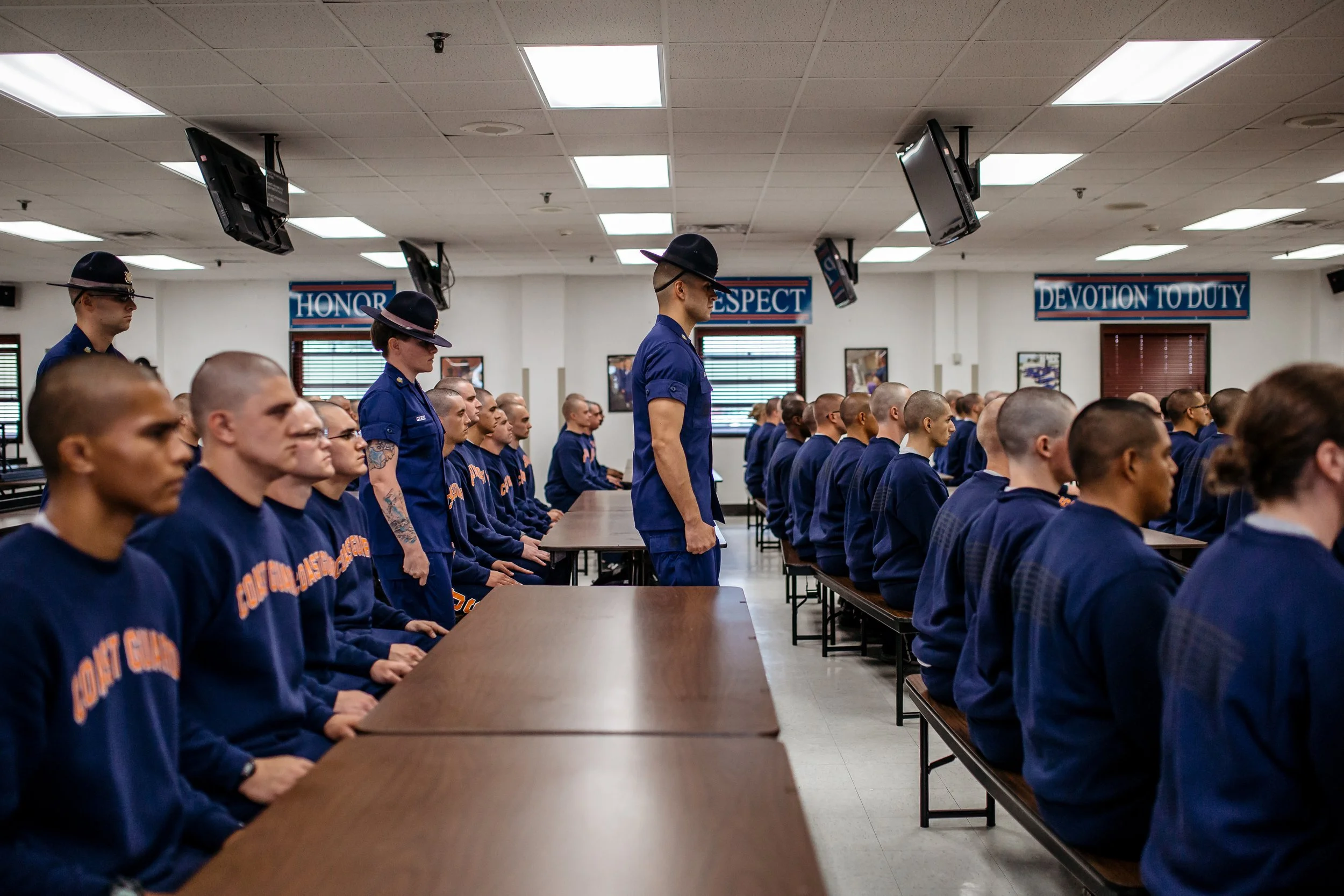
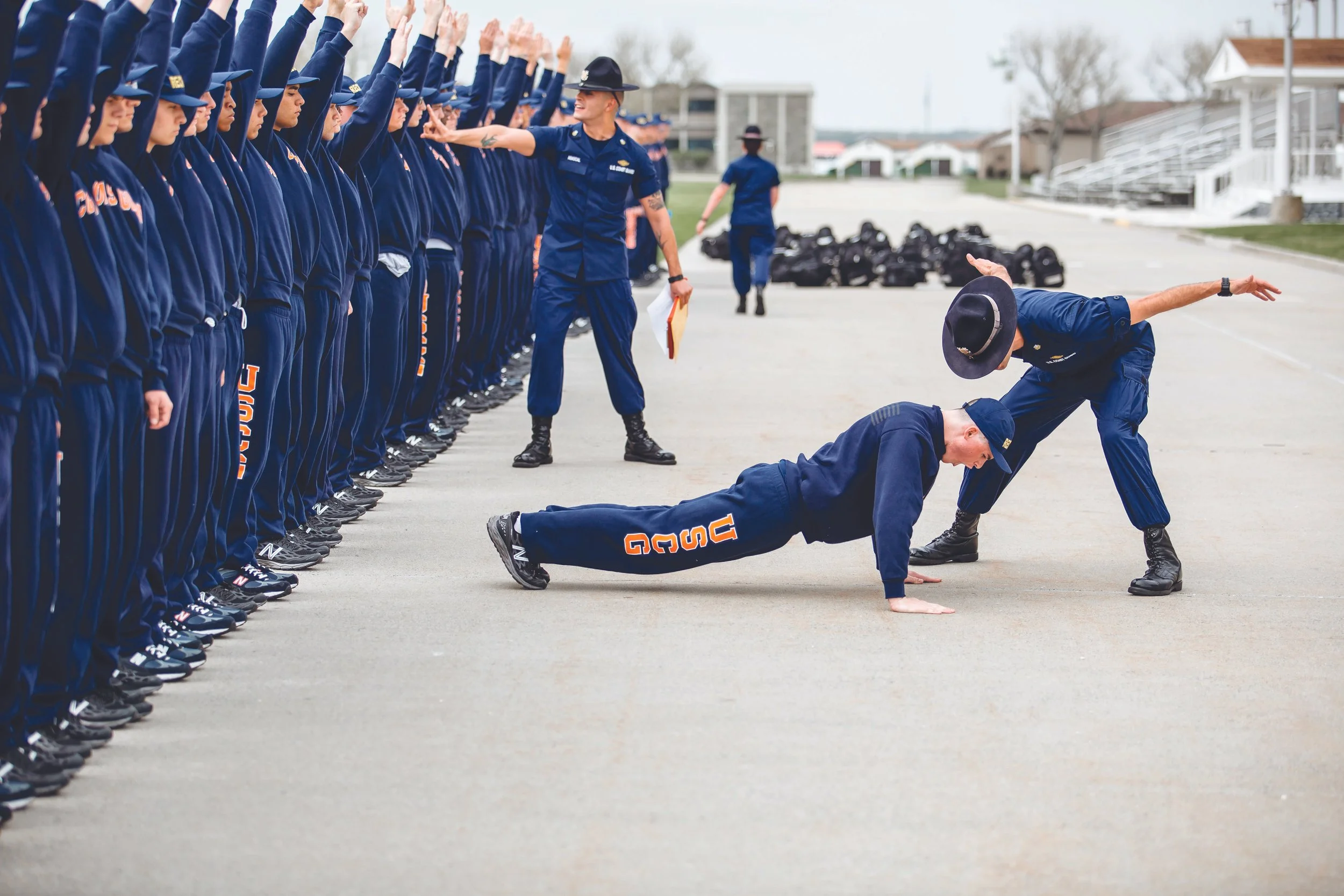
Training Center Cape May — TRACEN, if you want to sound like you know what you’re talking about — is the only Coast Guard boot camp in the country. Every enlisted Coastie begins here — more than 4,000 young men and women arrive each year to be tortured, I mean trained. But if you want to understand how a lil’ seaside town in South Jersey wound up becoming the birthplace of the Coast Guard’s enlisted workforce, you have to go back long before the first barking company commander ever made anybody do pushups.
Eons before the Coast Guard could call it home, the land at Sewell Point, a barrier spit located at the northeastern end of our island (which also incorporates Poverty Beach), had found ways to be useful. It had long served as a harbor of refuge, and in 1917, during World War I, the US Navy established a section base there. But rather than beginning with a neat, purpose-built military campus, the Navy repurposed an abandoned amusement complex. The old skating rink became sleeping quarters and a mess hall. The stage became a galley. The Human Roulette Wheel (sounds terrifying) became a scrub table. And the Barrel Of Fun was turned into a brig.
After a fire destroyed the original wooden complex in 1918, more permanent structures were built.
Then the site evolved again. In the years after World War I it was adapted for dirigibles, with a vast hangar constructed in anticipation of an airship that never actually arrived, the colossal ZR-2 dirigible, an experimental airship which was under construction in England. It was a new class of dirigible and untested, but the US Navy had high hopes. A 17-member crew of American sailors experienced with smaller airships had been transferred to England to help with its construction and the 50 hours of trial flights that had been planned. The goal was for them to learn how to both maneuver and repair the mighty airship so that they could fly it back to the US and teach other sailors what they had learned.
Sadly, on the fourth flight in front of an estimated 3,000 spectators, in the north of England in 1921, the skeletal structure that held the exterior envelope rigid failed, causing a massive midair explosion. Sixteen of the 17 Navy sailors were killed, along with 28 British sailors.
By 1924, the Coast Guard had taken over the installation for air facilities supporting US Customs enforcement, and during Prohibition the service used Cape May to help chase rumrunners off the Jersey coast.
So, before the base became known for turning civilians into Coasties, it was also part of America’s effort to stop people bringing booze into New Jersey — a task that sounds ambitious even on paper.
During World War II, the Navy and Coast Guard both used the base. Carrier pilots trained there. The Coast Guard used the site for patrol, rescue, anti-submarine work and buoy service. But the key turning point came after the war. In June 1946, the Coast Guard took exclusive control of the base. On May 31, 1948, it officially opened as a recruit training center. Then, in 1982, recruit training was consolidated there, cementing Cape May as the service’s one and only enlisted boot camp.
That remains the heart of the story, even if the story picked up a nervous subplot last fall.
In the autumn of 2025, people in Cape May County got understandably jumpy when the Coast Guard announced that it was seeking an additional recruit training site. Around here, where the base is woven into both the local economy and the civic bloodstream, the fear was immediate: were they going to leave Cape May?
The answer, it turned out, was no.
The Coast Guard said it had exceeded its recruiting goals for fiscal year 2025, bringing in 5,204 active-duty enlisted accessions, or 121 percent of target — its highest total since 1991. The problem was not that Cape May had become less important. The problem was that the service was finally recruiting so successfully that Cape May was running out of room. In blunt terms, TRACEN was bursting at the seams. The Coast Guard tied the search for more training capacity directly to force growth and future expansion plans.
Now the Coast Guard is opening a second training center in Alabama. In March 2026, the Department of Homeland Security announced a new Coast Guard training center in Alabama, with training missions expected to begin later this year. That facility has been presented as an expansion driven by recruiting success and future manpower needs, not as a retreat from Cape May.
In fact, one could argue that the new Alabama center is a compliment to Cape May rather than a threat. The Coast Guard went looking for more space not because Cape May had lost its value, but because the place had become too successful to handle the load alone.
The numbers tell you how big an operation this is. On an average day, more than 1,160 active-duty members, reservists, civilians, contractors and recruits are aboard the base.
According to Cape May County, the training center supports about 1,200 jobs and generates roughly $173 million a year in economic impact when payroll, institutional spending and visitor spending are combined. In a place where so much of the economy still leans on summer, that is the kind of year-round ballast that communities like ours dream about.
Apparently, around 40,000 people attend graduations at the base each year. Those people need hotel rooms, breakfasts, dinners, coffee, snacks, cocktails, beer — and somewhere to wander after the ceremony. In other words, military ritual turns into occupied rooms, restaurant covers and offseason foot traffic. That is how a training base becomes part of a town’s economic bloodstream.
That is why the county makes a point of publicly celebrating the relationship every spring through the Coast Guard Community Festival, though this year the event (scheduled for May 16) was canceled due to security concerns caused by the shutdown in the Department of Homeland Security. That annual festival (which presumably will return next year) is the formal expression of something locals have long understood: the Coast Guard here is not some remote federal tenant. It is part of the place. As we say back in the UK, it’s in with the bricks.
Former Cape May mayor Ed Mahaney summed it up when he said of Coast Guard personnel, “They attend our churches and sing in church choirs, they coach our Little League teams, they get involved in civic activities of all kinds. If we had to run all of our festivals and special weekends year-round without them, well, we couldn’t do it.”
So the next time you hear a cadence call float across town, or spot a knot of recruits marching with that unmistakable mixture of terror and concentration, it is worth remembering what is really happening behind those gates. On land that was once an amusement center, then a Navy base, then a Prohibition-era enforcement outpost, the Coast Guard still performs its most important act of renewal.
We continue to salute them!
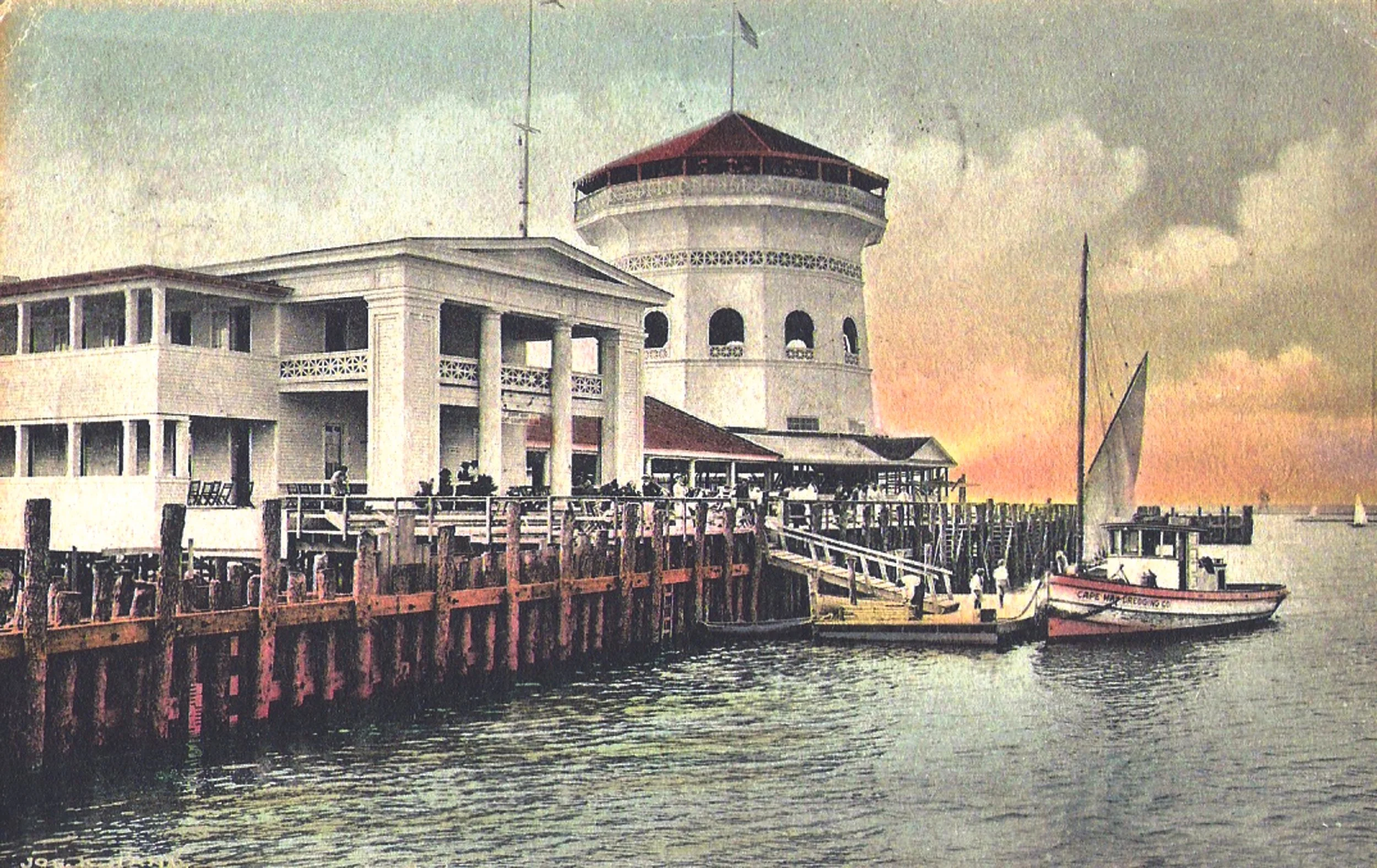
The Fun Factory, at Sewell Point, shortly after opening, with patrons lined up around the outside of the tower. The building was later destroyed by fire while being used by the US Navy during World War I.
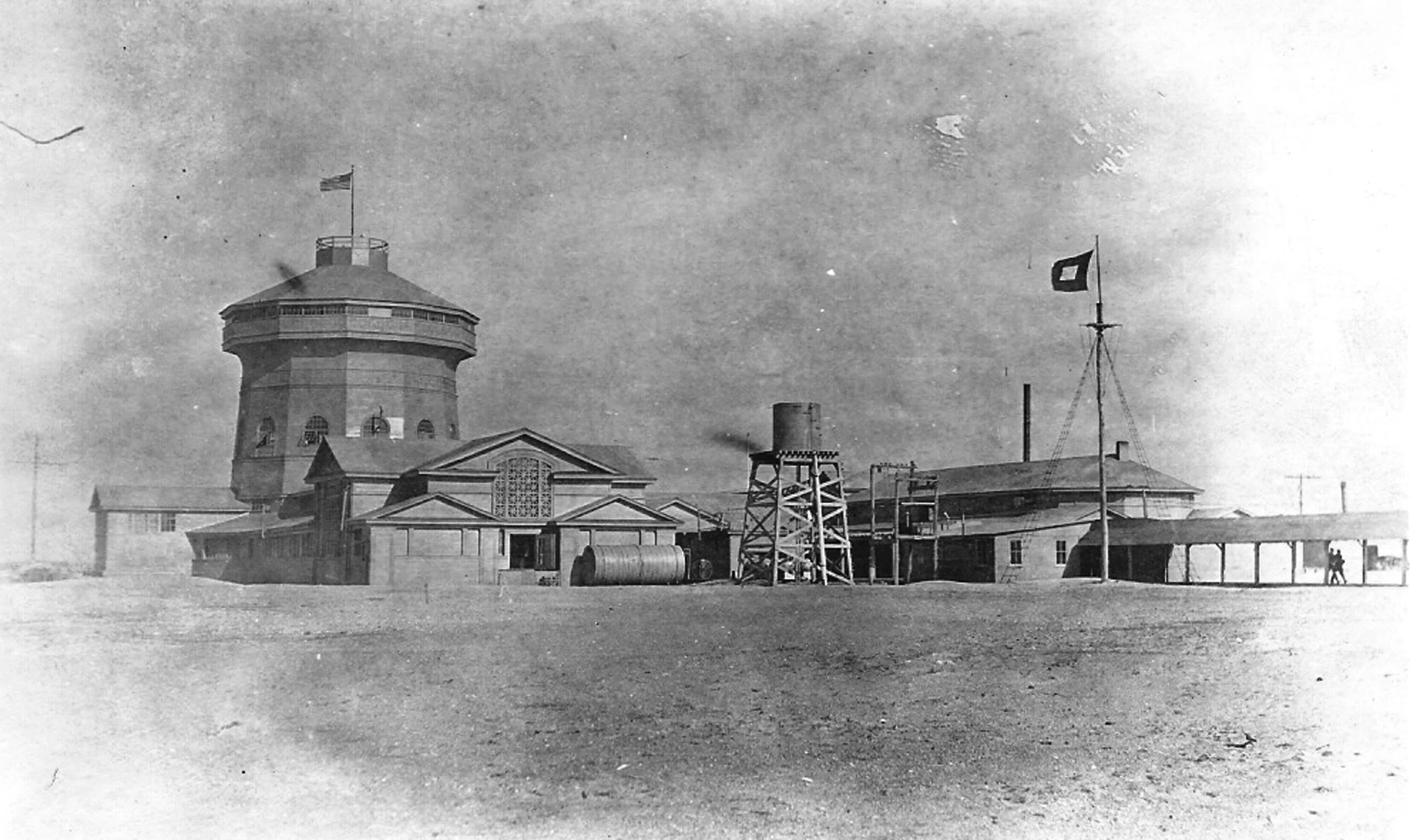
The Fun Factory before the 1917 fire, after it was converted for use as a Navy Section Base. The dance floor was used as a temporary dormitory and the old Barrel of Fun was used as a prison.