
Cape May once laid on a five-gun salute for President Ulysses S. Grant as his boat prepared to arrive in town. Unfortunately, the boat receiving it wasn’t carrying President Grant.
According to the Baltimore Sun’s account of his 1875 visit, an old government tug reached the pier just ahead of the presidential party. The welcoming party let rip. The tug’s engineer responded with his steam whistle.
The resulting “most unearthly steam screech” sent some of the spectators packing. By the time the actual president appeared, the welcoming party had run out of cartridges and he came ashore “without even trumpet, drum, or fife.” How embarrassing.
As we emerge from another round of midterm elections, it’s reassuring to remember that political theater has always had its production difficulties.
Five sitting presidents visited our resort during the nineteenth century — Franklin Pierce, James Buchanan, Ulysses Grant, Chester Arthur and Benjamin Harrison. Their stories spill well beyond the guest book of Congress Hall (which hosted four of them), taking us along the beachfront, out to Cape May Point and through Lower Township. Extend the map to a few miles up the Garden State Parkway and Donald Trump joins the cast. More on him shortly.
Before air-conditioning made Washington bearable in summer, the attraction was obvious. Cape May offered sea breezes, bathing and grand hotels. During the resort’s nineteenth-century heyday, as many as 3,000 visitors a day arrived by steamer. The wealthiest guests brought their political connections with their luggage. A president on the premises was excellent publicity for everyone.
Cape May has even claimed a visit from Abraham Lincoln, thanks to a tantalizing entry in the Mansion House register. On July 31, 1849, it recorded “A. Lincoln & wife—Phila. Room 24.” There was one difficulty: the future president was in Springfield, Illinois, that day, writing, signing and filing court papers. The research bulletin Lincoln Lore challenged the Cape May claim in 1969. Whichever Lincoln checked into room 24, the evidence points away from the man who would occupy the White House.
President Pierce arrived in 1855 with his wife, Jane, for the Fourth of July. The Baltimore Sun announced their arrival at Congress Hall with a breezy forecast: “The weather is delightful, and there is every prospect of a brilliant season.”
For the Pierces, delight was in desperately short supply. They had already buried two young sons when, in January 1853, a train carrying the family derailed in Massachusetts. Their surviving child, Benjamin, was killed. Pierce was weeks away from becoming president. Jane entered the White House in mourning, and never fully recovered from the loss.
On July 4, Pierce was called upon to speak, which he did, about the American Union and the importance of preserving it. Within six years, the country would be at war with itself.
His successor, Buchanan, a Pennsylvanian bachelor, visited in 1858. Two years later, as the country fractured, Buchanan argued that states had no constitutional right to secede, while also insisting the federal government lacked the power to force them to remain. It was an extraordinary position for a president watching the Union come apart.
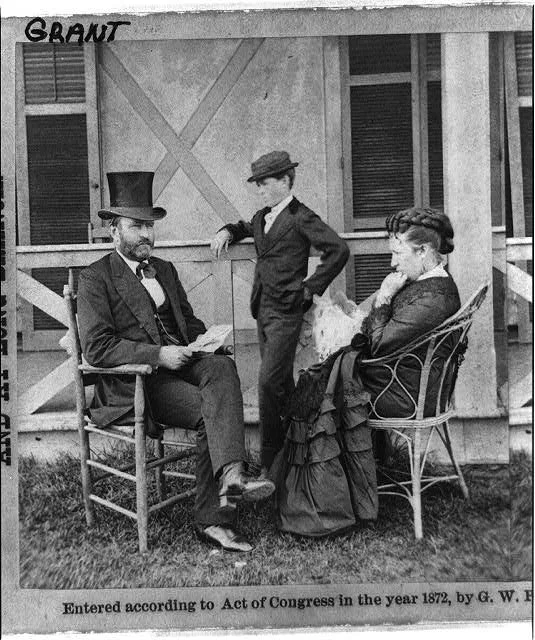
Grant, the general who helped put the country back together, made several Cape May visits. His welcome wasn’t always as grand as his reputation, as that unfortunate tugboat episode demonstrates.
The Baltimore Sun wasn’t especially impressed by his wardrobe, either. “His hat has seen better days,” it sniffed, before concluding: “He excites no enthusiasm.” Anyone imagining the nineteenth-century press as a deferential bunch should spend more time with the newspaper archives.
Another much-repeated tale has a hotel proprietor deciding Cape May’s councilmen were insufficiently well dressed to meet the president. Nine more presentable guests were supposedly recruited as substitutes. Whether Grant noticed the deception depends on which version you read.
Arthur’s visit in July 1883 came with rather more dependable ceremony. His party arrived at Cape May Point and traveled along the oceanfront by carriage to the enormous Stockton Hotel, where musicians played “Hail to the Chief.”
There was a day of touring and an evening reception, banquet and ball. Arthur shook hands with more than 2,500 people, according to a local historian at the time.
The departure was better still. Around midnight, amid fireworks, the president was rowed through the surf to his waiting vessel by a lifesaving crew. Try picturing that on a modern presidential itinerary.
President Harrison developed the deepest attachment to the area. He and Caroline first visited in 1889 at the invitation of John Wanamaker, the Philadelphia department-store magnate who also happened to be his postmaster general.
The Harrisons liked Cape May Point so much that Wanamaker and a group of friends arranged a $10,000 cottage for them. The deed and keys were presented to Caroline at the White House in June 1890.
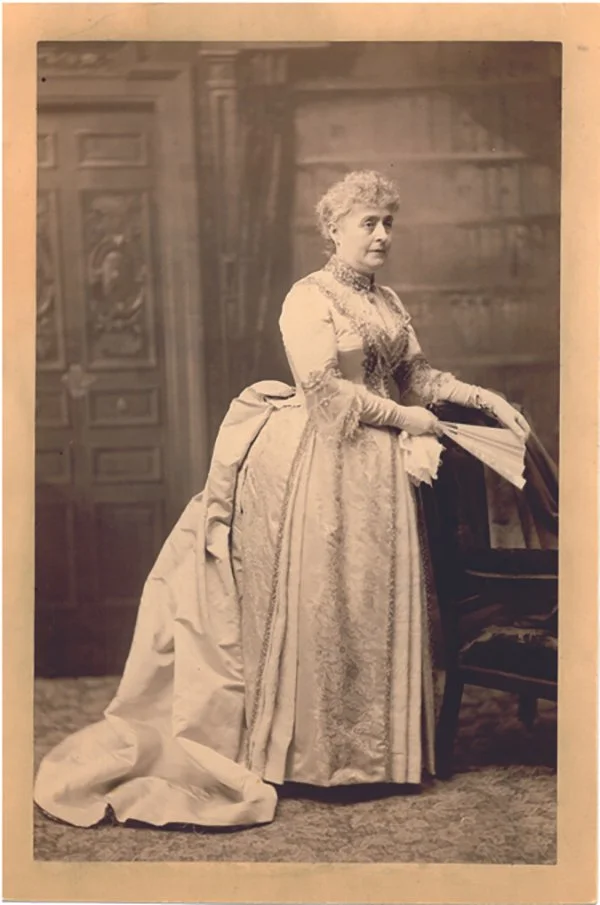
President Harrison's wife Caroline.
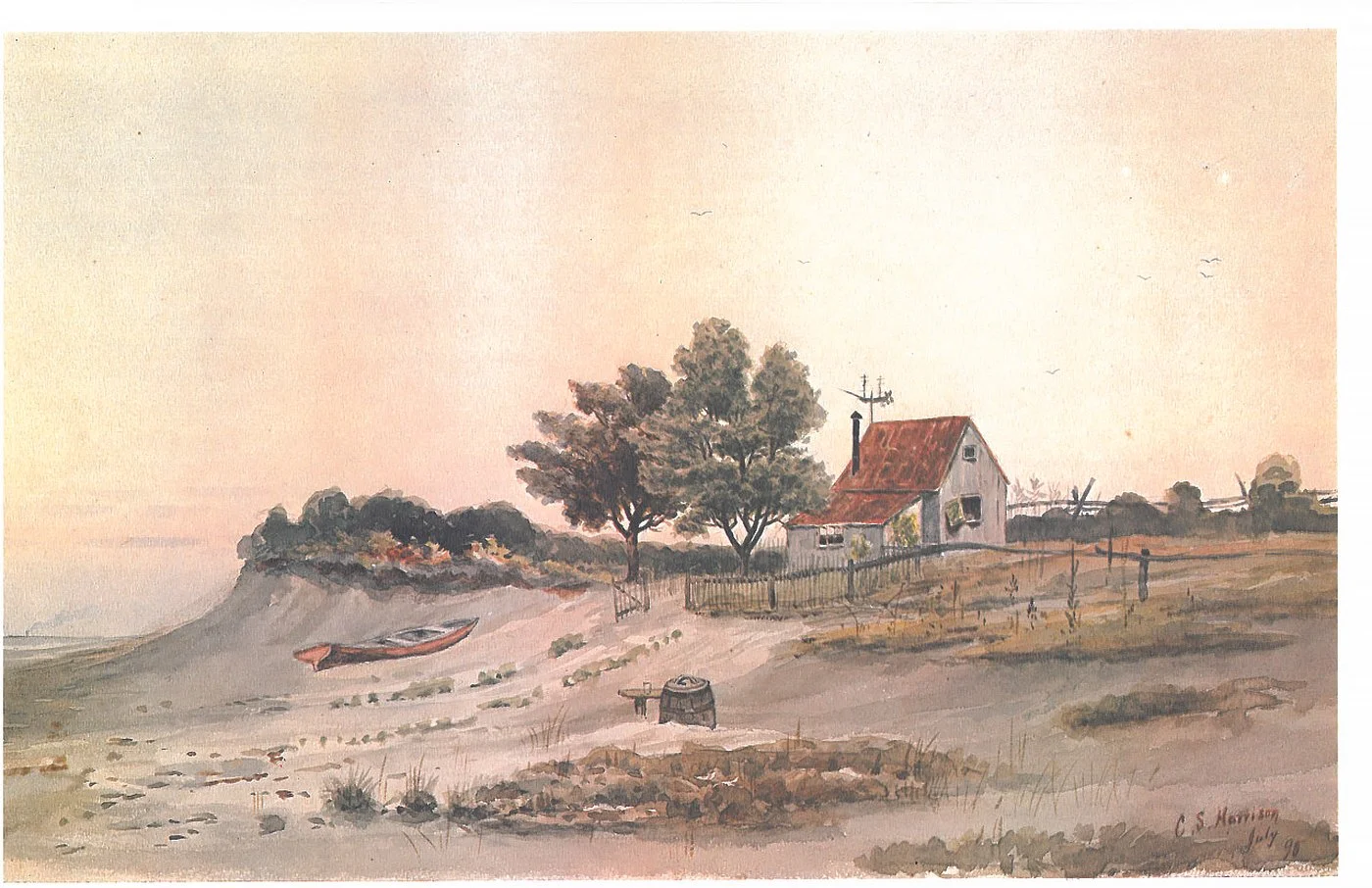
Painting of Town Bank by Caroline Harrison.
Predictably, the gift became a political headache. Critics questioned the generosity of people with an interest in the resort’s fortunes, and Harrison subsequently reimbursed the donors. The notion that a president’s holiday arrangements might attract scrutiny is clearly not a recent invention.
There was ordinary family life here, too. The Harrisons attended Cold Spring Presbyterian Church and took carriage rides through the countryside. Stevens recorded one excursion to visit an elderly couple on Shunpike Road after Caroline had admired a photograph of their cottage.
In 1891, the family returned while the White House underwent renovations, including the installation of electric lighting. Harrison conducted government business from offices at Congress Hall. Cape May was functioning as a summer White House, with all the paperwork that implied.
He did, however, find time for baseball. That August, he visited Cape May’s Athletic Park to watch the local team take on the New York Gorhams, an outstanding Black club featuring future Hall of Famers Sol White and Frank Grant. Pitcher William Selden delivered a shutout while the president looked on. White later described the Gorhams as “one of the strongest teams ever gotten together, white or black.” Cape May’s presidential history and the history of Black baseball shared an afternoon at the ballpark.
The electricity provides a lovely postscript. Back in Washington, Benjamin and Caroline were so nervous about being shocked that they refused to operate the switches. The domestic staff had to do it for them. Running the country was apparently one thing; turning out the light was quite another.
Caroline died of tuberculosis in October 1892. Harrison returned to Cape May after leaving office the following year, bringing a stenographer and plans to organize his papers and prepare lectures. Even then, he couldn’t quite manage a holiday without homework.
The modern political visitors have generally come looking for votes rather than a summer escape.
In 2007, Rudy Giuliani appeared on Congress Hall’s lawn while pursuing the Republican nomination for the 2008 presidential election. The former New York mayor was also stumping for local Republicans, including state Senator Nicholas Asselta, whose Democratic challenger was Jeff Van Drew.
In January of 2020, President Trump arrived in Wildwood to support Van Drew, by then a congressman who had switched from the Democrats to the Republicans.
And there was our local political plot twist: a Republican presidential hopeful had come to help defeat Van Drew in 2007; thirteen years later, a Republican president came to help reelect him.
Trump returned to Wildwood’s beach in May 2024, publicly coming out against Republican Curtis Bashaw’s bid for a Senate seat (he would eventually lose to Democrat Andy Kim). As Bashaw sat in the crowd that day, Trump called him out as a “Christie person,” because Bashaw had donated to former Governor Chris Christie’s presidential campaign. Bashaw is, of course, the owner of Congress Hall, host of all those previous presidents.
You can’t accuse Cape May County politics of lacking material.
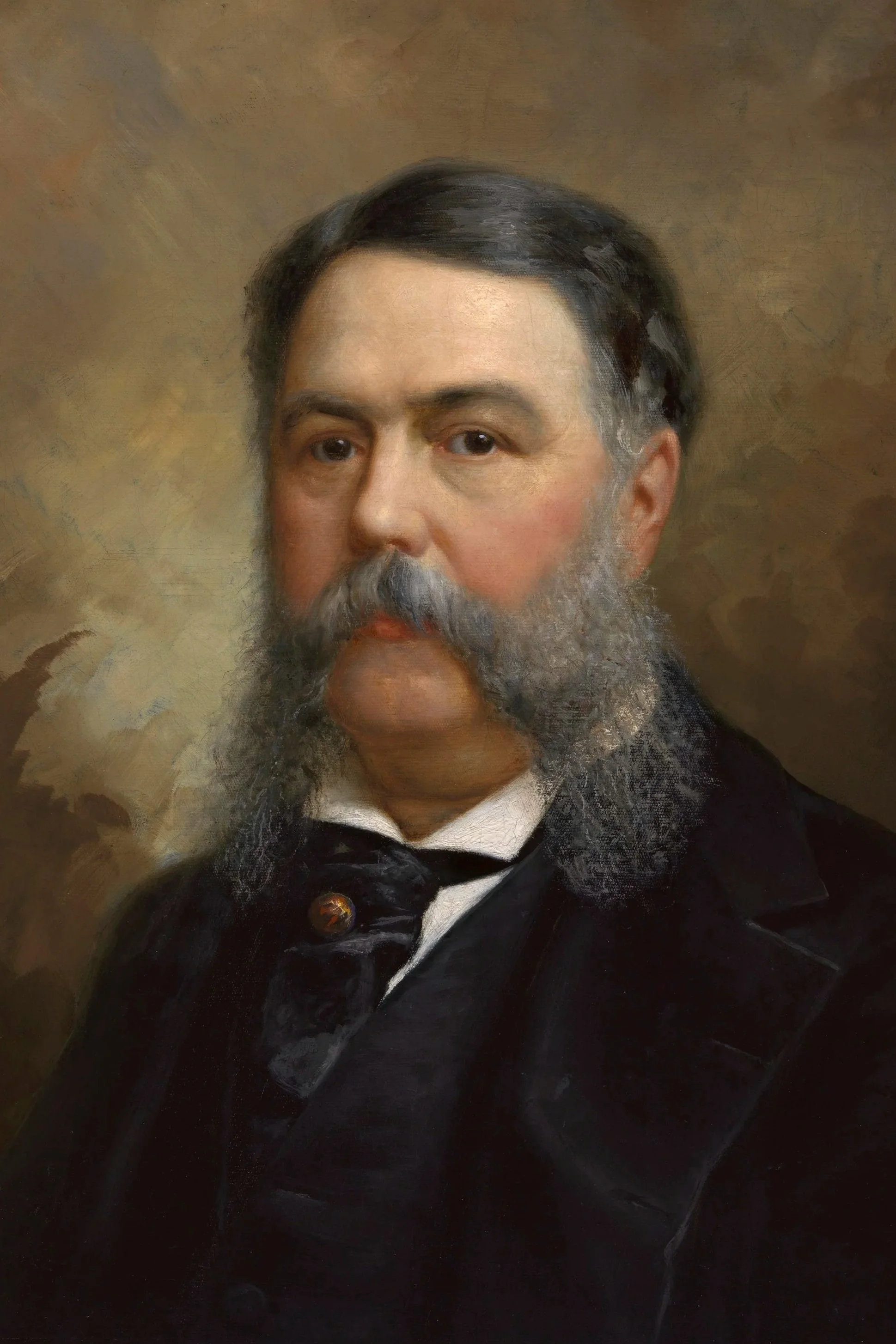
Chester Arthur (regarded as one of the “forgettable presidents”)
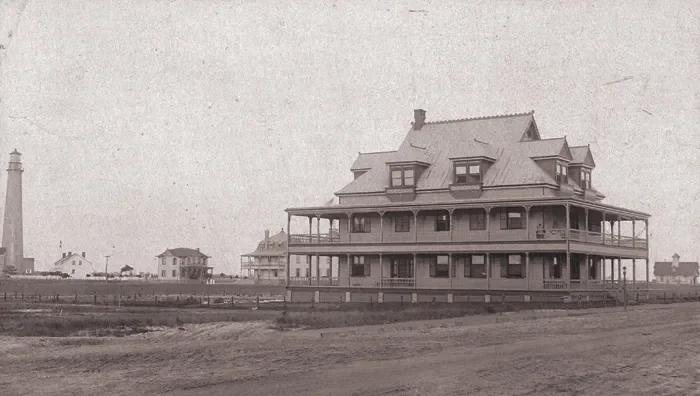
The Summer White House of Benjamin Harrison.