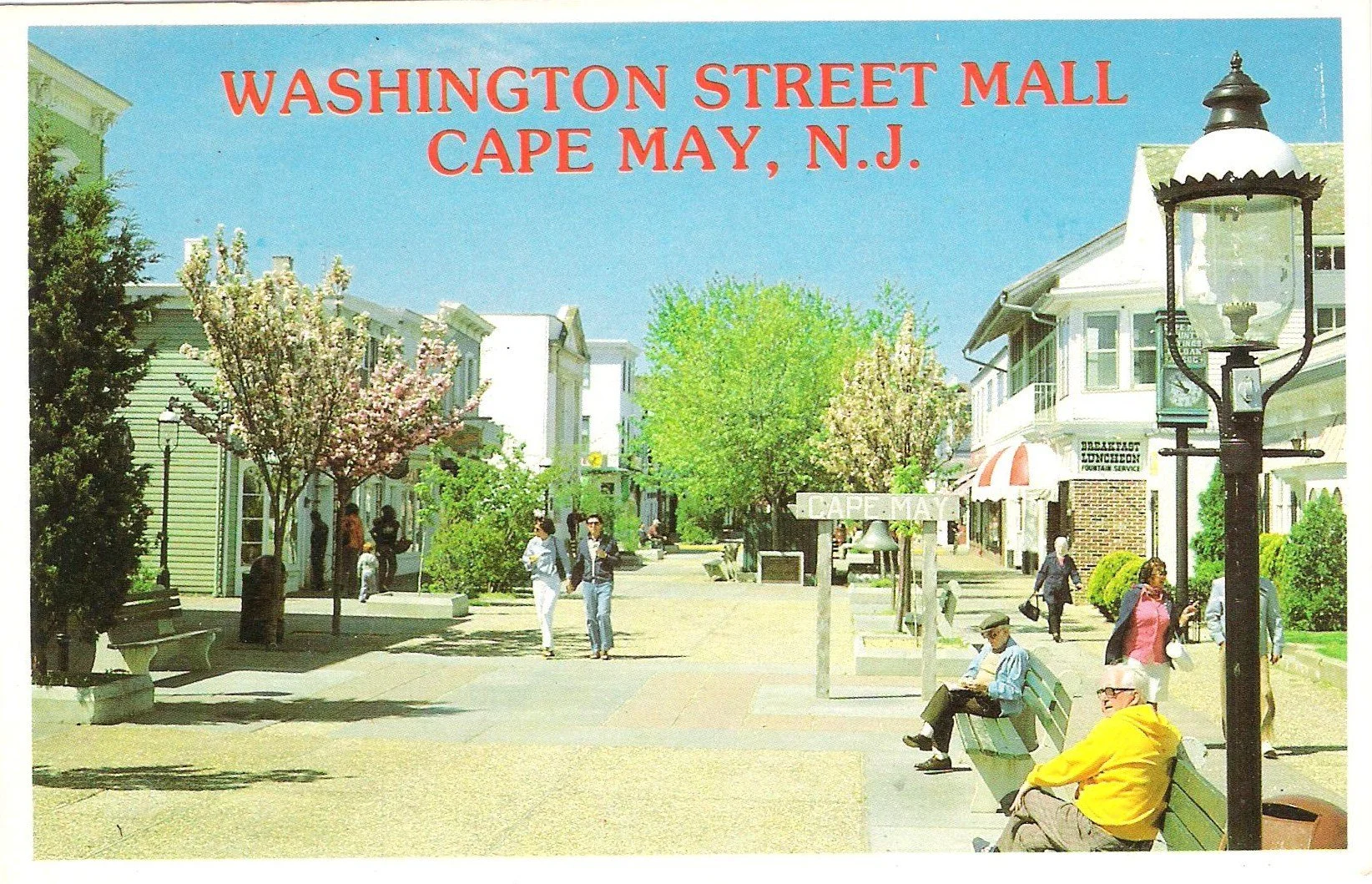
Why The Making Of The Mall Wasn’t A Walk In The Park
Stroll Cape May’s Washington Street Mall on a warm evening — past stores both boutique and kitschy, under the hanging lights, catching the gentle thrum of conversations from outdoor tables — and it’s easy to forget that this three-block pedestrian oasis was once an idea that divided a community.
Long before Instagram posts or packed summer crowds, the heart of Cape May’s downtown was a regular street with cars rolling through, storefronts struggling, and merchants quietly wondering how to revive the city’s soul. Turning that street into a pedestrian mall — today one of Cape May’s singular charms — was hardly a foregone conclusion.
The Washington Street Mall as we know it was born in the late 1960s, a part of a broader urban renewal effort in Cape May that ran from 1965 to 1971. City planners, concerned with economic decline, neighborhood blight and a commercial district that wasn’t living up to the town’s historic charm, began courting federal funds from the Department of Housing and Urban Development (HUD) for projects aimed at economic revitalization.
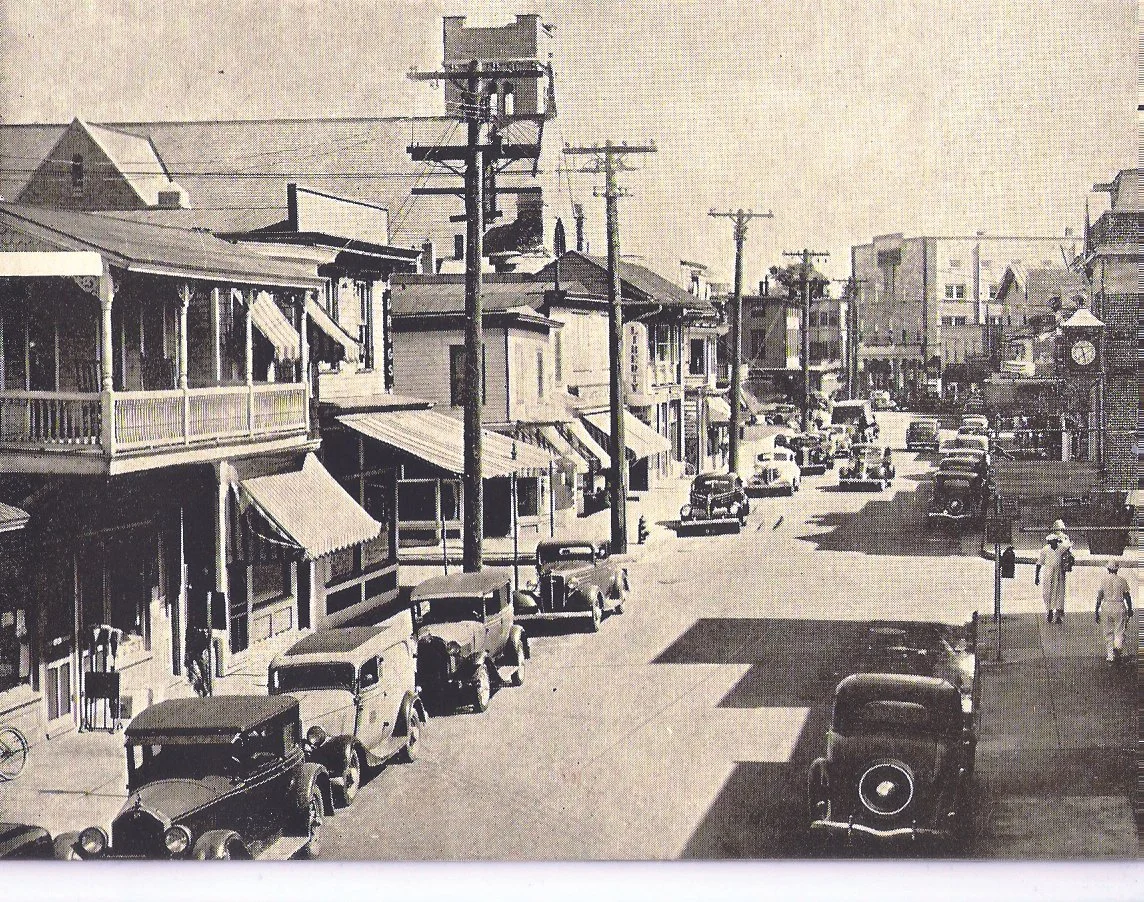
Washington Street in the 1940s, when Cape May had lost its place as the Jersey Shore’s boom town.
Mayor Frank Gauvry, City Planner John Needles and City Manager David Teel were among the officials who took the vision to Washington, DC, in March 1966, lobbying for support. As Gauvry would reflect decades later, “It was not a very attractive commercial area. The buildings along Washington Street were in desperate need of repair.”
The core idea? Close Washington Street from Ocean Street to Perry Street to vehicular traffic and transform it into a pedestrian-only boulevard of shops, trees, flowers and benches — a place people could stroll without the buzz of engines, a place that would link Cape May’s tourism economy to its historic streetscape.
It was bold at a time when pedestrian malls were just emerging in the United States. The first such mall — the Kalamazoo Mall in Michigan — had opened in 1959, and through the 1960s and early 1970s hundreds of pedestrian-only downtown streets sprouted all over the country as cities experimented with ways to compete with shopping centers and preserve downtown commerce.
But ideas that were exciting in theory were, locally, met with skepticism — and outright resistance.
Local opposition was fierce. Many Washington Street merchants feared that shutting their street to cars would drive customers away. Sam Kahn, whose Ugly Mug bar and restaurant sat on a key corner, reportedly complained that construction “was ruining his business” during the early phases of the mall’s development.
Others feared the unknown: would a street without cars really draw people? Was this just a fashionable fad, imported from far-off urban planning conferences but ill-fitting for a small seaside town? Cape May was known for beaches and Victorian houses — not urban redesign experiments.
“It was just the three of us running the city! There’s too many cooks in the kitchen today,” Gauvry would later quip, reflecting on how decisions were made in that era of rapid change.
The controversy wasn’t merely about cars. It was about change in a town that had already seen its share of boom, bust and resilience. In the 1960s, Cape May was trying to claw back its identity after decades of economic lag and shifting vacation trends. The Urban Renewal grants promised dollars — but they required agreeing to bold ideas.
Still, opponents and proponents alike agreed on one thing: something had to be done. So Washington Street was closed to traffic in 1970 and preparations began.
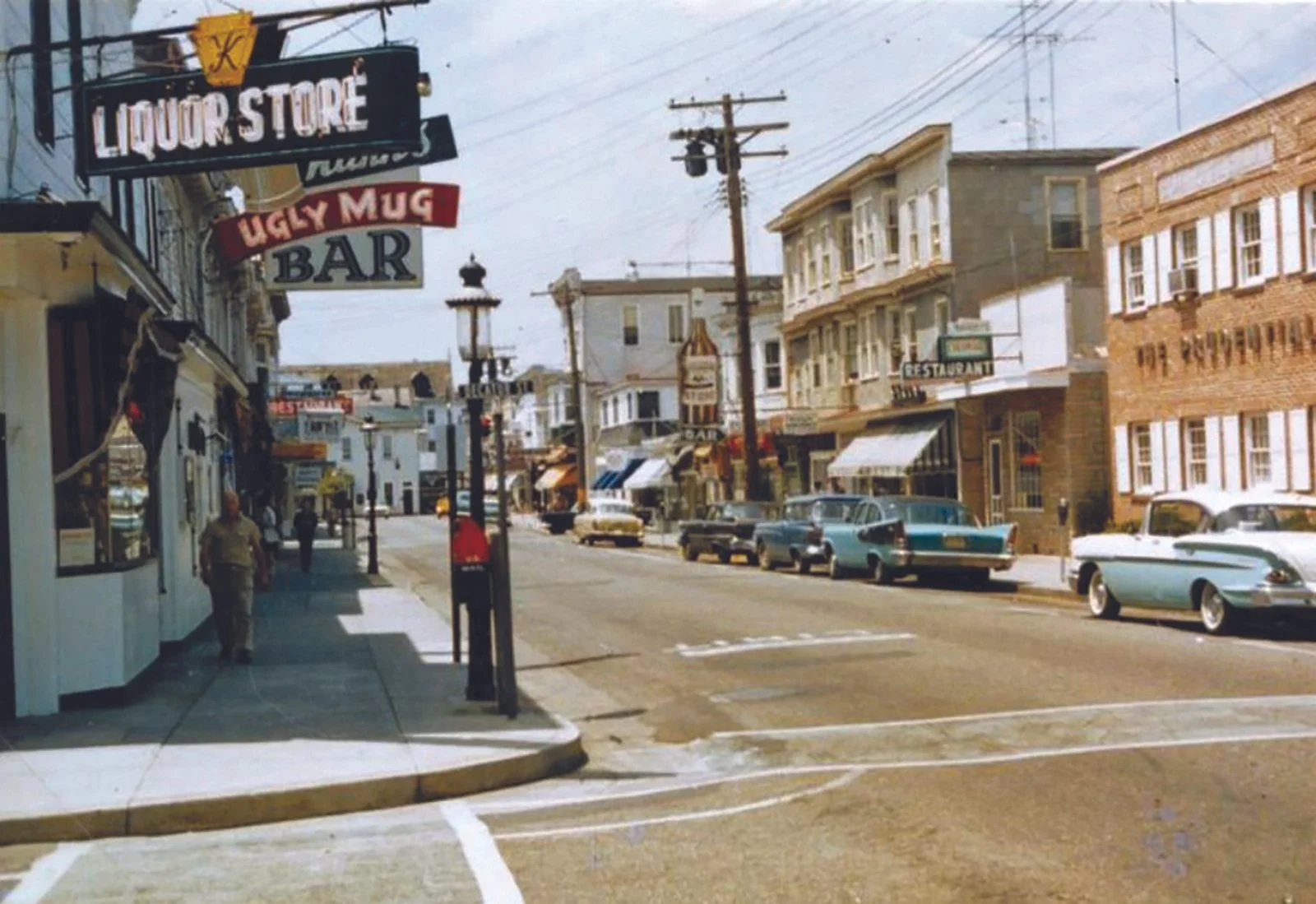
Washington Street in the 1960s. Note the Ugly Mug on the left — then owner Sam Kahn was against the idea of the mall, then proclaimed himself delighted when business boomed after it was completed.
On June 24, 1971, Cape May officially dedicated the Washington Street Mall. The asphalt was gone. In its place went trees, planters, brick walkways, and a promise: that pedestrians, not cars, would be the lifeblood of the new downtown district.
There was controversy, to be sure — but there was also triumph. Former Mayor Bruce Minnix later recalled how skeptical the community had been, but also how the success of the Mall began — sometimes in the most down-to-earth ways: “They gave money to people to write a song for the town... and then ran out of money for trees. Go figure.”
Still, rather than stalling the project, that mix of humor and civic drive became part of what made Washington Street Mall work: a willingness to improvise, to build something a bit experimental with whatever resources were at hand.
One of the first merchants to change his tune was, fittingly, Sam Kahn. After balking at the construction, by the end of the Mall’s first summer he told friends it had been “the best year he’s ever had.”
Pedestrian malls in the US were not a uniform success, and most did not survive long-term. As urban historian Victor Gruen’s pioneering work in Kalamazoo, Michigan showed, closing streets to cars was an attractive idea to draw people back to downtown in the face of booming suburban shopping centers — but success depended heavily on local context, climate and connectivity.
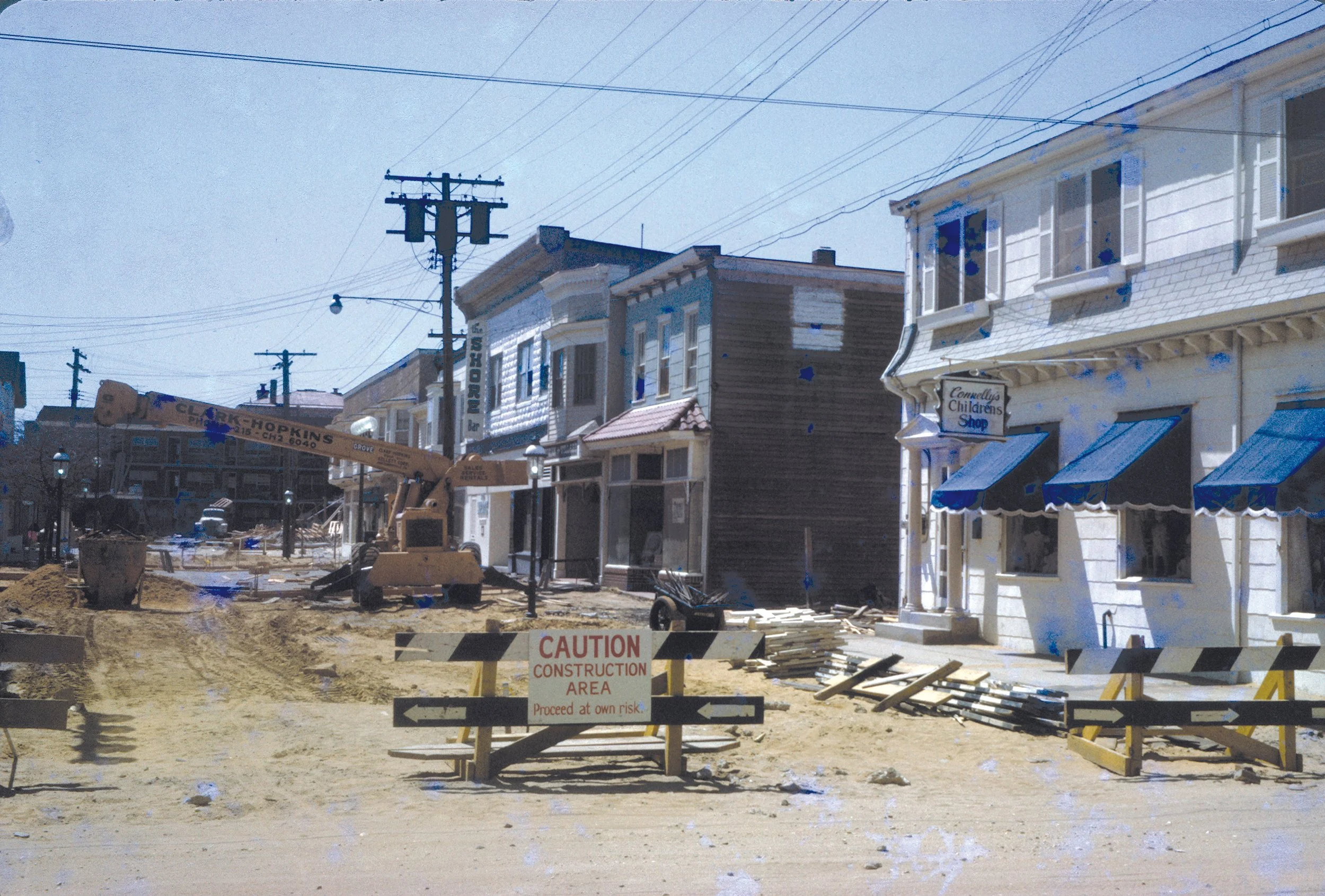
Work began in 1970 to create one of the first outdoor pedestrian shopping malls in the country. There were objectors in the early days.
Indeed, many cities that embraced pedestrian malls in the 1960s and 1970s had converted back to regular streets by the 1980s and 1990s. By 2000, fewer than two dozen of the original pedestrian malls remained in the United States.
What set Cape May apart was its unique mix of tourism appeal, historical charm, and walkability that already existed in the city’s DNA. A place that welcomes people on foot wasn’t awkward here — it was aspirational. That difference helped make Washington Street not just a relic of an urban planning trend but a living, thriving center of commerce and social life.
In the years after its opening, the Washington Street Mall became central to Cape May’s revival and identity. In May 1976, a fire destroyed part of the mall between Jackson and Perry Streets during the Christmas shopping season — a dramatic moment that, remarkably, was followed by rapid rebuilding and renewed energy from merchants and residents.
Throughout the late 20th century, the Mall stitched itself into the fabric of the city, becoming a gathering place, a showcase for independent retailers and restaurants, and a magnet for visitors from around the country.
By 2008, when a formal facelift and Business Improvement District was created, the Mall was far from an add-on — it was foundational.
Now more than 50 years after Cape May closed Washington Street to cars, it’s easy to take its success for granted. But as the story of its early days shows, pedestrian malls were a bold — and sometimes controversial — experiment in American urban design. Cape May’s Mall, unlike many that faltered elsewhere, found a happy ecosystem: a historic town, a tourism base, and a pedestrian culture that welcomed — rather than resisted — walkable space.
As one local historian put it, the Mall wasn’t just a street without cars: it became a place with soul. It’s where locals meet for ice cream, where visitors discover handmade crafts, and where, come evening, the evening light and the string lights turn shopping into an experience, not just a transaction.
In a way, the Washington Street Mall turned Cape May itself into a stage — one where past and present stroll side by side, and where the town’s charm is not just preserved, but lived every day.