
Sunset Beach
If you were to ask longtime locals what Sunset Beach would be without the concrete ship, the answer might come with a pause, followed by something like, “Well... it just wouldn’t be Sunset Beach.”
The broken hulk sitting just offshore — officially the SS Atlantus — has been part of the Cape May landscape for so long that it’s easy to forget she wasn’t meant to be a landmark at all. She was a practical solution to a wartime problem, briefly repurposed for an ambitious transportation plan, and then very publicly abandoned when the Delaware Bay had other ideas.
The SS Atlantus was built in 1918, near the end of World War I, at a time when steel was precious and ships were desperately needed. The solution, at the time, was concrete — reinforced with steel rebar, poured into massive molds and shaped into oceangoing vessels.
She was one of 12 concrete ships commissioned by the US Shipping Board, constructed in Brunswick, Georgia, and launched on December 5, 1918. By the time she hit the water, the war was essentially over, which already put her behind schedule in the usefulness department.
Still, Atlantus did what she was built to do, at least briefly. She completed sea trials and carried cargo — primarily coal — along the east coast. Concrete ships, however, turned out to be a little like concrete shoes: strong, but not especially nimble. They were slow, heavy and expensive to operate, and within a few years most were laid up or sold off.
For those concrete ship nerds among you, there are actually six visible wrecks of WWI-era concrete ships in this country — Atlantus, Palo Alto, San Pasqual, Peralta, Sapona and Selma.
In 1926, Atlantus found a second act when Colonel Jesse Rosenfeld, a Baltimore-based developer with big plans, purchased the ship as part of a proposed ferry connection between Cape May and Cape Henlopen, Delaware.
The idea wasn’t to use the ship as a ferry herself. Instead, she would be positioned offshore and partially sunk to serve as a fixed pier and breakwater, forming a protected docking area for ferry boats. It was ambitious, creative and very much in keeping with that era’s belief that engineering could solve just about anything.
In March of 1926, there was even a ceremonial groundbreaking for the project. But on June 8, 1926, while Atlantus was being towed into position, a storm blew up. Her moorings failed and the ship drifted before running aground roughly 150 feet from Sunset Beach. Multiple attempts were made to refloat her. None worked. The ferry project quietly collapsed, and Atlantus was left exactly where she didn’t belong.
Over the decades, wind, waves and winter storms have done what they always do. The hull cracked. Large sections collapsed. The midsection sank below the surface, while the stern remained visible, jagged and unmistakable.
What might have been an eyesore instead became a curiosity — and, eventually, an icon. People swam out to it, climbed on it, photographed it, and used it as a point of reference: park near the concrete ship, meet me by the shipwreck, watch the sunset by the ship.
When the modern Cape May–Lewes Ferry finally began operation in 1964, it did so miles away, with steel ships and modern terminals. The Atlantus had long since retired from transportation planning and settled comfortably into her role as accidental scenery at Sunset Beach, which has been welcoming visitors since long before she ran aground. It was once a steamship landing and, later, a modest recreational area, known for wide-open views of the Delaware Bay and, eventually, for Cape May diamonds — the quartz pebbles that still send visitors hunched over the shoreline like hopeful prospectors.
In the 1950s, the beach business was operated by Preston Shadbolt, who ran a small shell and mineral shop on the property. He also began a tradition that would become inseparable from Sunset Beach: the daily flag-lowering ceremony at sunset, honoring US service members.
In 1972, the Sunset Beach business changed hands when Marvin Hume purchased it from Shadbolt. Marvin was a US Navy veteran and former aerospace engineer who had already spent years running a science and mineral store on the Atlantic City Boardwalk. He knew rocks, he knew people, and he knew when a place had something special going for it.
Marvin renovated the existing buildings, expanded the retail offerings, and leaned into what Sunset Beach already did best: simple pleasures, unusual finds, and a front-row seat to the end of the day. The concrete ship wasn’t something to hide — it was something to celebrate.
Marvin also expanded the flag-lowering ceremony, inviting families to donate burial flags and share the stories of the veterans they honored. Over time, the ceremony became a quiet, emotional constant — a reminder that Sunset Beach was about more than souvenirs.
In 1979, Marvin’s son Larry Hume joined the business full-time. Larry, with his wife Michele, helped modernize operations, guiding Sunset Beach into the decades ahead without losing its character.
Larry and Michele’s children have also become an essential part of the operation, helping shape the visitor experience and keeping the business running smoothly. Together, they continue Sunset Beach as a family-run destination, offering must-visit shops, mini golf, a cool new eatery called the Fish House (courtesy of the Zest group), and — of course — uninterrupted views of a concrete ship that refuses to leave.
Today, the SS Atlantus continues to erode, piece by piece. Everyone agrees she won’t last forever. But for now, she’s still out there — crooked, stubborn and strangely photogenic. Enjoy what’s left of her while you still can.
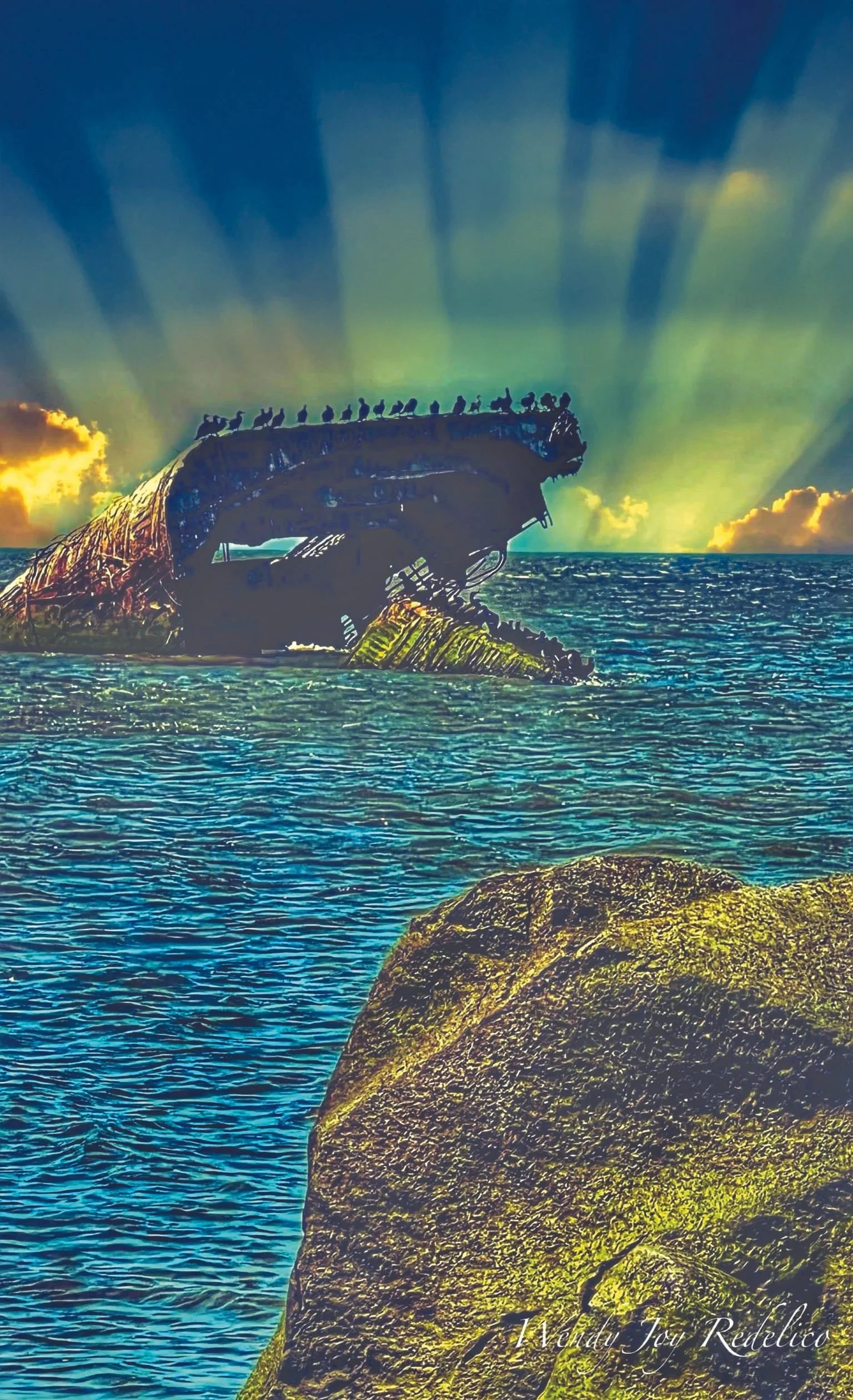
Photo by Wendy Redelico
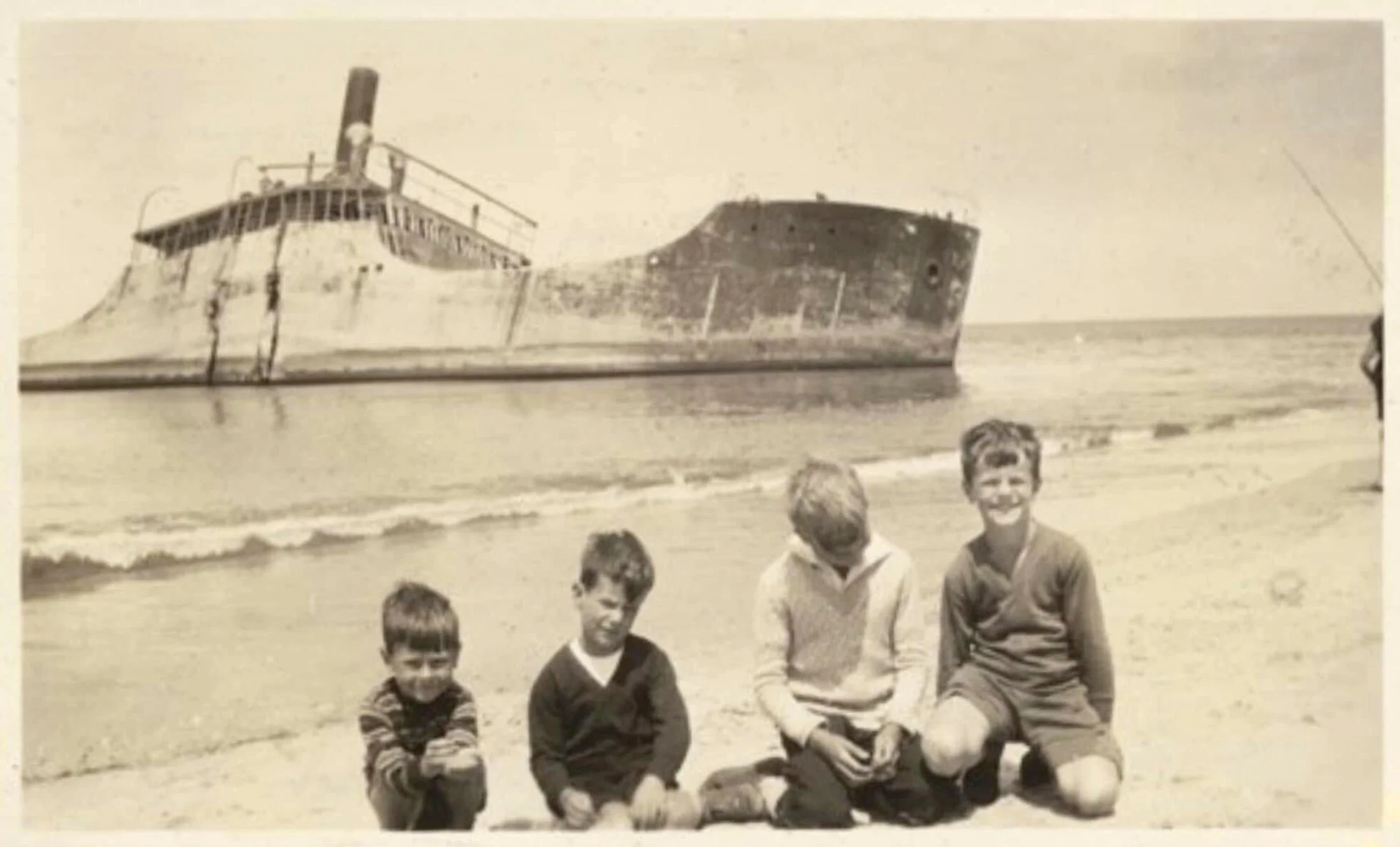
This undated picture (but likely from the 1930s) shows the SS Atlantus aground off Sunset Beach, following the failure of a ferry project. Lancaster County Historical Society
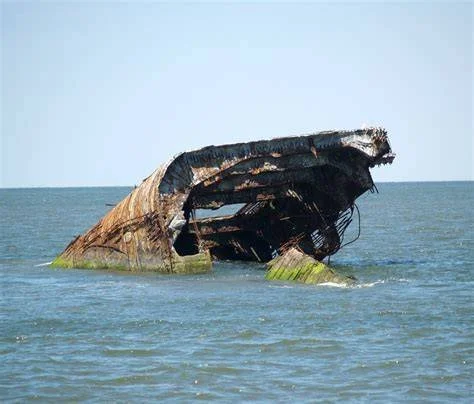
SS Atlantus — Cape May, New Jersey
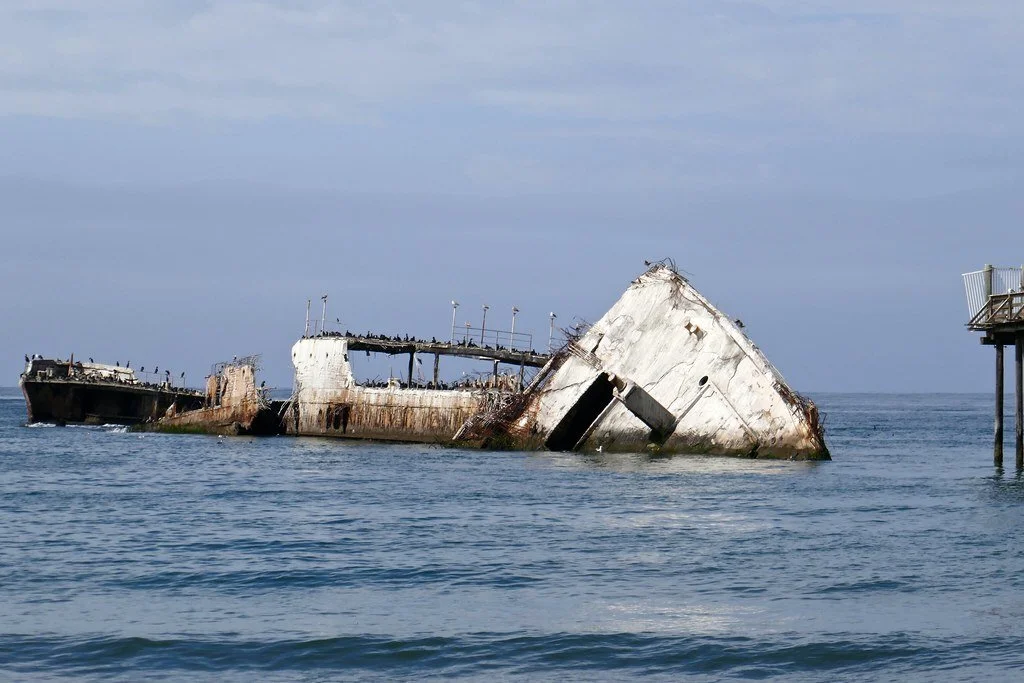
SS Palo Alto — Seacliff State Beach, Aptos, California
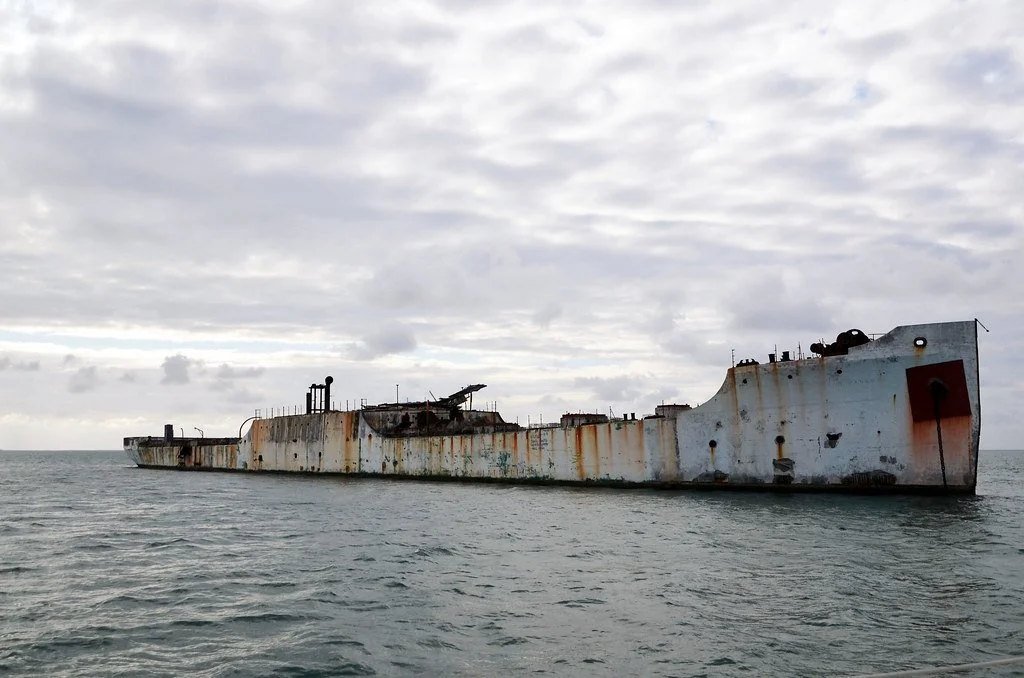
SS San Pasqual — Cayo Las Brujas, Villa Clara, Cuba
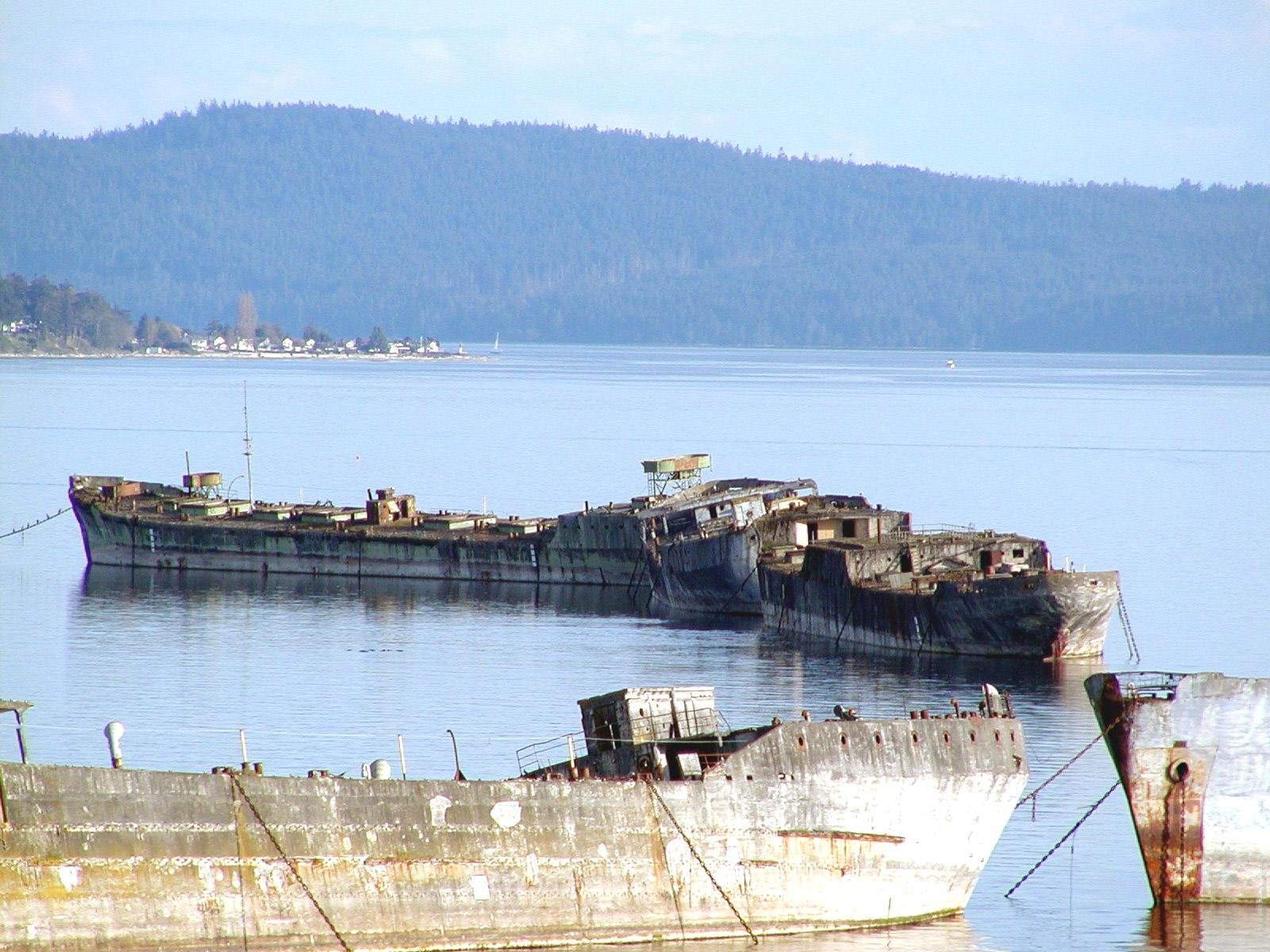
SS Peralta — Powell River, British Columbia, Canada. Peralta is still afloat as part of the Powell River breakwater and is noted as the last WWI concrete ship still afloat.
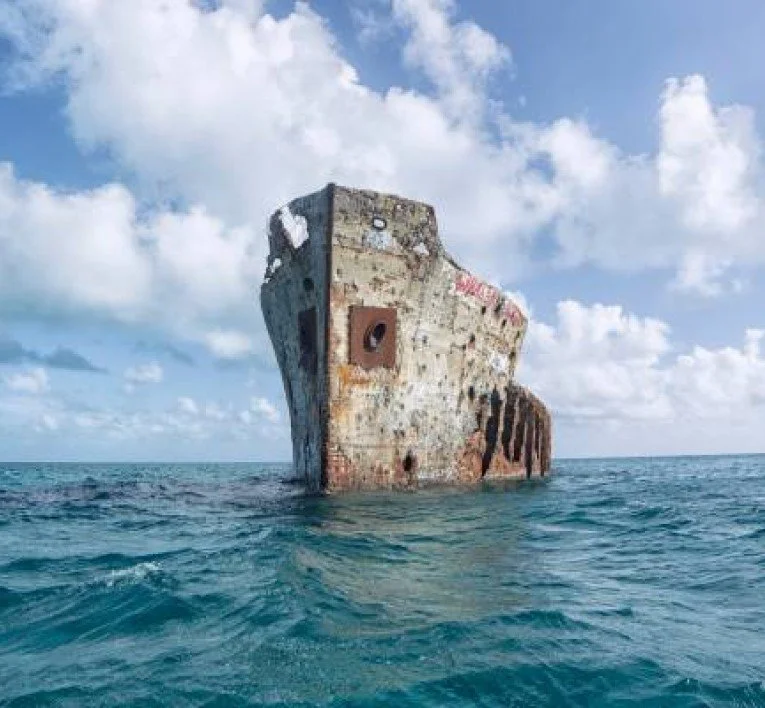
SS Sapona — South of Bimini, Bahamas
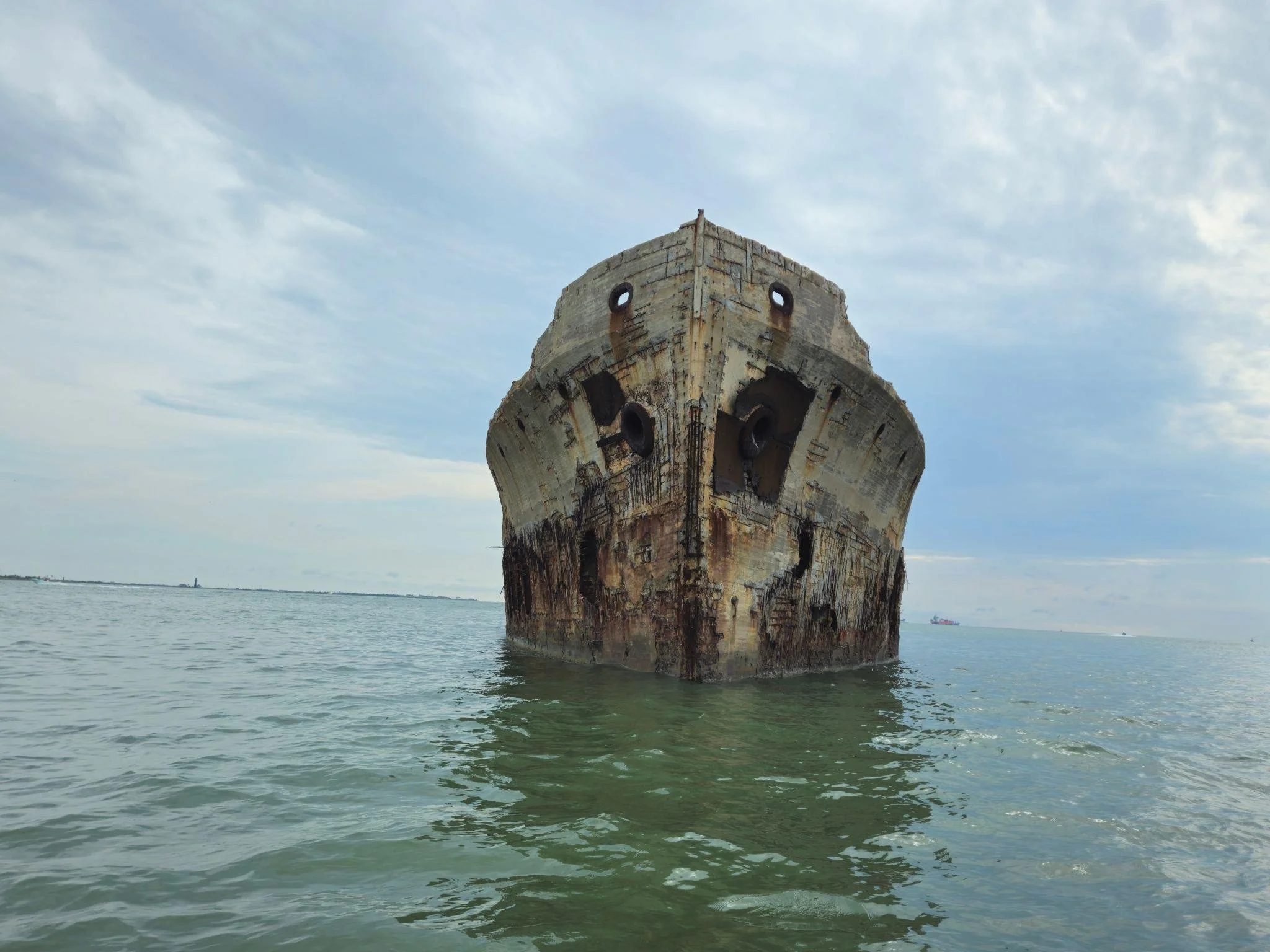
SS Selma — Galveston Bay, Texas