Behind The Battle To Save Cape May’s Historic Soul
Before Bruce Minnix could help rescue Victorian Cape May, somebody had to buy a book. “Nobody had the slightest political experience,” Minnix recalled in 1972. “Somebody ran out and bought a paperback on how to win elections.”
You have to love that anecdote. We owe a sizeable debt to people who looked at a threatened town, decided to take on City Hall and apparently needed to consult a instruction manual first. “Believe me, we studied that book,” Minnix told The New Yorker magazine. “It strongly advised talking to people in their kitchens, for example.”
Sound advice, right? Minnix was, by day, a Manhattan-based director of TV shows, most famously the Search for Tomorrow soap, a useful grounding, perhaps, for Cape May politics, in which he became embroiled.
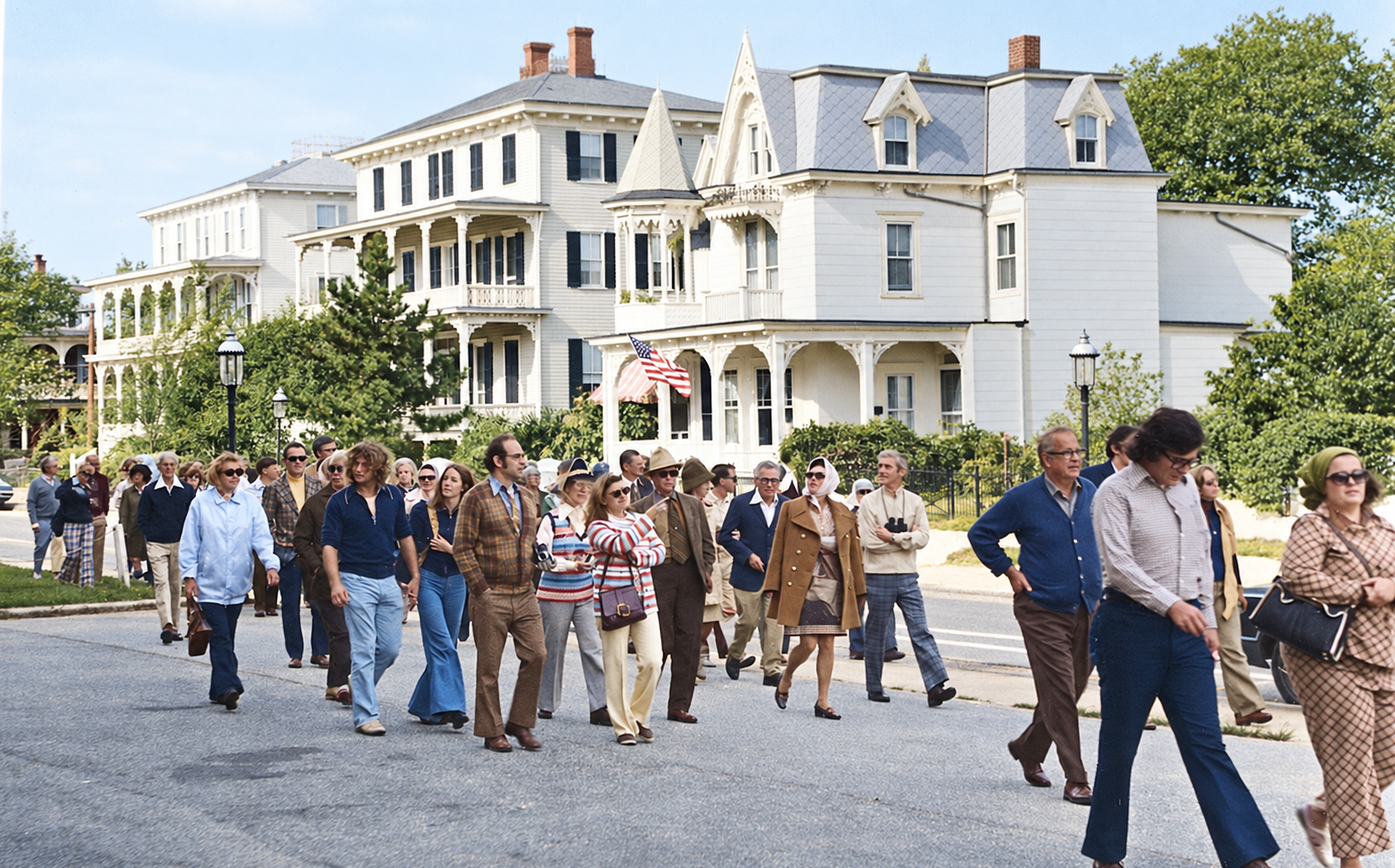
As Cape May MAC celebrates Victorian Weekend, October 9–12, it’s worth remembering how easily the celebration could have involved photographs of buildings we used to have. The porches, chimneys and wonderfully excessive rooflines survived because people fought for them — and sometimes even won.
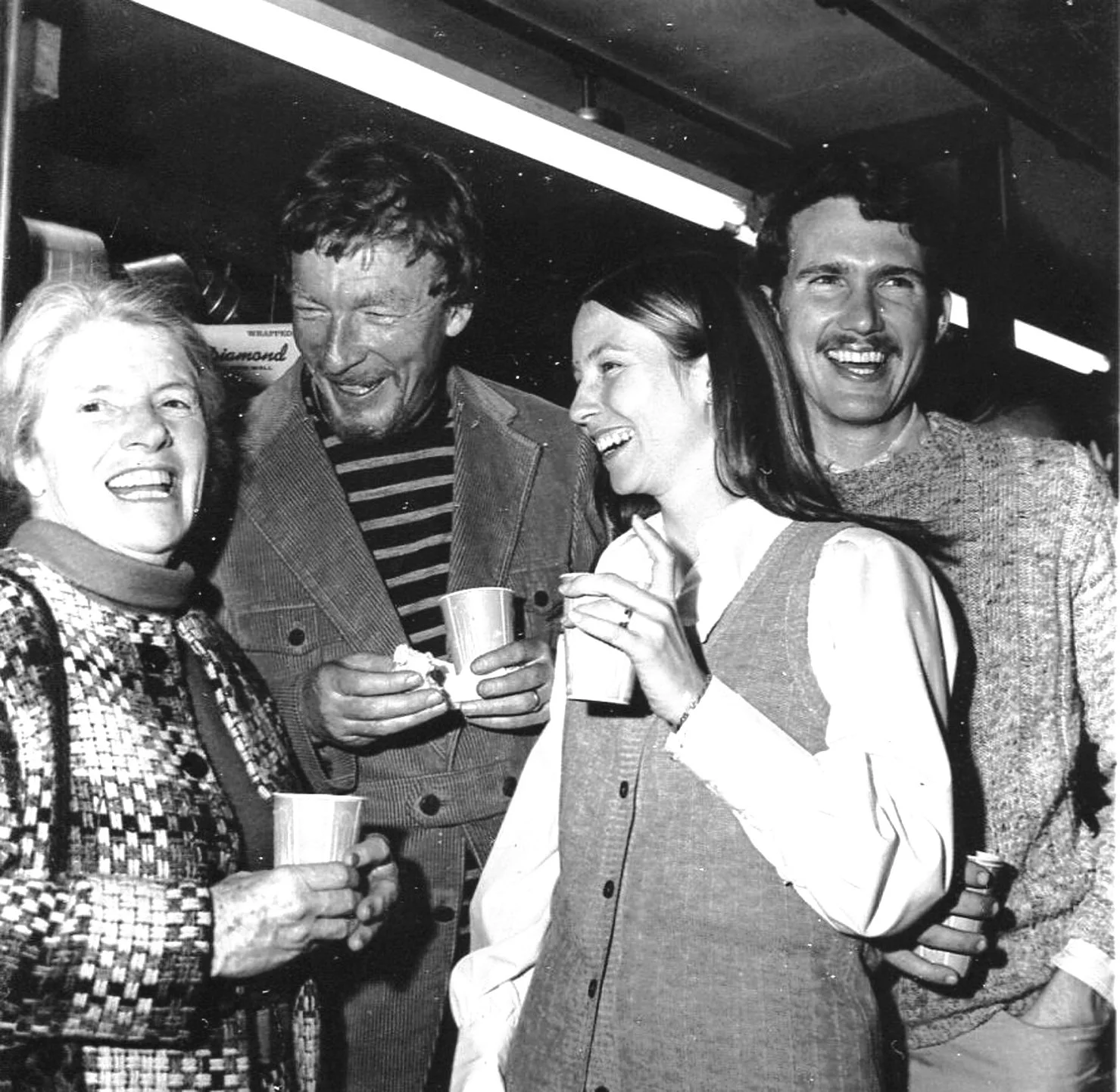
Bruce Minnix (second from left) after his 1972 election victory.
By the 1960s, Cape May’s aging hotels faced competition from newer resorts, and the Ash Wednesday Storm of 1962 battered an already vulnerable town. The boardwalk and Convention Hall were destroyed. Restoration required money, imagination and a willingness to believe visitors might find old buildings appealing.
There were believers already. Mayor Walter C. Wright and preservation advocate Dr Irving Tenenbaum had promoted Cape May’s historic character. But under Wright’s successor, Frank Gauvry, urban renewal offered a different prescription: modern accommodations and a Victorian-themed commercial district.
The plans included a 77-acre Victorian Village, with shopping and facades dressed up to look old. Meanwhile, the remains of demolished buildings (many of them in bad shape, it should be noted) were hauled to the elementary school grounds and burned.
Into this picture came Carolyn Pitts, an architectural historian with a strong attachment to Cape May and very little enthusiasm for watching it become firewood.
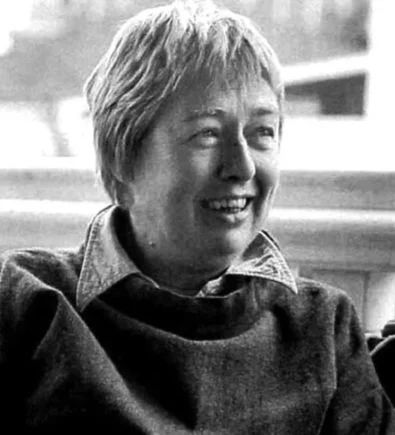
Carolyn Pitts was the prime mover in Cape May becoming a National Historic Landmark City, inspiring droves of visitors to enjoy its Victorian architecture.
Working under an urban-renewal subcontract, Pitts and her allies surveyed 600 hotels, houses and commercial buildings. The inventory revealed an extraordinary collection of nineteenth-century architecture. A requirement to document the town had become a powerful argument for keeping it.
“They called her brassy and bold,” preservation architect Hugh McCauley recalled of Pitts after her death in 2008. “The developers called her an obstructionist. They could not visualize the revival.”
Pitts could. With Edwin C. Bramble of the Cape May Cottagers Association and Willard Randall, she helped secure the historic district’s place on the National Register of Historic Places on December 29, 1970. Pitts called their alliance the “scholarly mafia.” They had worked without City Hall’s knowledge or approval.
Federal recognition didn’t automatically outlaw every private demolition. It did bring preservation review into federally assisted projects, giving opponents of destructive urban renewal a powerful tool. City officials even tried to have the designation reversed.
Meanwhile, one particularly important chapter of that architectural textbook was in danger of being torn out.
The Emlen Physick Estate, built in 1879, had deteriorated badly. Its Stick Style mansion, by Philadelphia architect Frank Furness, featured those marvellous oversized chimneys and an individuality that even Cape May could appreciate. Developers wanted to clear the property for tract housing.
In September 1970, the Mid-Atlantic Center for the Arts and Humanities was formed to save it. Its founders included Fred Kuhner, Bruce and Corinne Minnix, and Carolyn Pitts.
But this little volunteer organization was thinking beyond patching up one house and hoping for the best. First, though, it needed $90,000 to buy the estate. MAC’s founders pursued federal money, but the grant needed to pass through the municipality. The administration refused it, concerned about losing taxable property.
The preservationists’ response was to change the administration. Minnix and fellow reformer Jerry Inderwies won council seats in 1972. Minnix became mayor after finishing 18 votes ahead of his nearest opponent. Eighteen votes. Cape May’s fortunes turned on a margin smaller than a respectable dinner party.
In 1973, grant funding enabled the city to acquire the estate and lease it to MAC for restoration and public use. The arrangement provided for a lease of up to 99 years at a dollar annually, with MAC responsible for restoring and maintaining the property.
Saving a building gets the headlines; maintaining it consumes the following decades, on an endless cycle. MAC’s tours helped pay for restoration and maintenance. The Victorian house museum became a working demonstration that preservation could earn its keep.
Elsewhere, Tom and Sue Carroll helped establish Cape May’s bed-and-breakfast movement in 1971. Other owners restored houses for guests, restaurants and shops. The economic argument for keeping Cape May recognizable was taking physical form, one repaired porch and occupied room at a time.
The patient scholarship continued, too. Pitts recruited architects, including Hugh McCauley and Perry Benson, to measure and draw historic buildings. Their work became known as Operation Gingerbread.
“At the time, everything was pretty much painted white,” Benson recalled in 2018. Today’s exuberant colors can make it difficult to picture the town he encountered.
The next federal milestone came in 1976, when Cape May received National Historic Landmark designation.
Minnix would lose his reelection bid in 1976, and Blomkvest returned to City Hall as mayor, serving until 1988. But Cape May’s renaissance continued.
This year marks the fiftieth anniversary of the landmark designation. Which brings us back to the business of enjoying it.
Victorian Weekend began in 1973, while MAC was still entirely volunteer-run. By the time Michael Zuckerman became director in 1983, it had grown into four days, sustained by enough committees to populate a small convention. There were committees for house tours, finances and the fashion show. Even the fashion show’s cash bar had its own committee. I admire an organization that takes refreshments that seriously.
Over Zuckerman’s 37 years as director, MAC’s reach expanded far beyond Washington Street. It opened the Cape May Lighthouse to visitors in 1988, launched the Cape May Music Festival in 1990 and opened the World War II Lookout Tower in 2009.
Jody Alessandrine succeeded Zuckerman in 2020, spearheading a name change: the Mid-Atlantic Center for the Arts & Humanities became Cape May MAC, with the initials recast as Museums + Arts + Culture.
The Physick Estate still needs repairs, conservation and people who can explain why any of this matters. A rescued house doesn’t stop aging because somebody puts it on a brochure.
This year’s Victorian Weekend offers house and architectural tours, a crafts show and vintage baseball at Lafayette Field, played under 1864 rules. There’s also a beer trail. The committee responsible for refreshments would surely approve.
Enjoy it. But spare a thought for Kuhner, the Minnixes, Carrolls, Pitts, Bramble, Randall and everyone who followed. They left us buildings we can walk into, streets we can recognize and a town whose history continues to pay its way.
That paperback turned out to be a pretty good investment.
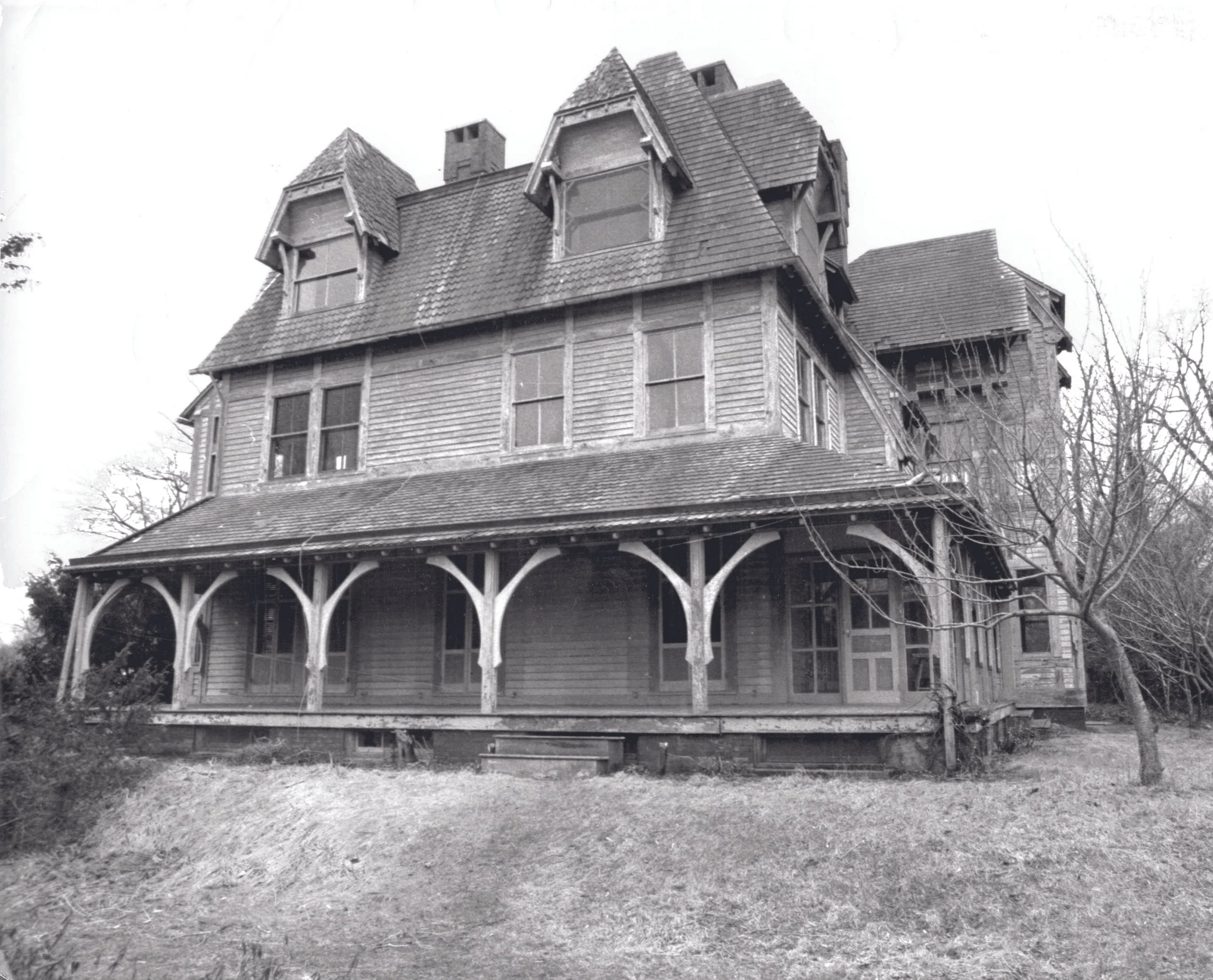
The decrepit Emlen Physick Estate in 1970, a lightning rod for preservationists.