
An Extraordinary Landmark Built By A Remarkable Man
Here in Cape May, we like porches, history, beaches, ghost stories and the idea that somewhere beneath and beyond the summer traffic and the real-estate listings there is still an older, stranger place humming along. But even in our famed historic district, the Chalfonte occupies hallowed ground. It isn’t just old. It is the oldest continuously operating hotel in town, which is a more impressive distinction than “historic” because plenty of things are historic once they stop being useful. The Chalfonte never stopped. It kept going.
It celebrates its 150th birthday this year and if you want to tell its story correctly, you have to begin not with wicker furniture or fried chicken or the agreeable creak of old floorboards, but with Henry Sawyer. He arrived in Cape May in 1848 at the age of 18, a carpenter, an immigrant. He was born Heinrich Sager in Bavaria, Germany, but by the time he washed up here, he had switched to a name more likely to prosper in a Jersey shore resort town.
Then the Civil War arrived and turned him into one of those men whose biographies seem almost offensively overplotted. Sawyer enlisted in a Pennsylvania regiment before New Jersey had one, then reenlisted with the 1st New Jersey Cavalry. He rose through the ranks and in 1863, at Brandy Station, was wounded and captured. He was taken south and imprisoned in Libby Prison in Richmond, VA, which was not a place designed to encourage long-term thinking. Then came the episode that followed him forever, the Lottery of Death, in which Union officers were selected by lot for execution in retaliation for Union actions. Sawyer’s name was drawn. After months of fear, stalemate and exchange negotiations, he was released and came home.
You can imagine how a man returns from something like that — either grateful and humble, or convinced that since fate already had its shot and missed, there is no point in living small. Sawyer appears to have chosen the second option. He moved into the hotel business with the same energy he had shown everywhere else. He became proprietor of the Ocean House in Cape May in 1867. In 1876, Sawyer opened the Chalfonte on Howard Street. At first it was planned as a boarding house. Two years later came the great Cape May fire of 1878, which wiped out 40 acres and destroyed around 2,000 hotel rooms. The Chalfonte survived — and Sawyer expanded. He added a long wing, a dining room, a two-story colonnade and more guest rooms, turning it from a boarding house into an actual hotel of consequence.
Sawyer sold the Chalfonte in the late 1880s and died in 1893, but he had planted the flag. Cape May is full of buildings people admire for being pretty, but The Chalfonte inspires something a little different. It inspires affection, which is a sturdier emotion. People forgive it for being creaky and weathered and not entirely interested in behaving like a modern hotel because it has earned the right.
After Sawyer, the hotel passed through several owners before landing, in 1911, with the Satterfield family of Richmond, Virginia. That was the beginning of its long middle age, the chapter that fixed much of its personality. The Satterfields ran the hotel for more than 70 years, and their influence still lingers in the place’s manners, food and mood. They brought a strongly Southern sensibility, and it became one of those wonderfully contradictory Cape May institutions: a Jersey shore hotel with a Southern accent.
Like many old places, though, the Chalfonte reached the stage where charm alone could no longer keep it upright. Old buildings require romance at a distance and money up close, and usually more of the second than the first. The next major chapter belongs to Anne LeDuc and Judy Bartella, who took over after the Satterfield era and spent decades preserving the place when preservation still meant actual labor rather than social-media admiration. Their stewardship helped keep the Chalfonte from slipping into that sad American category of beloved place everybody claims to cherish right after it gets demolished.
Then came the Mullock family, who bought the Chalfonte in 2008 and took on the complicated work of maintaining a place whose appeal depends partly on the fact that it does not feel wholly domesticated by the present. Bob and Linda Mullock were not strangers to Cape May hospitality, and under their ownership the trick has been to keep the hotel alive without sanding away the rough edges that make it the Chalfonte. That sounds easy until you consider what modern travelers expect, and what old hotels resist. The Chalfonte has always had to walk a narrow line between comfort and character. Lean too hard toward comfort and you risk turning it into just another polished pseudo-historic inn. Lean too hard toward purity and you end up preserving a hardship exhibit. The Mullocks, who married at the Chalfonte in 1981, have been trying to keep it in the sweet spot — old, usable, beloved, slightly improbable.
But for all the talk of owners and eras and architecture, the Chalfonte’s emotional center is probably not the porch or the lobby. It is the kitchen of the Magnolia Room restaurant. Or, more specifically, Helen Dickerson and her daughters, Dot Burton and Lucille Thompson. Helen, whose mother Clementine Young was a chambermaid at the hotel, began working in the kitchen in the 1920s and stayed for more than 60 years. Helen worked side by side with Dot and Lucille for more than half a century.
Just pause on that for a second. In an age when restaurants rebrand themselves every seven minutes and culinary reputations are built on social media clicks, these women stood over the same stoves, in the same hotel, for decades, turning repetition into institution. Dot died in 2015; Lucille in January of this year. The family culinary legacy continues with Dot’s son Jimmy Burton, who runs the kitchen at the Rusty Nail.
What they produced was the kind of food that defeats fashionable language. The hotel itself has the best phrase for it: “soul food with its Sunday clothes on.” The Magnolia Room never needed reinvention or explanation. It needed the fried chicken to be right. It needed the biscuits to rise. It needed the room to feel like a place where people had been fed properly for a very long time by women who knew what they were doing and did not need to advertise the fact. Helen, Dot and Lucille were not celebrity chefs. They were better than that. They were trusted.
Helen’s Southern fried chicken was featured on Tyler’s Ultimate on the Food Network and The Phil Donahue Show, but it had already been remarkable for years, which is why people in Cape May talked about it with the mixture of reverence and hunger usually reserved for saints and summer tomatoes.
Cape May is full of beautiful places. The Chalfonte is one of the few that seems to have kept its memory intact. It has outlived fashion, survived fire, absorbed families, fed generations, and come through all of it still recognizably itself. That’s something special.
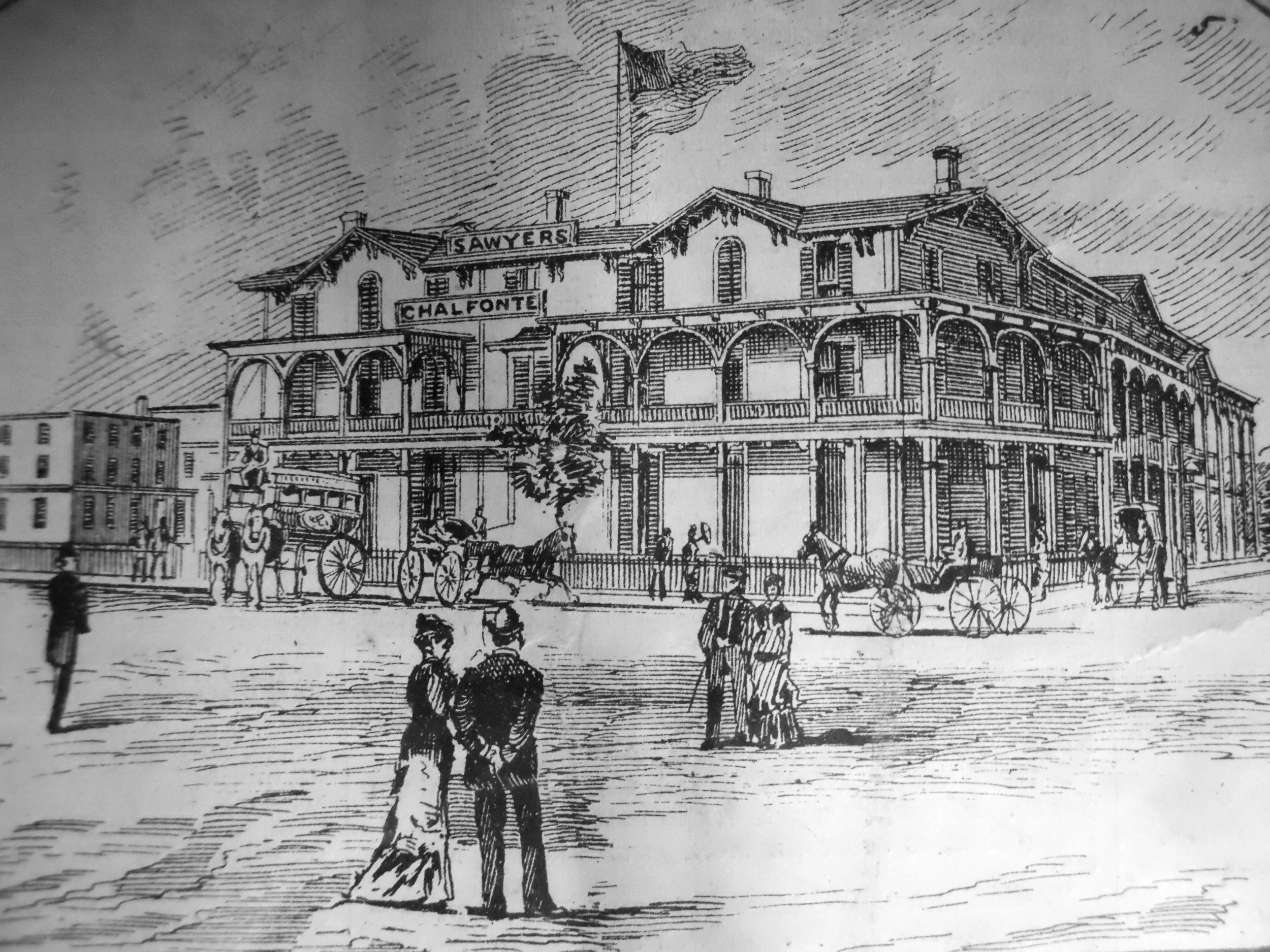
Following the 1878 inferno in Cape May, Henry Sawyer carried out a major expansion of the Chalfonte, transforming it from a boarding house into a major hotel.
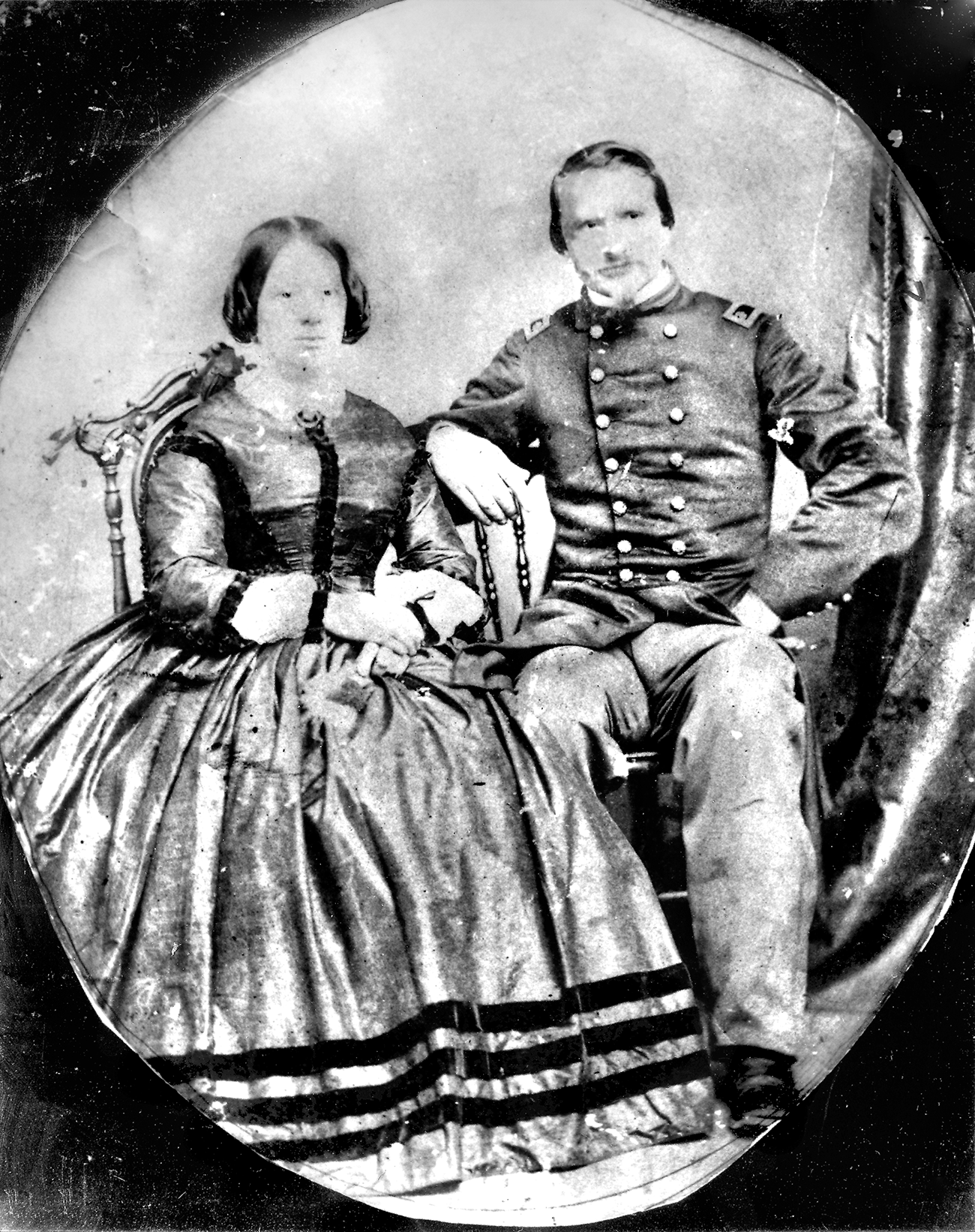
Henry and Harriet Sawyer, who with their three children lived in what is now West Cape May. Harriet appealed to President Lincoln to help free her husband from his pending execution.
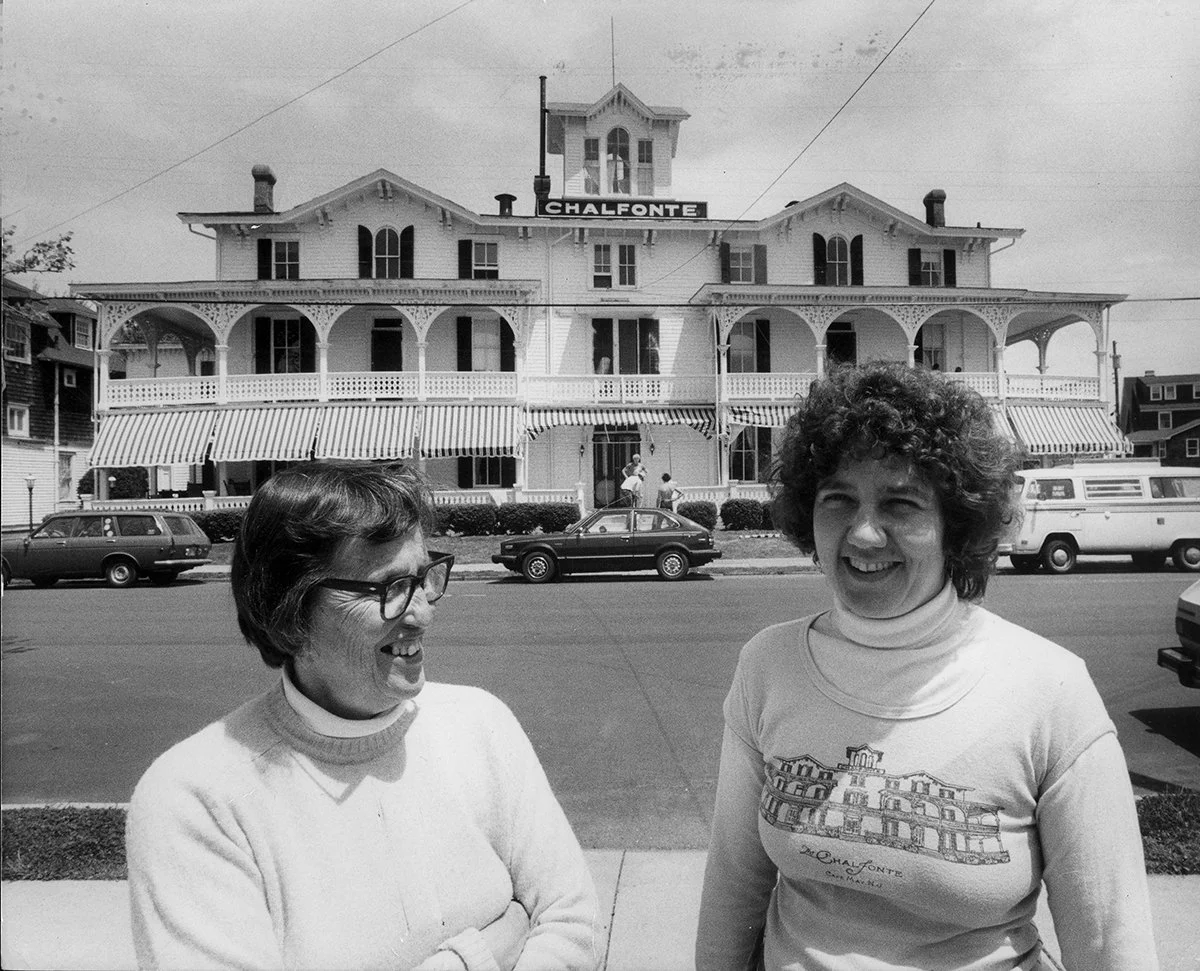
Anne LeDuc and Judy Bartella in 1982 after purchasing the Chalfonte from the Satterfield family.
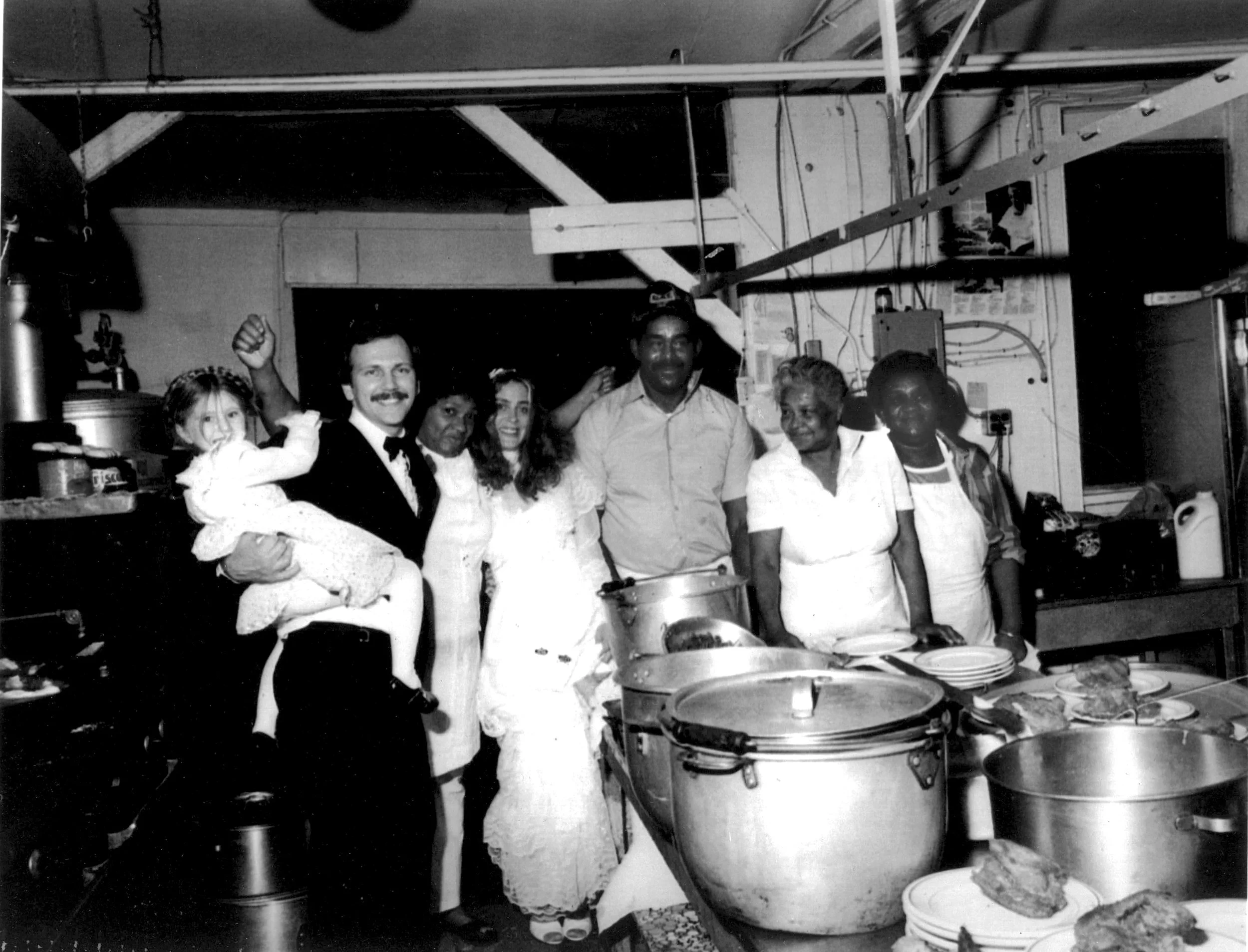
Bob and Linda Mullock had their wedding at the hotel in 1981. They bought the hotel in 2008.