
The Oyster Revolution
It’s hard to imagine a time when oysters were street snacks for the masses. To most of us today, they’re glamorous little baubles reclining on crushed ice, described by waiters as “briny,” “clean” or boasting a “cucumber finish” in a tone usually reserved for fine art or racehorses.
But in old Philadelphia, oysters were sold in taverns, on sidewalks, from carts and counters, guzzled in impressive quantities by folks who were not trying to impress anybody. Residents could wade into the Delaware River and pull oysters out of the water by hand. In fact, Philadelphians ate so many of them that the discarded shells wound up in roads and building materials.
Sixty miles south of Philadelphia, the three villages of Bivalve, Shellpile and Port Norris produced so many of these shelled marvels that Cumberland County was regarded as the Oyster Capital of the World. At the height of the industry in the 1920s, around 60 million oysters were harvested in the county, with 80 railroad cars a day transporting them to Philadelphia, New York and other major markets.
In those days, Port Norris was one of the wealthiest towns in New Jersey, with millionaires living side-by-side in stately Victorian houses lining the streets. Oyster Capital of the World… it sounds like the sort of thing an over-eager chamber of commerce intern might invent after too much coffee, except in this case it was true. The Delaware Bay shell trade made boomtowns out of muddy little communities. There were schooners, packing houses, shuckers, captains, wholesalers and enough wealth rolling off the shell piles to make the region one of the great oyster centers anywhere.
Then humans did what humans do. Rapid industrialization caused major pollution and destroyed oyster beds on a massive scale.
But now, as you will undoubtedly have noticed, oysters are back in a big way in Cape May County. They’re once again part of everyday local life — not just as delicate little things on a silver restaurant tray, but as one of the clearest signs that the Delaware Bay still works for a living.
Which is a wonderful thing all around since oysters matter not just because they are delicious (if you like that kind of thing), but also because they clean water, build habitat, support farmers, keep working waterfronts working — and tie this county to one of the oldest, richest stories in South Jersey.
The county is farming oysters at a scale that would have seemed improbable not all that long ago. Twelve of New Jersey’s 80 commercial aquaculture licenses operate here, a strong sign that this is not a boutique side hustle for a few people in fashionable rubber boots and denim overalls.
The oyster brands that trip off the tongue in these parts include Cape May Salts, Sweet Amalia, Ludlam Bay and Whale Creek, to name a few. Cape May Salts were the trailblazers, beginning in 1997, launched by Atlantic Capes Fisheries in partnership with Rutgers University as part of the effort to revive the state’s oyster industry. Atlantic Capes, founded by the late Danny Cohen, helped turn Cape May Salts into one of the best-known oyster labels in the state and a successful brand that proved Delaware Bay oysters could once again command real attention in the market.
Although the briny Cape May Salt flavor remains, they’re no longer operating under the Atlantic Capes umbrella. In 2024, the company licensed the brand to Brian Harman, a longtime general manager of the Cape May Salt farm and now running his own Cape Harbor Shellfish operation, based in Galloway.
Sweet Amalia, grown on the Cape Shore Flats, in Middle Township, has probably become the most-talked-about local oyster these days. Lisa Calvo, who founded the farm, came to the business through marine science and has spent years marrying hatchery logic to bay instinct. She delivered one of the truer lines ever spoken about her trade: “Every oyster, depending on where it’s grown, is going to pull its flavor from that place.” If you’ve been paying attention, you’ll likely know that Sweet Amalia has won nationwide attention for its oysters as well as for its restaurant, in Newfield, Gloucester County, which was named one of the top 50 in the country (not county) by the New York Times.
If the growers are the visible stars of today’s Cape May County oyster scene, Rutgers is the engine room. The Haskin Shellfish Research Laboratory in Green Creek handles breeding and broodstock, which are the mature adult oysters used for breeding and “parenting”, while the Aquaculture Innovation Center in North Cape May handles seed production on a commercial scale. (I think it’s fair to say that many folks don’t know about the existence of the North Cape May facility, adjacent to the canal, but it’s an impressive operation.) Together, those facilities help create the oysters that eventually wind up on local farms and, later, on restaurant plates.
Rutgers has been breeding eastern oysters since 1960, largely in response to diseases that devastated the old industry. Sean Towers, who leads the North Cape May operation, says that many of the local oysters people eat in Delaware Bay counties were “spawned and started in this facility.” Which feels very reassuring to me.
How does it work? First, Rutgers maintains mature parent oysters — broodstock — in controlled tanks. Those oysters are fed and coaxed into spawning. Eggs and sperm become larvae. The larvae are raised in filtered seawater and fed cultured algae. After roughly two weeks, they become spat, aka baby oysters. These little babies then move through nursery systems like downwellers and upwellers until they are seed oysters ready for growers to buy.
Then the farmers take over. At Sweet Amalia, Lisa Calvo says she buys hatchery seed at around two millimeters — basically a grain of sand — and grows it out in rack-and-bag systems over the flats. Other oyster farms use floating cages to nurse oysters along.
This middle section of an oyster’s life is all work — sorting, thinning, cleaning, tumbling, checking cages, timing the tide, dealing with predators, heat, ice, mud, fouling and all the other little insults nature throws at shellfish farmers for sport.
The Rutgers seed provides the genetic head start and the safe beginning. The farm provides the finish. One to two years later, depending on conditions, those oysters are harvested, washed, chilled, packed and shipped. Some go straight to chefs. Some go through wholesalers
So yes, the oyster on your plate may have begun life in a Rutgers tank in North Cape May, spent its adolescence in a mesh bag on a Cape Shore rack or a cage in Ludlam Bay, and then made its social debut with a lemon wedge and a little silver tray.
Maybe that is why oysters feel so right here. They connect everything. Philadelphia’s old appetite. Cumberland County’s grand shellfish past. Cape May County’s working present. Science. Farming. Restaurants. Water quality. Local pride. Oysters can move effortlessly between ecology seminar, dock talk and a nice little beer-paired happy hour.
A little history. A little science. A little labor. A little weather. And then, if all goes well, a very good lunch. Assuming, of course, that you like to slurp salty little gelatinous blobs. And, even if you don’t, along with bees, oysters might yet stop this planet from going up in smoke. So let’s raise a chilled glass of Cape May Oyster Stout to that!
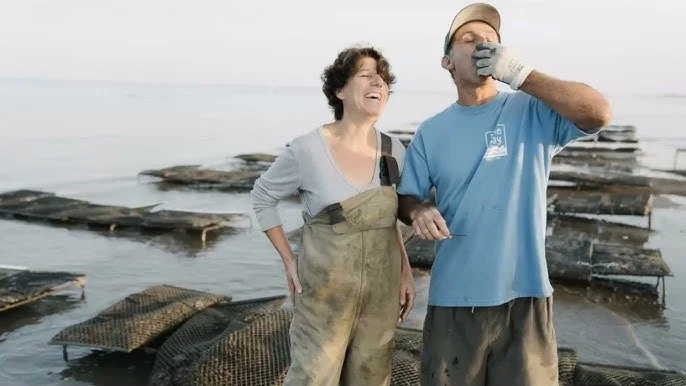
Lisa Calvo, left, of Sweet Amalia, is a nationally acclaimed oyster producer, with a farm in Middle Township and an award-winning restaurant in Newfield, in Gloucester County.
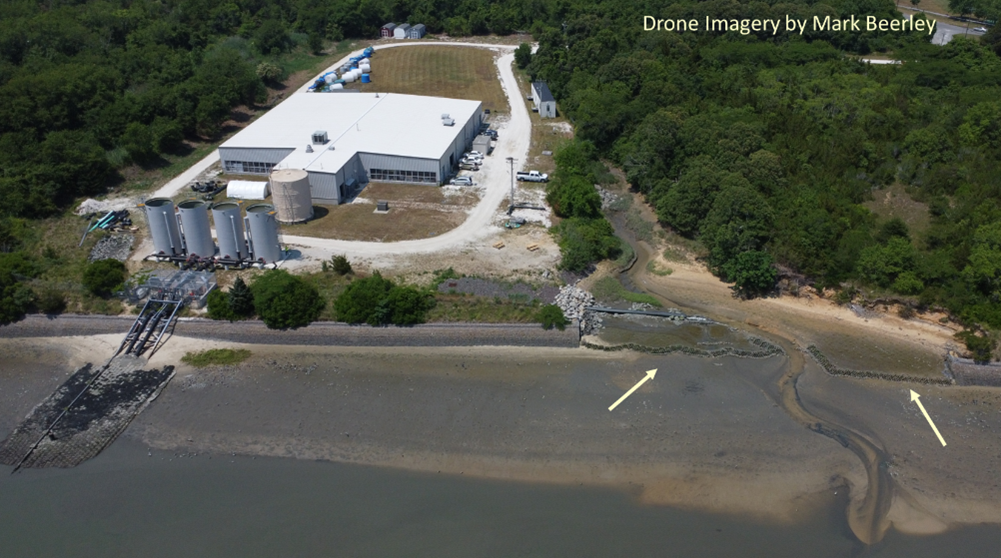
The Aquaculture Innovation Center in North Cape May, overlooking the canal, flies under the radar but is integral to the raising of Cape May County oysters. Photo by Mark Beerley
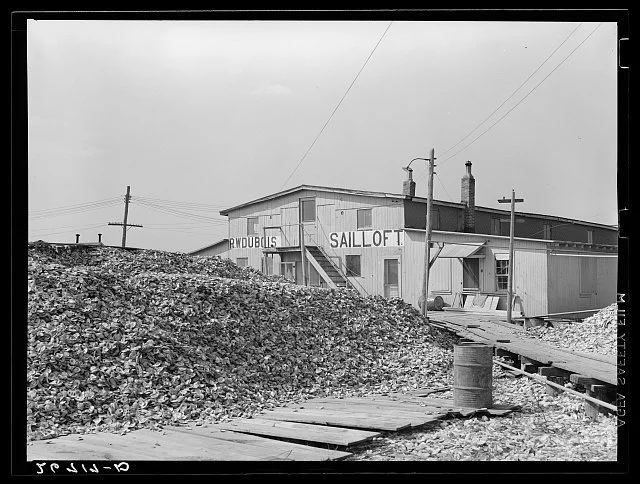
Pile of oyster shells at Bilvalve, New Jersey in 1938.
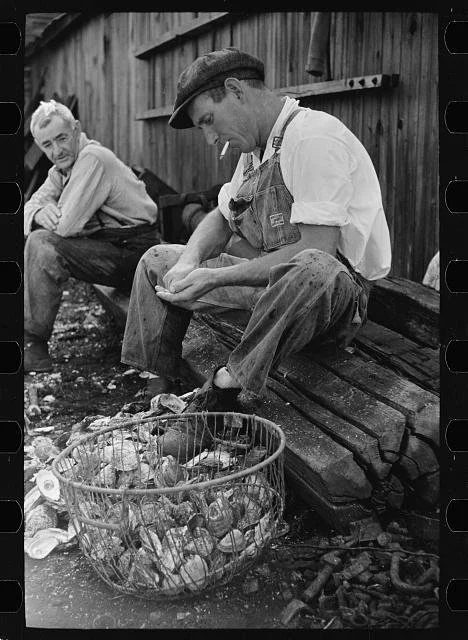
Shucking oysters at Bivalve, New Jersey.