The Troubled Life And Death Of A Cursed Cape May Goliath
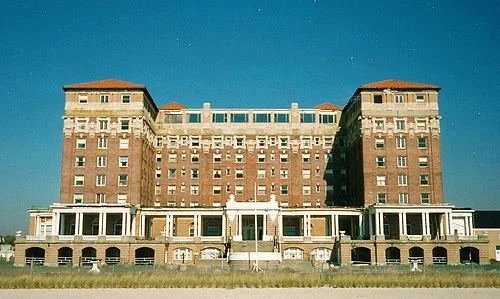
Toward the eastern end of Beach Avenue, large houses face the ocean as if they have always been there. But until 1996 this ground belonged to a building so enormous that it seemed less to occupy East Cape May than to supervise it: the Hotel Cape May, later the Admiral, finally the Christian Admiral. It had three names, two military careers, several financial crises, one preacher of operatic conviction and, at the end, a rescue battle far more complicated than the usual tale of greedy developers and a wrecking ball.
The story begins with a prospectus, which is where many dangerous ideas begin. In 1903 the Cape May Real Estate Company, led by Pittsburgh railroad man Peter Shields and backed by Pennsylvania money, including state senator William Flinn, announced “A New Cape May” on roughly 2,000 acres running east toward Sewell’s Point. There would be 7,500 building sites, streets as wide as 200 feet, a 102-foot ocean boulevard and boardwalk, a seawall, sewers, lakes, parks, a golf course, an amusement pier and a deep harbor of roughly 500 acres.
“Nothing has been left to chance,” declared the company. “On this site will arise a new, superb city.” Modesty appears to have been one of the few amenities omitted from the plan.
The developers understood that a new city required spectacle — and wealthy people arriving by train. On August 25-27, 1905, Cape May staged automobile speed trials on its hard beach. The advance billing promised the “fastest automobiles in the world.” The drivers included Henry Ford, two years into the Ford Motor Company, and Louis Chevrolet, still six years away from putting his name on his own auto empire.
This was not quite the two-car, wheel-to-wheel duel that later retellings prefer. It was a timed flying-mile meet. On the Saturday, Chevrolet covered the mile in 39 2/5 seconds and Ford in 39 4/5. So Chevrolet beat Ford by two-fifths of a second, but two other racers beat them both. On Sunday, Ford finished third and Chevrolet fourth. It was less Ford v Ferrari than a wonderfully beachy piece of resort promotion.
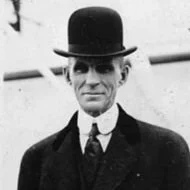
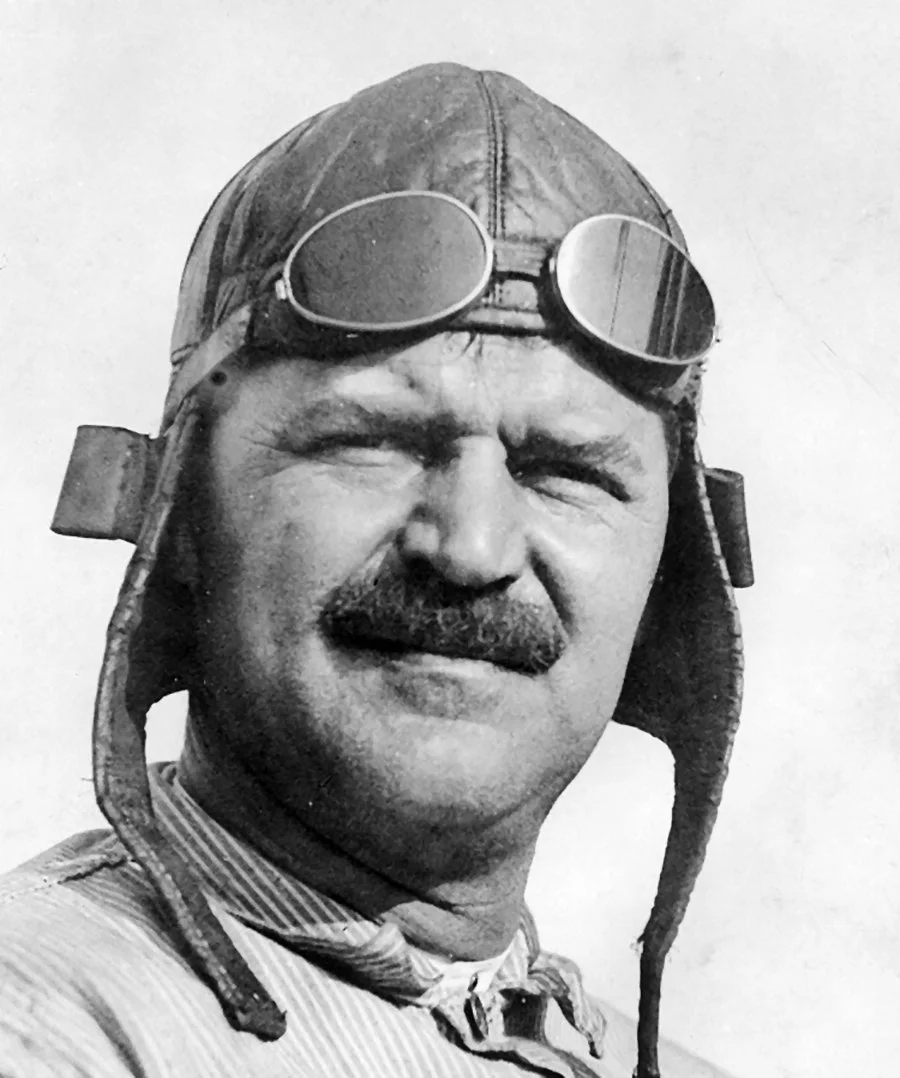
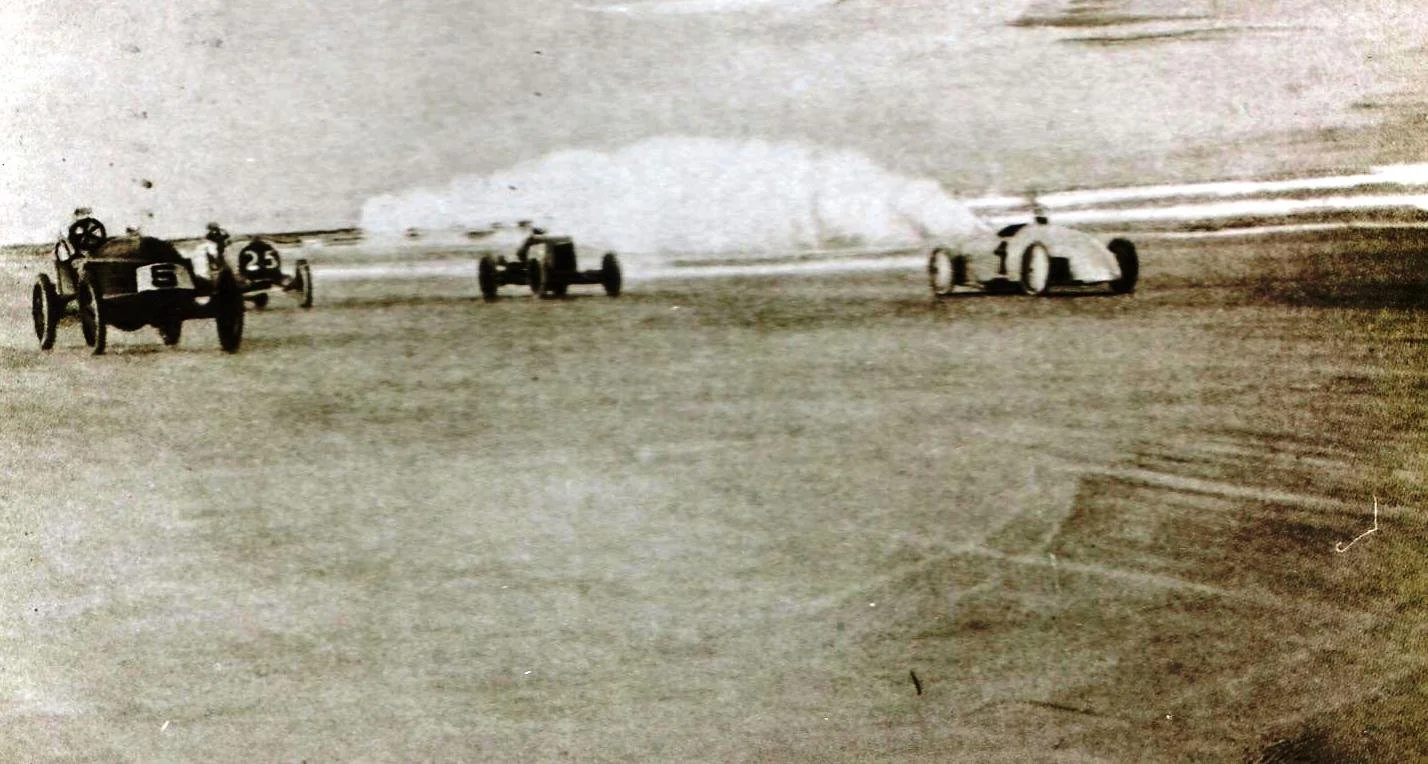
Top: Henry Ford (left) is shown racing on the beaches of Cape May against Louis Chevrolet (right), among others. Ford lost the race but did not, as local legend states, have to sell his car to pay his bill at the Stockton Hotel.
Ground was broken for Hotel Cape May in 1906. Then the central section partly collapsed, delaying the opening until 1908 — an omen with all the subtlety of a falling piano. Designed by Philadelphia architect Lloyd Titus, the eight-story Beaux-Arts colossus contained 338 guest rooms by the Army’s later count, 125 fresh- and salt-water baths, two great lobbies, electric lights, central heat and two elevators. It was Cape May’s largest hotel and the only major piece of the grand East Cape May scheme completed.
It was also a financial disaster. The hotel failed to show a profit after its first season, while harbor dredging consumed the development company. Ownership changed, land was peeled away from the property, and by the time America entered the First World War the building was in receivership. The dream of a new resort city had produced one immense hotel with leaky pipes and not nearly enough city around it.
Then the Hotel Cape May found its purpose. The Army leased it in January 1918 and turned it into General Hospital No. 11, with an authorized capacity of 750 beds. Enlisted men slept in tents behind the laundry. By October, 600 sick and wounded men were under treatment, and the monthly population remained between 500 and 690 until the summer of 1919.
These were not simply soldiers convalescing beside the sea. Cape May treated deafness, speech disabilities, eye and throat diseases, maxillofacial wounds, damaged peripheral nerves and injuries to the skull, brain and spinal cord. Deaf soldiers learned lip-reading and occupations; men with speech injuries received articulation and vocational training. The official Army history praised the climate and sandy soil, while recording that the “far-famed Jersey mosquitoes abounded in great numbers.”
The hospital closed on July 20, 1919, after wounded men stopped arriving from Europe. During the Second World War the Navy leased the hotel as part of its East Cape May base, using it as a hospital and convalescent center and adding the swimming pool.
Between wars, the hotel was purchased by the Admiral Hotel Company and renamed The Admiral, but by 1940 that venture had also failed. Then a real estate company planned to turn it into a retirement home, but didn’t. The Pennsylvania Company tried to revive it and gave up after a few years. The Masefield Company bought it in 1957, and promptly went bankrupt. Soon after, the Pennsylvania Bank and Trust Company bought it up on back taxes to the tune of $66,000 and left the building vacant.
Locals remembered a proper social hotel. “We’d get dressed up, dance to live music. It was nice,” recalled Jack Powell. But the finances remained grim, and in the early 1960s the old giant again stood in peril, just as Cape May itself was reeling from the Ash Wednesday Storm of March 1962.
Enter the Reverend Carl McIntire, who snapped it up after the storm. The Philadelphia Inquirer said the hotel would become a conference center for a “20th Century Reformation” movement. Volunteers descended to clean it, among them McIntire’s young grandson Norris Clark. It reopened for the 1963 season as the Christian Admiral.
McIntire was not built for quiet entrances. A Bible Presbyterian fundamentalist and ferocious anti-communist, he opposed liberal theology, evolution, sex education, fluoridation and racial integration. At the height of his influence, his daily radio program played on more than 600 stations. He called himself “the servant of the Lord in a very Holy Cause,” led a 14,000-person pro-Vietnam-War march in Washington and once staged a table-tennis protest outside the White House. His original Presbyterian credentials had been withdrawn in 1935 for “sowing dissension within the church,” which likely struck him less as a punishment than a validation.
At the Christian Admiral there was no alcohol, smoking or dancing, but there were summer Bible conferences, twice-daily speakers, a new rooftop dining room and, by 1967, a 600-seat auditorium. Shelton College later used rooms for classes and dormitories. McIntire also began acquiring threatened Victorian buildings. Another McIntire grandson, Curtis Bashaw, remembered that “people thought he was crazy.” Norris Clark said, “Nobody wanted these Victorian houses.” In 1963, McIntire bought two Lafayette Hotel cottages for one dollar each and moved them down Beach Avenue. He was difficult, theatrical, politically extreme — and decades ahead of fashionable opinion on the value of Cape May’s old buildings.
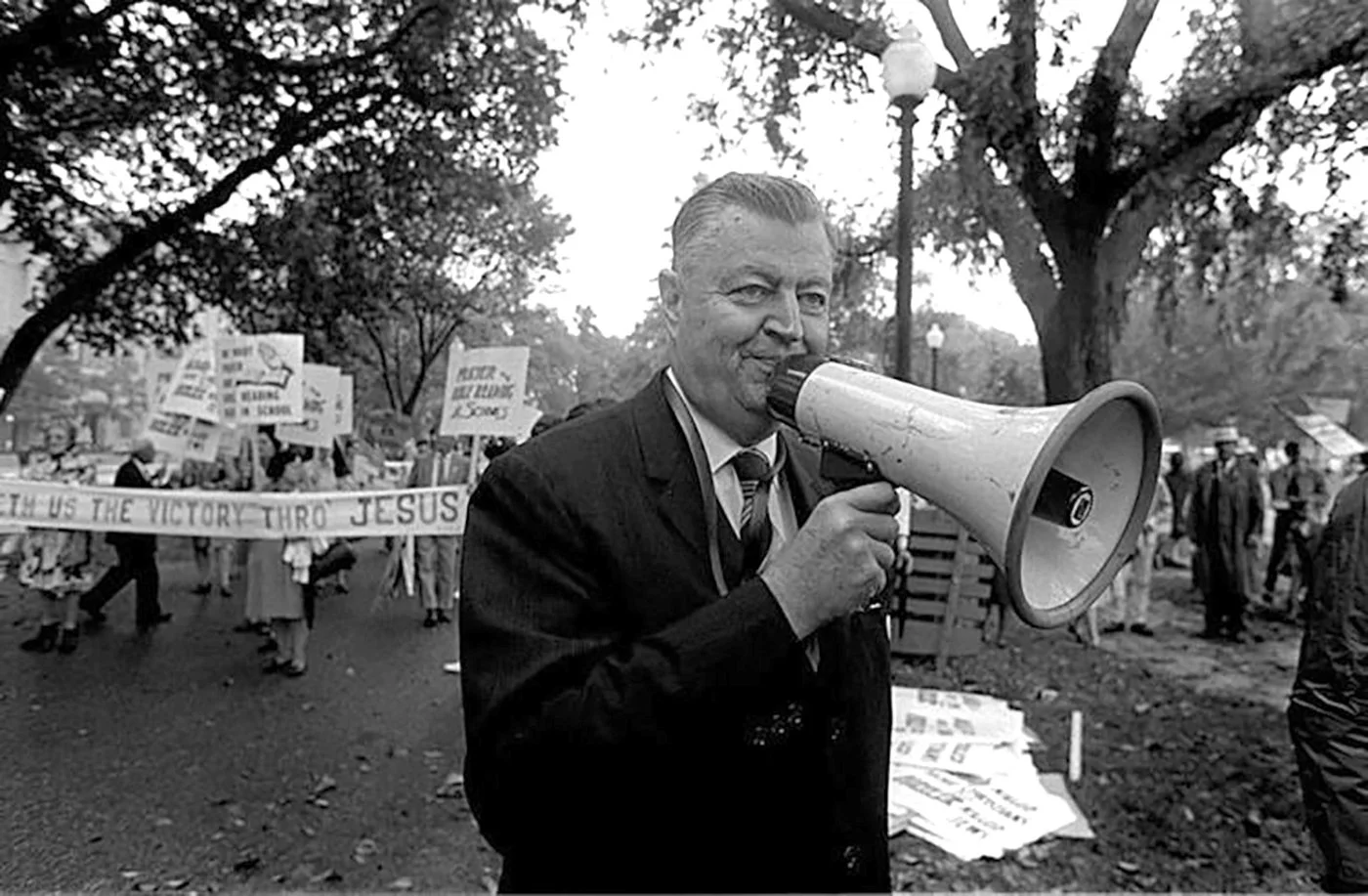
Reverend Carl McIntire ran the Christian Admiral as a bible study base, using former London double-decker buses to ferry guests between the Admiral and Congress Hall, which he also owned.
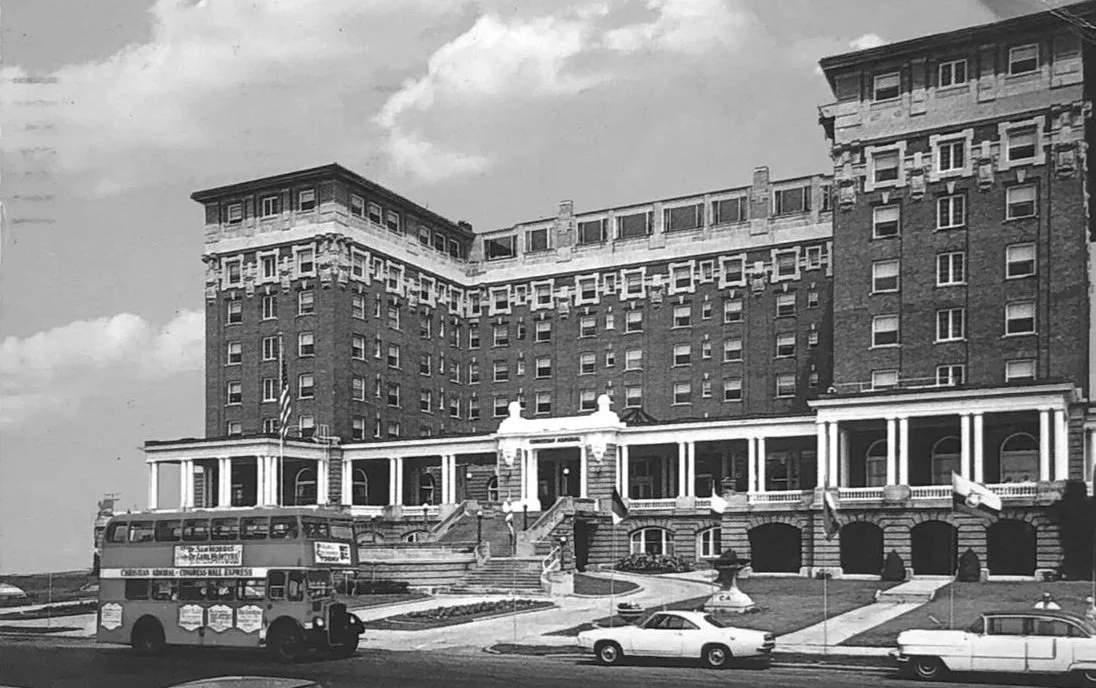
The pity is that he could save cottages but not, ultimately, the mammoth building at the center of his mission. His radio reach collapsed after an FCC fairness-doctrine fight; his Christian Beacon Press company entered bankruptcy in 1990. By then New Jersey’s post-1983 Uniform Fire Safety regime required existing high-rise hotels to be upgraded. Only the Admiral’s lower two floors received sprinklers in 1990. The upper floors still needed them, and the hotel was closed for building violations in 1991.
The roof was failing, the upper stories were open to weather, water had penetrated every level, mechanical systems were severely deteriorated, and steel embedded in the masonry had corroded. Parts of the eighth floor and roof deck had already been removed for safety in 1988. One engineer’s estimate put replacement of the roof alone at up to $70 million before restoration of the rest of the hotel! The new fire requirements forced the issue; nearly nine decades of water, salt, weak finances and deferred work made the answer ruinous.
McIntire’s grandsons, Curtis Bashaw and Norris Clark, spent years seeking a viable future while the family operation was restructured, but no buyer could make the numbers work. These were not men indifferent to preservation: Bashaw had restored the Virginia Hotel, and both grew up inside their grandfather’s Cape May campaign. In the bankruptcy resolution, the Christian Admiral was sacrificed to pay creditors; Congress Hall was saved and reopened after a $25 million restoration.
Salvage began in October 1995, followed by demolition through the winter. Crowds watched from Beach Avenue as the building was dismantled section by section. On March 25, 1996, cables pulled down the last tower. Demolition foreman Alex DePalma offered a fitting final review: “This is the windiest city I’ve ever been in.” The site was divided into single-family lots, producing the houses you see today.
Cape May lost an irreplaceable landmark. It did not lose it because nobody cared, or because two grandsons woke up eager to erase their grandfather’s work. They fought for an answer and met a building that finally needed to die.