
The German U-Boat That Surrendered In Cape May
Linger on the Cape May beach on a calm evening, salt in your nose, gulls in your ears, and there’s the faint sense that the world, despite all available evidence, may be in decent shape. Which is why the story of U-858 fascinates me. It is not just that a German submarine surrendered at the end of World War Two. It is that one of the final dramatic moments of the Atlantic war played out right here, within sight of a place better known for verandas and vacations than the collapse of the Third Reich. It’s a jarring juxtaposition.
In the spring of 1945, that submarine surfaced, flew the black surrender flag and drifted into history with the air of a villain arriving a scene too late. Commanded by Captain Thilo Bode, U-858 became the first U-boat to surrender to the US after Germany’s capitulation. The formal surrender was completed at Lewes, Delaware, on May 14, 1945, but the drama belonged every bit as much to Cape May because the escorted submarine was brought into waters here before her crew was transferred and put ashore at Fort Miles.
Now let’s rewind to 1942, when German U-boats came hunting and found the East Coast embarrassingly exposed. Ships sailed in waters that suddenly looked less like commerce routes and more like targets. Tankers burned within sight of land. Wreckage washed ashore. The war stopped being something happening “over there” and became something that glowed ominously beyond the beach. Cape May, because of its position by the Delaware capes, sat on the edge of a strategic corridor. This was an artery leading toward Philadelphia, industry and naval infrastructure farther north. If German submarines could menace this stretch, they could menace something important.
Cape May had already learned that lesson the hard way. In the early hours of February 28, 1942, the destroyer USS Jacob Jones was torpedoed off our coast after traveling from New York harbor. A German submarine fired a spread of torpedoes and struck the destroyer’s port side. The ship stayed afloat for a short time before going down. Of the 145 men aboard, only 11 survived.
That is why the appearance of U-858 three years later mattered so much here. When people in Cape May looked out at that surrendered submarine in May 1945, they were not merely observing a military footnote floating by under escort. They were looking at the humbled end of a threat that had already bloodied their own waters. The same sea that had swallowed the Jacob Jones was now delivering one of Germany’s U-boats in defeat.
U-858 had left Norway on March 11, 1945, one of 74 boats assigned to Germany’s 33rd flotilla. By then the war had entered its exhausted final act. Whatever swagger had once attached to the U-boat arm had long since drained away into attrition, desperation and collapsing odds. Germany was still sending submarines into the Atlantic, but by the spring of 1945 the enterprise felt less like strategy than habit.
The U-Boat commander, Thilo Bode, makes for an oddly unglamorous central figure in a story like this, which is perhaps one reason the episode feels more believable than cinematic. Bode was born in Bochum in 1918, joined the Kriegsmarine in 1936, transferred into the U-boat arm, and later commissioned U-858 at Bremen in September 1943. He made two patrols totaling 173 days at sea.
For all the dark aura surrounding German U-boat commanders, he appears to have sunk no ships and damaged none. In a war full of men remembered for sending other men to the bottom, his best-known act became surrender.
Germany’s surrender order reached U-858 on May 8, 1945. The next day the submarine established contact with American authorities. On the morning of May 10, USS Carter and USS Muir met her; later that day USS Pillsbury and USS Pope took over, placed a US Navy prize crew aboard and removed roughly half the German crew, including most of the officers.
American sailors had to ensure the submarine stayed afloat long enough to be handed over properly since German sailors had opened undersea hatches in an apparent attempt to scuttle the vessel. Even in defeat, the business of bringing in a U-boat was not as simple as accepting car keys from a chastened driver.
The escorts brought U-858 toward a rendezvous point about 40 miles off Cape May, and by the morning of May 14 the submarine had arrived in the waters off our cape. From there, the formal surrender was accepted, crew transfers continued, and the vessel was directed toward the Delaware side of the bay.
What a sight it must have been. For more than three years, U-boats had existed for most Americans as rumors made lethal: torpedoes in the dark, flares on the horizon, names added to casualty lists. Now one of them was visible in daylight, not as a hunter but as a prisoner. Locals were able to see it firsthand, with Navy and Coast Guard vessels around it and commercial fishing boats and private craft watching from the sides.
The U-Boat crew became prisoners of war and were sent to Fort DuPont in Delaware, where they remained for about a year before later being transferred to England. The submarine was brought to anchor near Cape Henlopen before being moved to the Philadelphia Navy Yard. The practical business of processing prisoners and securing equipment quickly followed the moment of spectacle, as practical business always does.
After the war, U-858 was stripped of anything considered useful and used for target practice off the New England coast. Eventually it was sunk and disappeared into the Atlantic.
Locally, that wasn’t the end of the story. In 2001, Joe Salvatore, who operates the Aviation Museum at Cape May Airport, wrote to Thilo Bode, the former U-boat skipper. Joe wanted him to come over and deliver a lecture at the museum. Bode said he was too old, but suggested Joe contact the youngest member of the crew, who was now a police officer in northwestern Germany.
“I contacted him,” Joe told me. “He said okay, if you fly me over first-class on Lufthansa, and I said okay!”
He delivered a fascinating lecture on his U-Boat experience (overall, “it stank”) to a packed museum and was later taken to dinner by a group of local German-Americans.
A fitting and pleasant end to a compelling story. (PS: Get over to the Aviation Museum and see more details on this story, and a lot more besides.)
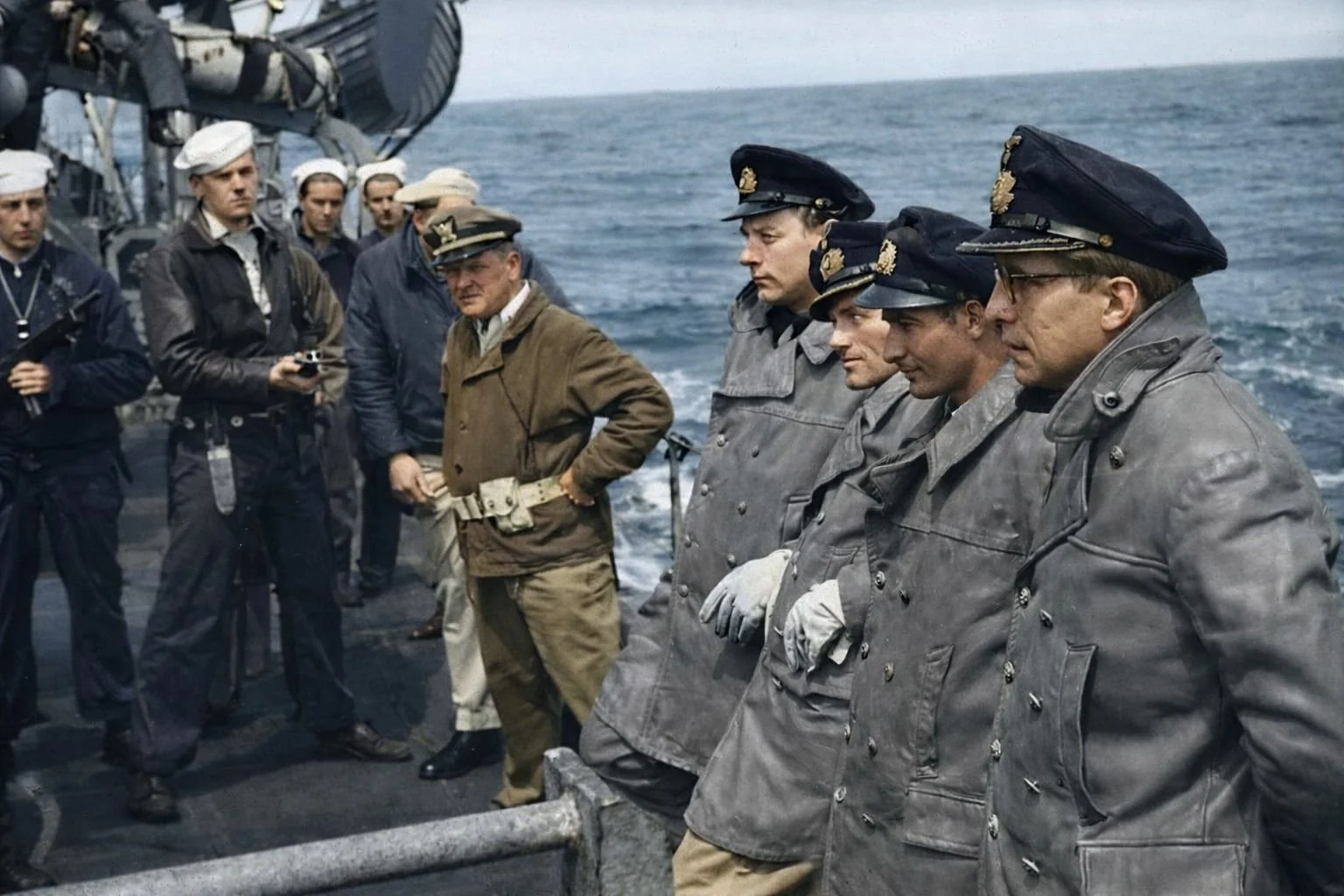
Officers from the German U-Boat U-858 are guarded by the US Coast Guard after their surrender off the coast of Cape May.
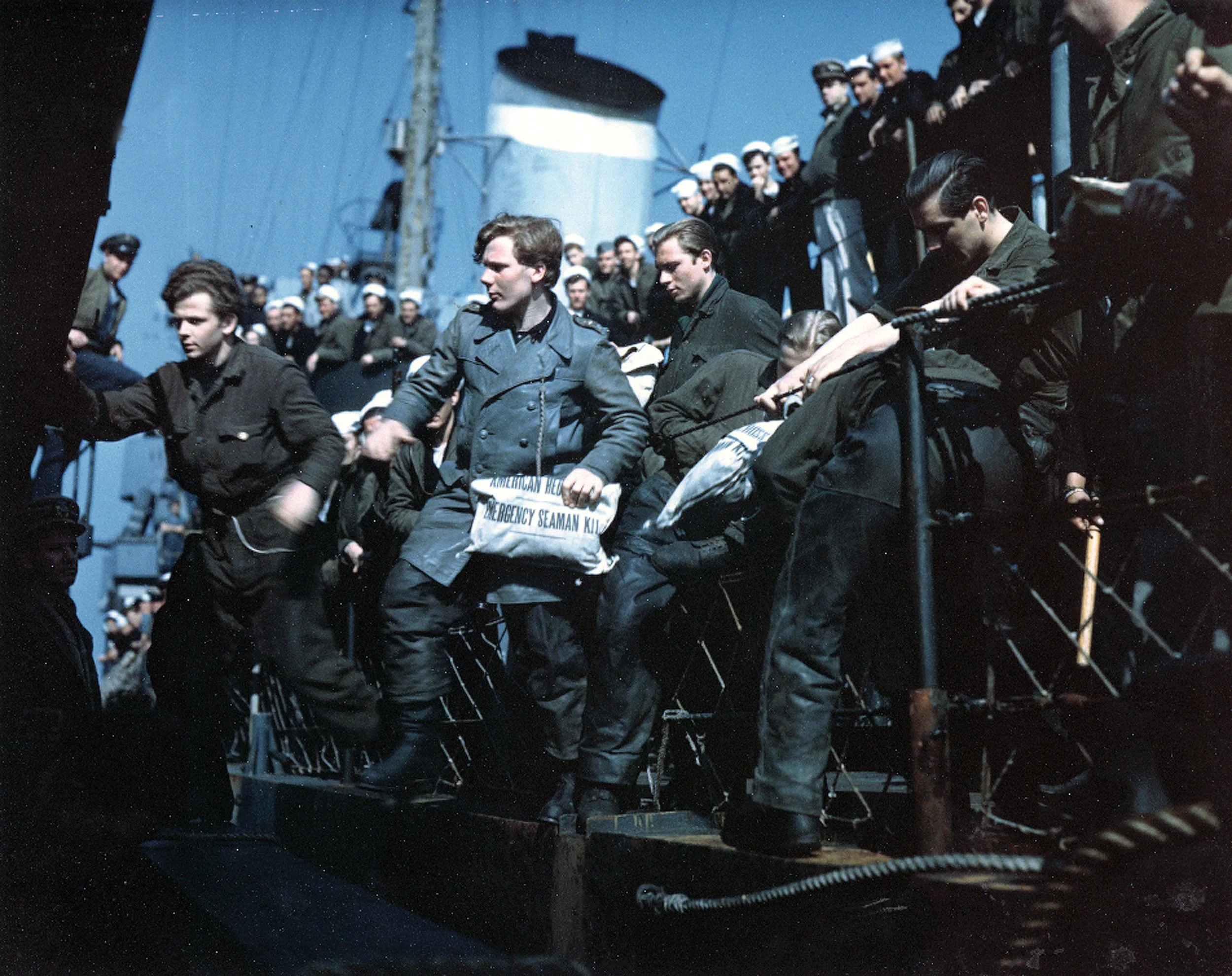
Sailors from the German U-boat U-858 surrendered to Allied Forces on May 10, 1945 just off the coast of Cape May.
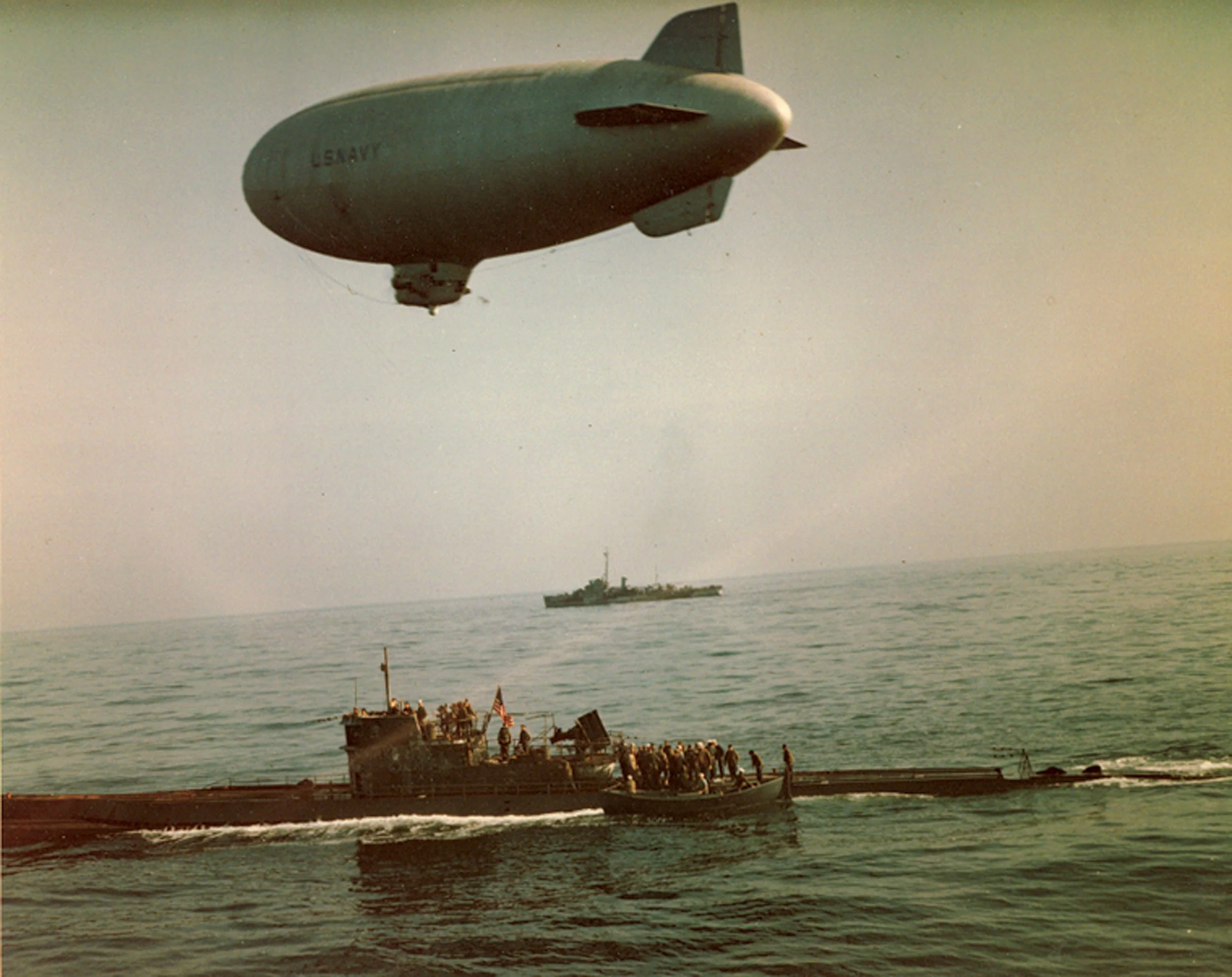
The moment of surrender for the U-boat and its commanding officer Thilo Bode, who, decades later, would return to Cape May to discuss his experience.