
The call came in the way these calls always come in this time of year around these parts: there’s a seal where there should not be a seal. Not “there’s a seal on the beach,” because that wouldn’t qualify as news in March. No, this was more in keeping with New Jersey’s standards of wildlife management, which is to say: a baby gray seal had hauled herself off the beach in Harvey Cedars, LBI late February, and fallen asleep in the middle of the road.
Traffic stopped. People stared. Phones came out, obviously. Because nothing says modern civilization like seeing a wild animal in obvious distress and immediately thinking: this will do numbers on Facebook.
To be fair, the seal was highly photogenic. Baby gray seals have that big-eyed, blubbery, permanently astonished look about them, as if they’ve just learned what a mortgage is. This one was underweight, exhausted and, judging by her choice of napping location, perhaps not yet operating at peak strategic capacity.
Which is where the Marine Mammal Stranding Center enters the story. The Brigantine-based rescue team came up, took charge, and got the pup to rehab, where she could do what so many of us would like to do in late winter: lie down indoors, be fed by people who know what they’re doing, and avoid the public.
And if you think this was a freak occurrence — some one-off Jersey Shore fever dream involving a seal with poor boundaries — it was not. The Stranding Center gets these calls every season. Seals in roads. Seals in driveways. Seals in parking lots. Seals in generally inconvenient locations.
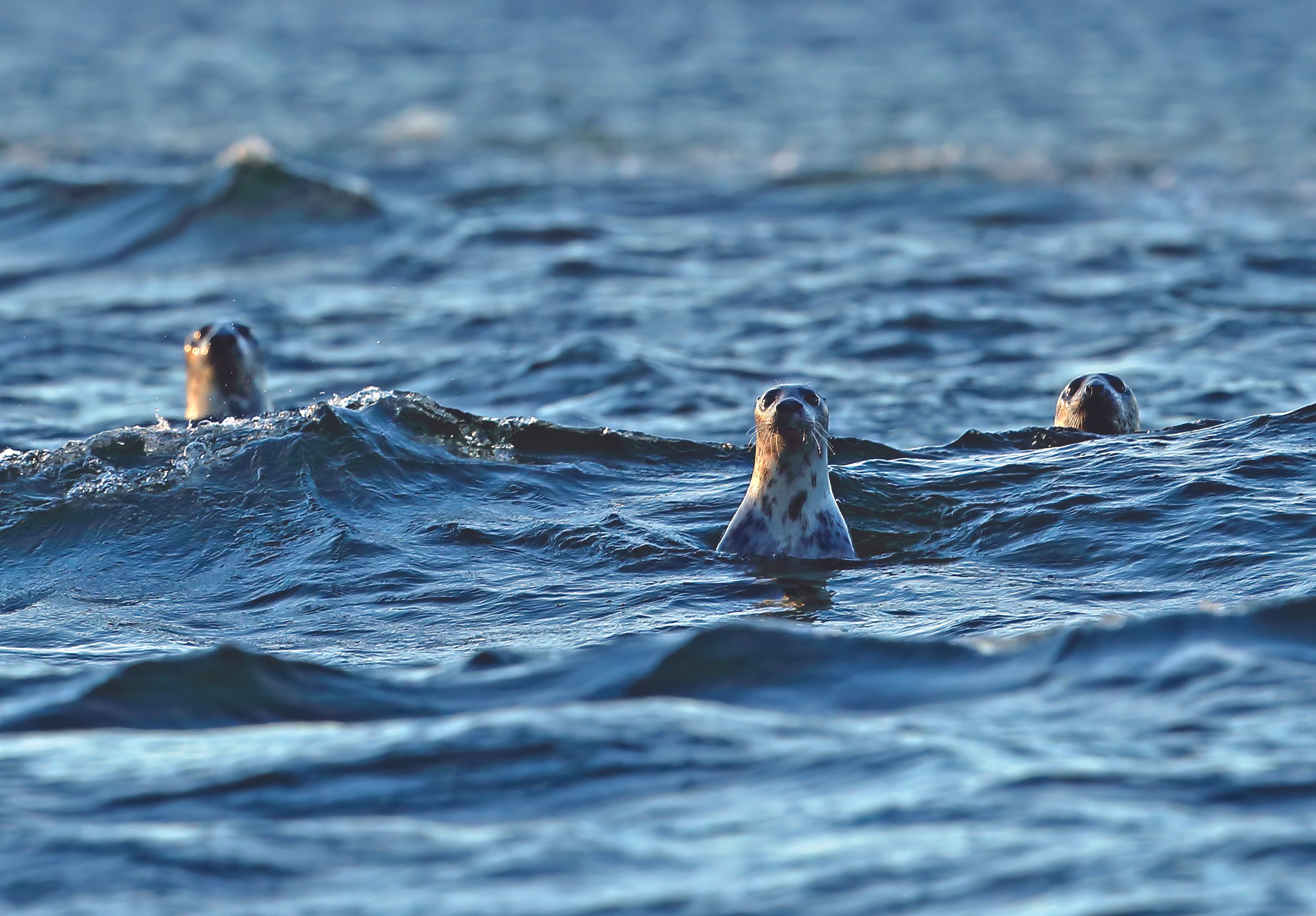
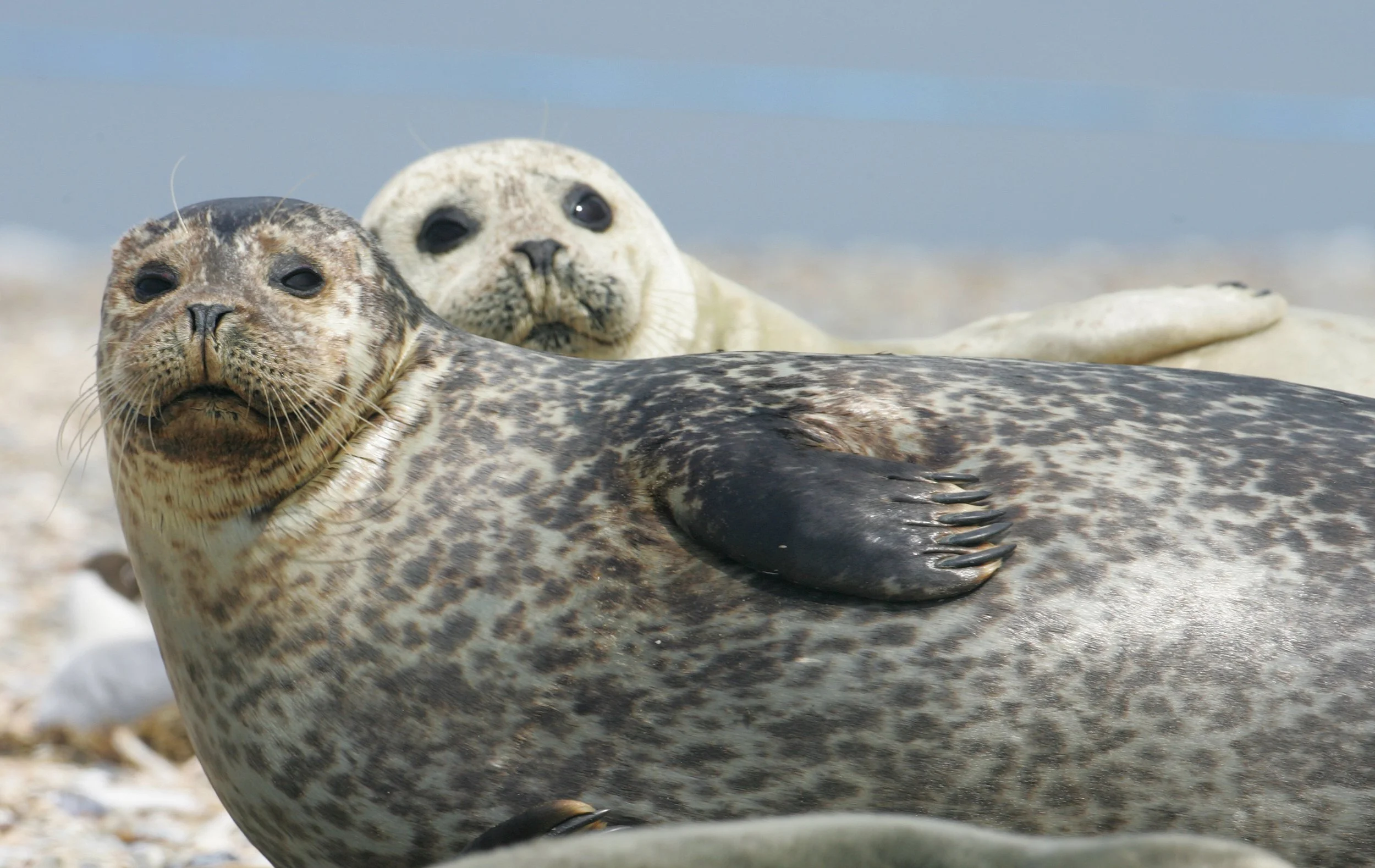
Because, down the shore, late winter and early spring is seal season. Most of the creatures we spot along our stretch of shore are harbor seals and gray seals. They spend much of the year farther north — New England, Canadian waters, all those places where people own serious parkas and use the phrase “ice conditions” in everyday conversation. But as the colder months settle in, and especially in late fall through early spring, younger animals in particular push south. Why? Food, for one thing. Resting spots, for another.
Also, I suspect, if you’re a juvenile seal trying to figure out life, the Mid-Atlantic has a certain off-season affordability. Our waters make sense for them. There are fish. There are protected places to haul out. There are stretches of beach in winter that are, by shore standards, practically serene. And by March, a lot of the younger seals are newly weaned, still learning how to fend for themselves, still very much in the marine equivalent of that phase when a college freshman calls home to ask how long chicken can stay in the fridge.
This is all especially true of gray seal pups, who are adorable in that dangerous way all babies are adorable, where the cuteness disguises the fact that they are one bad decision away from disaster. Their mothers nurse them for a remarkably short period of time, and then — this being nature, which is often beautiful but almost never gentle — that’s basically it. Best of luck with the Atlantic Ocean, and watch out for sharks.
Over the years, interactions between people and seals have produced an anthology of weird little stories.
There are the soft-hearted ones. The police officer standing watch over a pup until the Stranding Center arrives. The public works crew redirecting traffic around a seal who has shown no interest in redirecting itself. The beach walkers who keep a respectful distance and call the hotline. The volunteers who ferry animals, answer phones, set up barriers, explain for the 5,000th time that no, you may not pet the seal.
Then there are the stories that make you lose faith in civilization. People trying to drag seals back into the surf because “it looked stranded,” as though the seal had crawled out of the ocean for a nap merely because it had forgotten where the ocean was. People inching close for selfies. People letting dogs run up to hauled-out animals because their dog is “friendly,” a phrase that has justified more idiotic human behavior than perhaps any other in the English language. People pouring water on seals, which is a bit like seeing me lying on a towel in July and concluding that what I need is a garden hose to the face.
The problem, if you want to call it that, is that seals are often very bad at looking okay.
A perfectly healthy seal lying on a beach can appear deeply ill or recently deceased. They breathe dramatically. They lounge with theatrical intensity. They throw sand around. They assume body positions that suggest either mortal peril or a Pilates class gone very wrong. (I can relate.) Their faces do not help. They have those mournful, old-soul expressions that seem to say, “I have seen things,” even when what they’ve most recently seen is a sandbar and a confused labradoodle.
This is why the official advice is so simple, and why it must apparently be repeated forever: If you see a seal, back up. That’s it. That’s the central lesson. You have now completed Seal Awareness 101.
Keep your distance. Fifty feet absolute minimum, but ideally at least 150 feet. Leash your dog. Do not touch the seal. Do not feed the seal. Do not pour water on the seal. Do not try to become part of the story. If the animal appears injured, entangled, dangerously thin, bleeding, or has chosen to nap in a place better suited to a Honda Civic, call the Marine Mammal Stranding Center’s 24-hour hotline on 609-266-0538
So if you are out walking Higbee or cruising along one of those quieter beach stretches where March still feels half-owned by the birds, and you spot a sleek whiskered shape stretched out on the sand like it has personally paid the taxes on the place, do the correct thing.
Enjoy the sighting. Keep the dog away. Resist the urge to become the seal’s publicist. Call the Stranding Center if help is needed.
And otherwise let the animal be. Because the seal does not need your commentary. It does not need your hydration strategy. It does not need your child poking it with the sort of curiosity that usually ends with a tetanus shot.
What it needs, more often than not, is a little peace, a little space and a coastline that remembers it is not ours alone.
As for that seal pup that plopped down in the middle of the road in Long Beach Island? As of this week, she is recovering at the hospital in Brigantine, eating cut-up fish, and no longer requiring tube feeding.
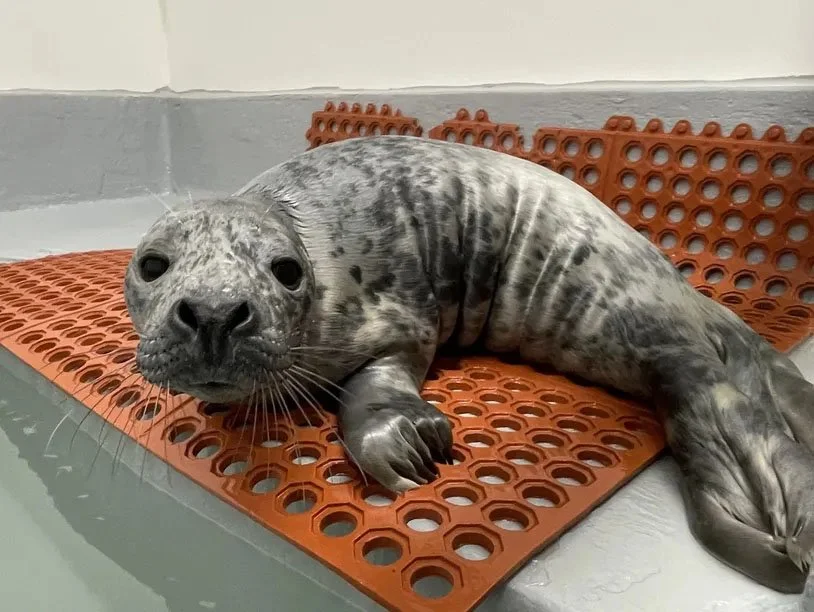
MMSC's Stranding Team transported this seal to the Marine Mammal Stranding Center in Brigantine.