
Gulls get a bad rap. In Shore towns, they’ve been categorized as Public Enemy Number One. Ocean City has gone so far as to put trained falcons and hawks on boardwalk patrol, the avian equivalent of hiring bouncers to protect tourists and their fries. Disney took aim by depicting the gulls in Finding Nemo as a dumb, greedy cult — an appropriate foil to the helpful, empathetic pelican with an interest in dentistry.
But is this spectacularly awful PR accurate? “Gulls are gregarious so they’re not afraid to get in your face for something they want,” says David La Puma, a local birding expert and a former director of Cape May Bird Observatory. “But, man, they are stunningly beautiful if you take the time to look at them, and they really are fascinating.”
Sure, gulls swipe our sandwiches and fries. And, yes, they occasionally leave unwelcome... gifts, let’s say, on our shoulders or beach bags. But you also have to admire them. Consider their adaptability — unlike other animal species driven away by development, gulls are able to exist everywhere people do. Then there’s their sociability — La Puma can tell you about a one-legged laughing gull who comes to the Cove beach every year to see the same surfer.
The trickiest part about gulls is actually identifying them. While we tend to affix all of our long-winged, web-footed seabirds with the same loaded label — seagull — there’s no such thing. On a typical year in Cape May, we see 11 kinds of gull. Here, we’ve compiled a photo guide to getting started. Take this issue to the beach for help with labeling the birds in your periphery (we’ve numbered them to help you with ID-ing) — or use it to cover your sandwich while you eat! The gulls are coming for it.
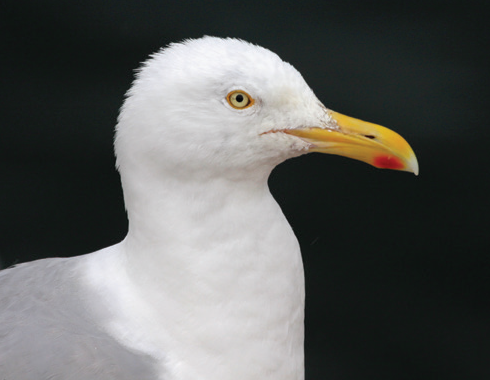
1. American Herring Gull
year-round
These hefty birds are competitive and they’re not afraid of threatening other birds over food. They love herring, but will also eat mussels and crabs. They’re romantic, too — during courtship, males feed their mates. Like dogs, they pant to cool off. And, in order to drink ocean water and survive, they secrete salt through their eyes. They can live nearly three decades.
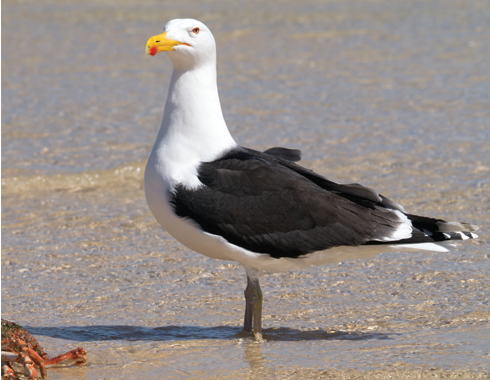
2. Great Black-Backed Gull
year-round
All hail the king of the Atlantic waterfront — that’s how experts at Cornell Lab of Ornithology refer to these broad, powerful birds. At more than two-and-a-half feet, they’re the largest gulls in the world, and we get a ton of them breeding in Cape May. Like the glaucous gull, these guys are significant predators of other seabirds (although more than half their diet comes from human trash). At nearly 27, the oldest one recorded was spotted in New Jersey.
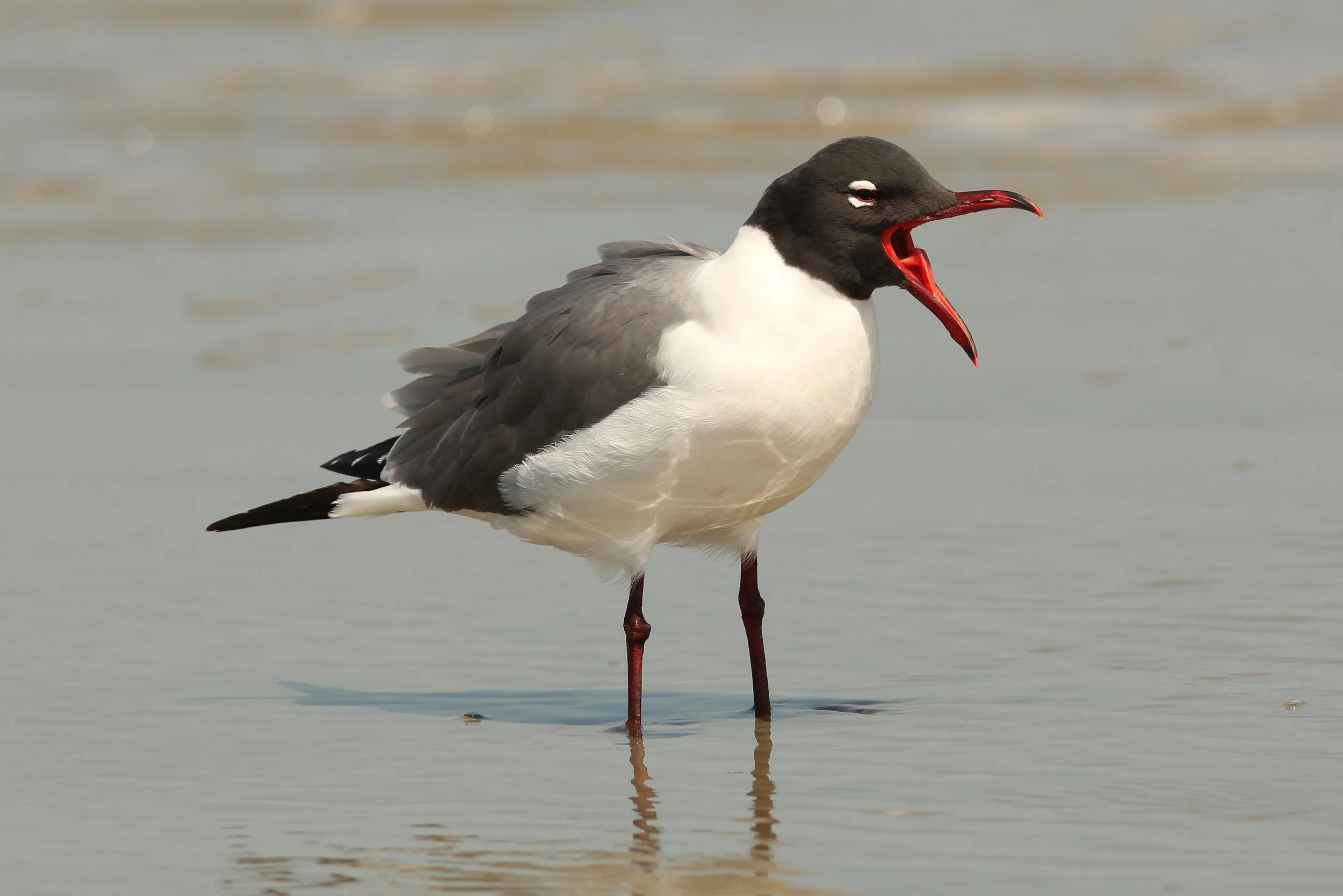
3. Laughing Gull
spring, summer, fall
These black-headed cuties are appropriately named — their call sounds more like a nasal cackle, and it’s as much a part of Cape May’s summer soundtrack as lapping waves and lifeguard whistles. Laughing gull colonies in this part of the country — sometimes 25,000 pairs strong — were nearly wiped out by egg and plume hunters in the 19th century, but the birds have made a comeback. A progressive species, both males and females pitch in to build a nest. Sometimes, you’ll catch them hovering over the head of a pelican, hoping to steal its catch.
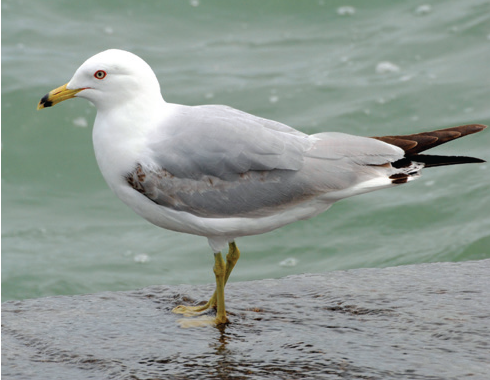
4. Ring-Billed Gull
fall, winter, spring
Here are your acrobats. If you were to throw a French fry into the air (you’ll be a very unpopular person on the beach if you DO) a ring-billed would likely swoop in to catch it. But while they’re super-skilled at recognizing food, they’re not so good at recognizing their own babies — they’ve been known to pick pebbles off the ground and place them in their nests, mistaking them for fallen eggs. The birds — who have a built-in compass for navigating migration — have also been known to crossbreed with other species, including the laughing gull. Their name comes from an easily recognizable black band around a yellow beak.
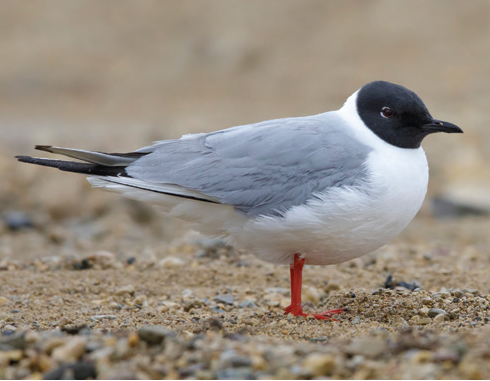
5. Bonaparte’s Gull
fall, winter, spring
One of the smallest gull species, Bonaparte’s is named for a French ornithologist, Charles Bonaparte, the nephew of French emperor Napoleon. He’s excellent at catching insects while in flight (the bird, not the emperor), and he’s the only gull type to regularly nest in trees. These guys like to keep to themselves, rarely joining larger gulls at trash dumps. Look for a white triangle on the outer part of the wing.
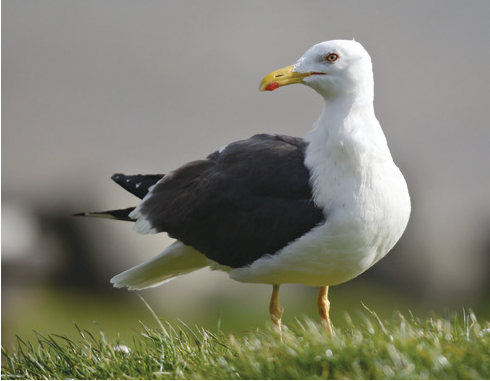
6. Lesser Black-Backed Gull
spring and fall
Fifty years ago, it would have been very rare to see one of these birds in Cape May — they were a Europe-only species. But, like a lot of folks, they’ve since discovered the joys of a trip to Cape May. Also, like a lot of our visitors, they enjoy getting their feet wet, so you’ll regularly spot several of them standing in the surf at Cape May Point. Recognize them by slate-grey wings and a smudgy patch around the eye.
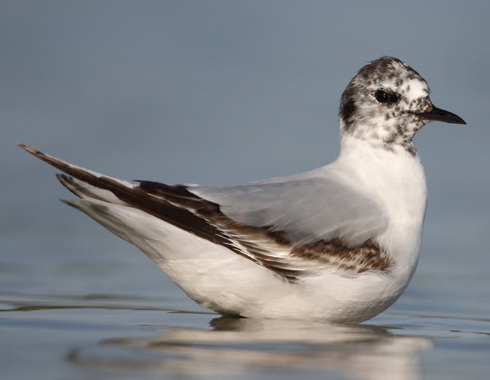
7. Little Gull
spring and fall
The first little gull nest in North America was not discovered until the 1960s, but no one’s sure what that means — were they new to this place, or had they always been seriously good at hiding? Either way, the dainty bird lives up to its name — this is the smallest gull in the world, weighing under six ounces. Recognize it by its pale grey winter wings, dark ear and smudgy head.
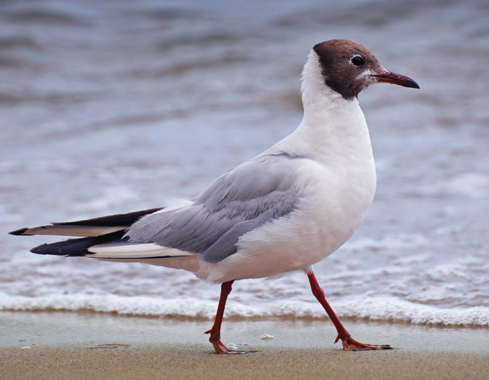
8. Black-Headed Gull
winter
This is an infrequent visitor to North America — an average of only three to five are spotted in Cape May per year, and you might find them hanging with the Bonaparte’s crowd. They’ll be hard to pinpoint, because they don’t actually have a black head — when breeding, it’s dark brown. And when not breeding, like during winter in Cape May, it’s white with some dark smudging behind the eye. The gull’s calls are a bit harsh… listen for their signature kar and kek sound.
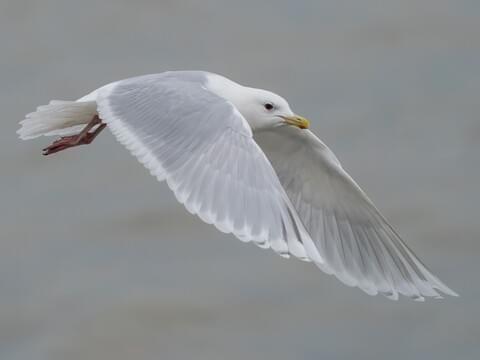
9. Iceland
winter
These guys breed on large cliffs in the Arctic, building mossy nests on a rock face, but you’ll spot one or two of them wintering on the Cape per year. They’re super-graceful flyers and you’ll recognize them by their signature move, an ability to scoop fish out of the water without landing. The people of Greenland hunted this species extensively in the 19th and 20th centuries, but it survived largely because so many flocks prefer the continent’s least accessible places.
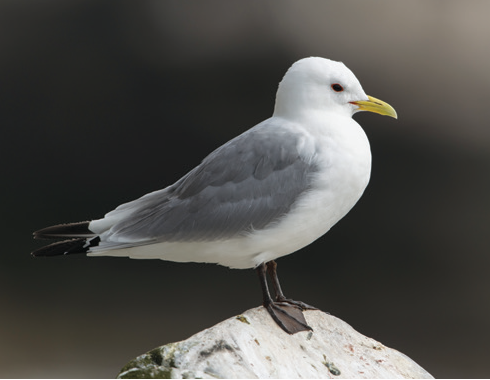
10. Black-Legged Kittiwake
winter
The name comes from the call, a highpitched kitty-wa-aake, though the birds are usually quiet in winter. Keep your eyes peeled for the exceptionally short black legs. Because the black-legged kittiwake winters at sea, pelagic birding trips off the Cape are the best way to catch them shallow diving or snatching fish from the water.
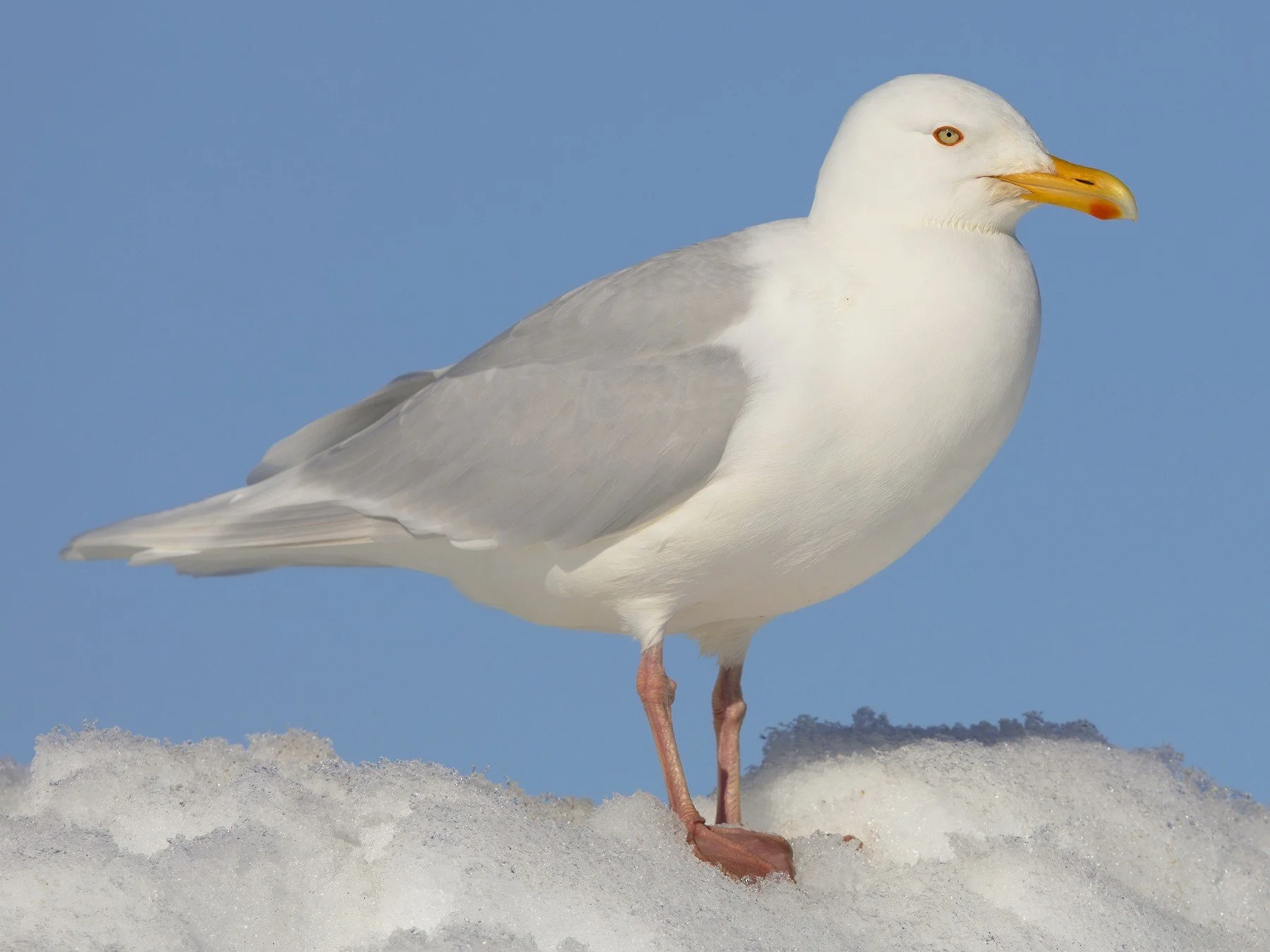
11. Glaucous Gull
winter
The second largest gull isn’t a regular visitor to the Cape. For food, hyper-predatory glaucous gulls have been known to pick off the eggs — or even the chicks — of other seabirds. They’re efficient about it — sometimes, they wait for a fox or a human to do the work of distracting a colony and then swoop in to steal their target.