How Cape May County Raised Its Grape Expectations
COVER STORY BY JACK WRIGHT
There was probably a time when saying you were going wine-tasting in Cape May sounded a little like saying you were headed to Wildwood for a philosophy seminar. This was a place of beaches, birding, Victorian porches, marshes, sunsets and the seasonal Olympics of trying to get dinner reservations in July. It wasn’t a place where the harvesting of grapes was a thing.
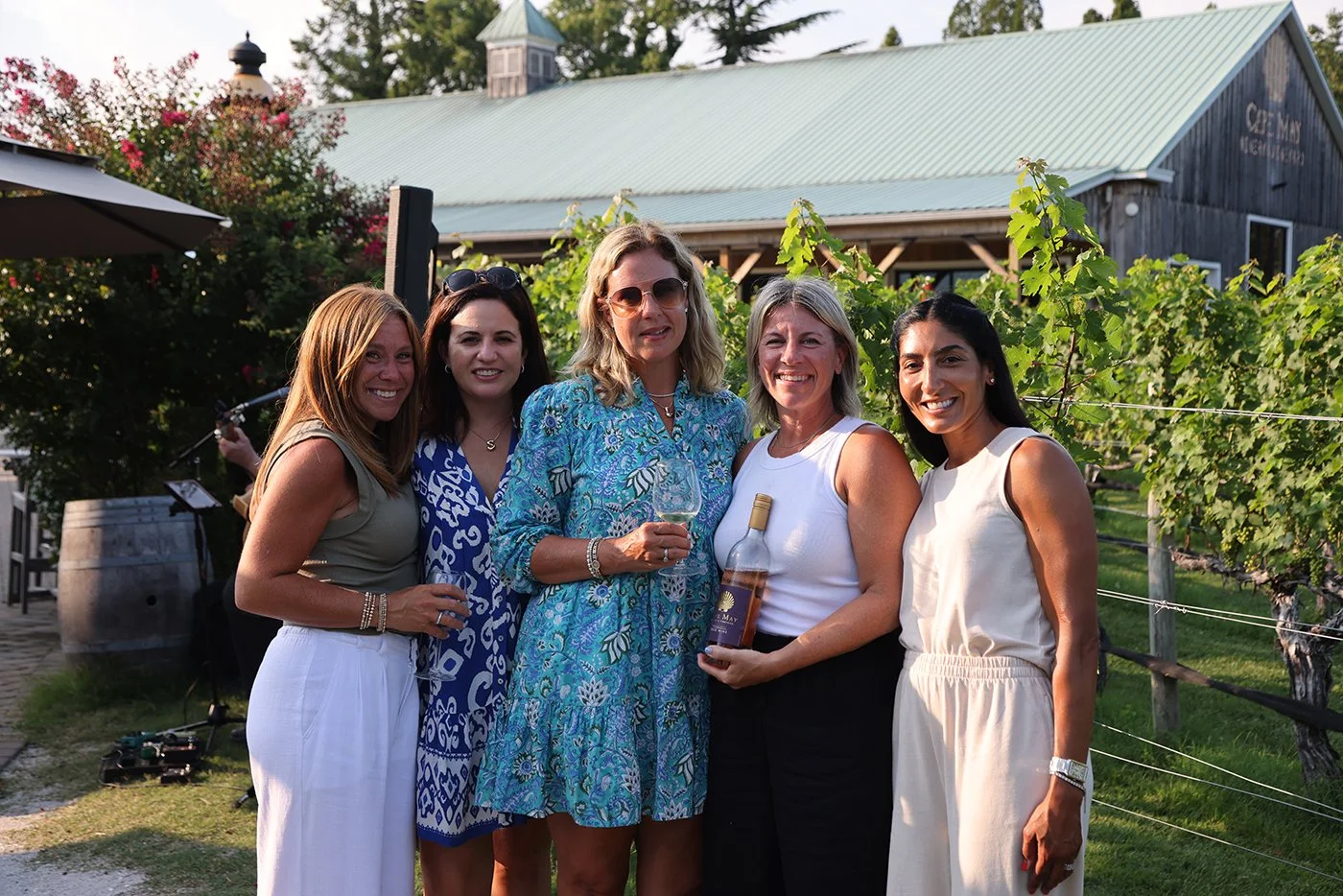
When the Craig family purchased Cape May Winery in 2003, that’s when people began to take notice, though the company had been flying under the radar since 1989, when the Hayes family first put vines in the ground on Townbank Road, with the help of a grant from Rutgers University. Seven years later, they released their first wine, a Cabernet Sauvignon, demonstrating that this sandy, salty corner of New Jersey could produce something more ambitious than beach plums and beach traffic.
The Craigs (who had made their mark in Cape May with the success of the iconic Washington Inn) expanded the winery, added a tasting room and serious production spaces, and steadily built it into one of the county’s anchors. Patriarch of the family, Toby Craig, had the right sense of humor for a man trying to sell New Jersey wine to people who still thought that phrase sounded vaguely comic. When asked about the state’s wine reputation back in 2012, he replied, “Don’t hold it against us.”
Now the story has moved into another generation (or two). Toby’s daughter, Betsy Sole, runs the daily operations, while her youngest son Jackson is a winemaker (Tyler, her other son, is the manager/sommelier at the Washington Inn).
Head winemaker at Cape May, Mike Mitchell, once put the larger ambition plainly: “If you want to be taken more seriously in the world of wine, it’s about having a region.” One winery can be dismissed as a novelty. Two wineries suggest a trend. A cluster starts to become geography. Geography, if you are lucky and good enough, becomes wine country.
Today, Cape May Winery offers 20 different bottless, including multiple award winners.
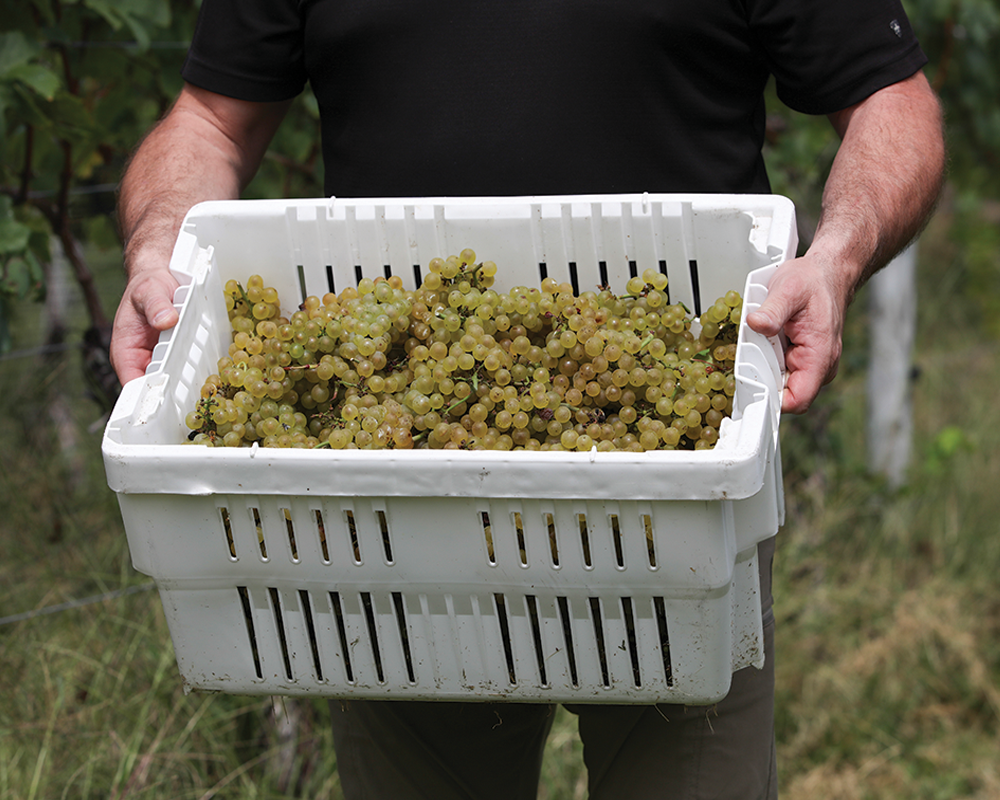
So why does Cape May County work for grapes at all? Because, by some stroke of meteorological good manners, the county has a set of conditions grapes actually like. The Cape May Peninsula AVA, federally recognized in 2018, was approved because of its distinct soils, long growing season and the temperature-moderating influence of both the Atlantic Ocean and the Delaware Bay. The sandy and sandy-loam soils drain well. The winters are milder than inland New Jersey. The summers are tempered just enough. The breezes help dry the canopy. The frost-free period is longer than in much of the rest of the state.
That is why county winegrowers keep talking about the bay and the ocean. They are not just giving you scenic material for the brochure. They are explaining why the farming works.
If Cape May Winery was first, Hawk Haven helped persuade people this area was not a one-winery curiosity. Todd Wuerker planted their first vines in 1997 on family farmland in Rio Grande, and, with wife Kenna, opened the tasting room in 2009. Hawk Haven quickly became one of the county’s flagship operations, a place serious about estate-grown wine and serious, too, about changing public perception. Todd said, “When we started, we would get customers who came in saying, ‘New Jersey can’t grow grapes and make wine.’ Now, people come in and say, ‘We’ve heard great things.’”
Hawk Haven also became one of the county’s more social vineyard stops. Their Rootstock series gave the place another dimension. But they are now moving into a new chapter. The tasting room has reopened after a four-month renovation. Last year they completed an expansion of the production facility, and now the old farmhouse at the front of the property is being renovated into a bed-and-breakfast, with completion hoped for early next year.
There’s also been a philosophical shift at the winery. The emphasis now is squarely on the vineyard and the wines, moving away from large events. The Hawk Haven experience, Kenna says, will now be “intimate and wine-centric,” with Philly Wine School-educated staff leading premium tastings in the redesigned room, specialty tastings on the patio, sparkling wine tastings focused on production methods, plus vineyard and winery tours.
What about the other winemakers? Turdo Vineyards & Winery planted vines in North Cape May in 1999 and opened in the early 2000s, bringing an Italian accent to the local story. Turdo has long focused on varietals like Nebbiolo, Barbera, Sangiovese and Nero d’Avola, which was a useful reminder that Cape May County’s climate could support more than the usual East Coast suspects. Founder Salvatore Turdo’s line still reads like a mission statement for the whole region: “You have to prove yourself every year, with every single vintage.” Down here, that sounds about right.
Natali Vineyards planted its first vines in Cape May Court House in 2001 and opened in 2007. It occupies a key place in the county story because founder Alfred Natali helped push for the federal recognition of the Cape May Peninsula AVA. Natali’s argument for the region has always been rooted in geography: milder winters, slightly cooler summers, breezes, drainage, and the peculiar advantages of being surrounded on two sides by water. The ambition there has never been modest. The claim has always been that Cape May County can make serious wine, not merely pleasant local wine. Natali changed ownership via an auction last month and I haven’t been able to get information from them regarding their plans.
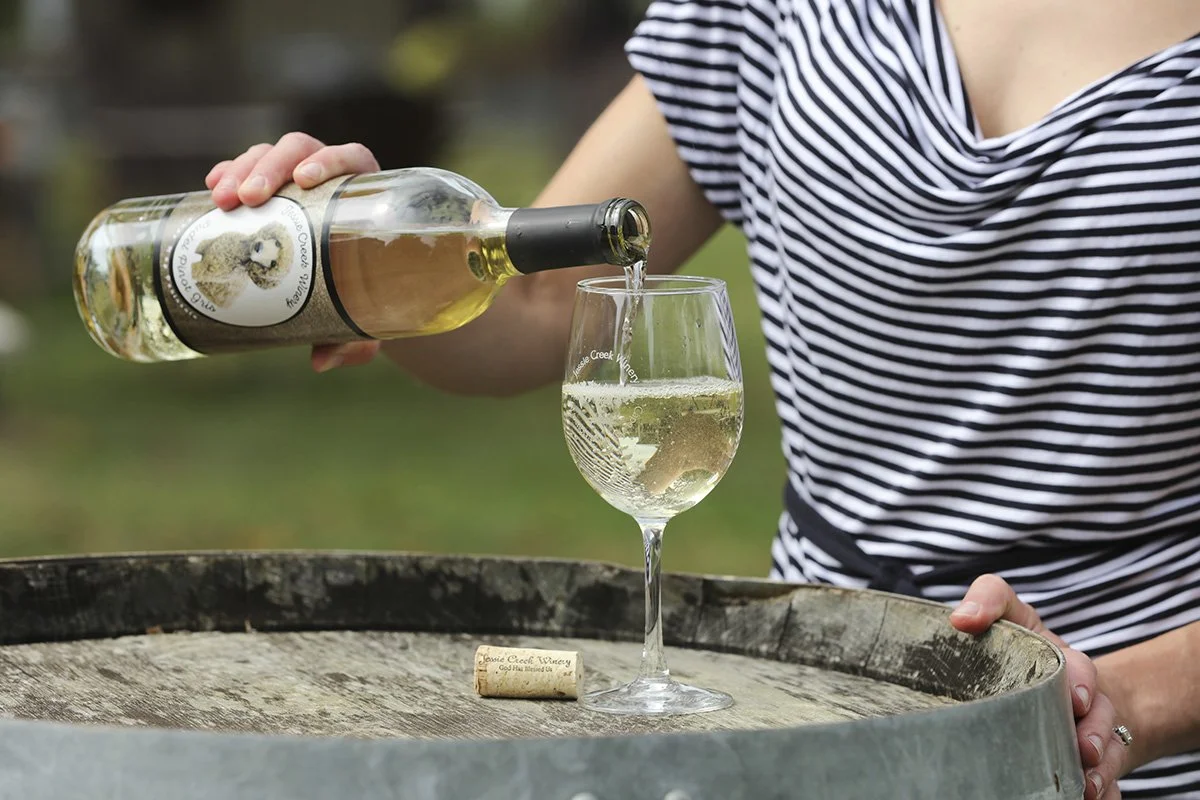
Near to Natali, Jessie Creek came at the idea from a slightly different angle. The first vines went in during 2002, and the winery opened in 2012. It is part vineyard, part inn, part art destination, which is exactly the kind of layered business model Cape May County seems to invent naturally. Nobody down here likes just one revenue stream if three can be made to get along politely.
Closer to home, Willow Creek began planting in 2005 and opened in 2012, leaning into the wine-estate idea. As initially the only winery on the island (that’s about to change), it has helped fold wine even more directly into the local tourism picture.
By then, the outside world had started to notice. The New York Times has written about Cape May’s wine scene more than once. New Jersey Monthly and Edible Jersey have weighed in with high praise, while state-level competitions kept handing medals and Governor’s Cups to county producers. At some point the conversation changed. People stopped talking about Cape May wine as an interesting surprise and started talking about it as wine.
And now, at the end of the story for the moment, comes Sea Horse.
Every regional industry likes a new arrival because it suggests the thing is still alive. Sea Horse is the newest winery story in town, and it comes with a strong stamp of personality from owner John Stratis, who describes it as “a self portrait of the owner — my interests, values and priorities.” The building reflects both the property’s past and its setting now: outside, horse-farm architecture, a nod to what the property originally was; inside, coastal décor, because this is still Cape May County and no one is going to ignore the sea breeze if it can be invited indoors aesthetically.
Stratis says Sea Horse, which will become the island’s second winery, is expecting to open any day now. Its wines will include sauvignon blanc, chardonnay, merlot, a Red Reserve, a White Reserve and others. And one of its most attractive selling points may be the simplest one: like Willow Creek, it’s an easy bike ride from downtown. Which ain’t nothing. Around these parts, convenience is part of the pleasure. If people can get somewhere without a parking problem, all the better. If they can do it by bicycle, even better still.
So that is how Cape May County became wine country. One pioneer. Then another. Then a family farm in Rio Grande. Then Italian varietals, an AVA petition, a vineyard inn, an island estate, medals, tastings, tours, and now one more winery getting ready to open.
Which, when you think about it, is a Cape May kind of story. Somebody looks at a place everyone thinks they already understand and finds another use for it. In this case, the beaches and marshes and bay breezes turned out to be good for grapes.
And grapes, as we all know, are very good for tourism. Cheers to that.
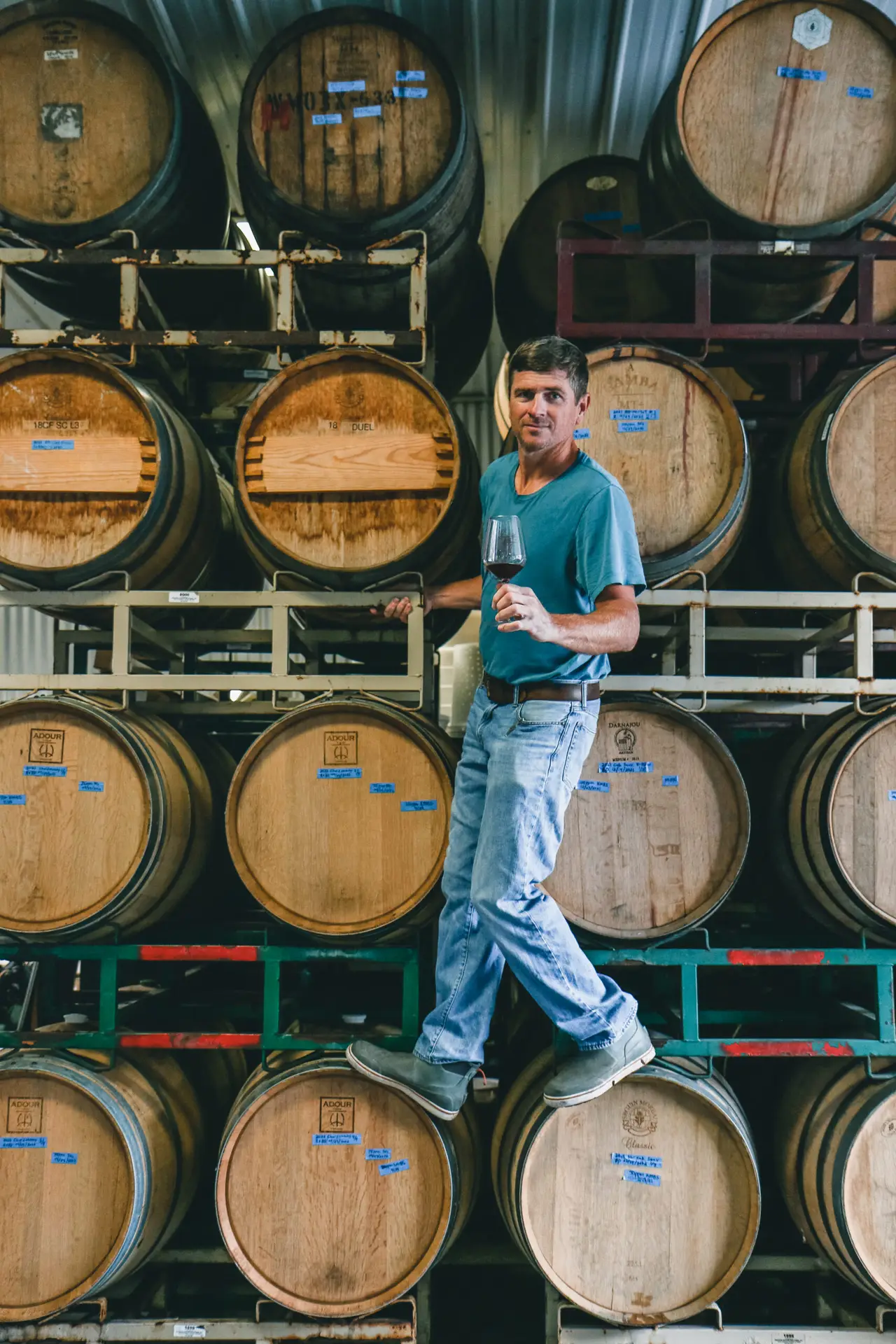
Todd Wuerker at Hawk Haven Winery in Rio Grande, which he operates with his wife Kenna.
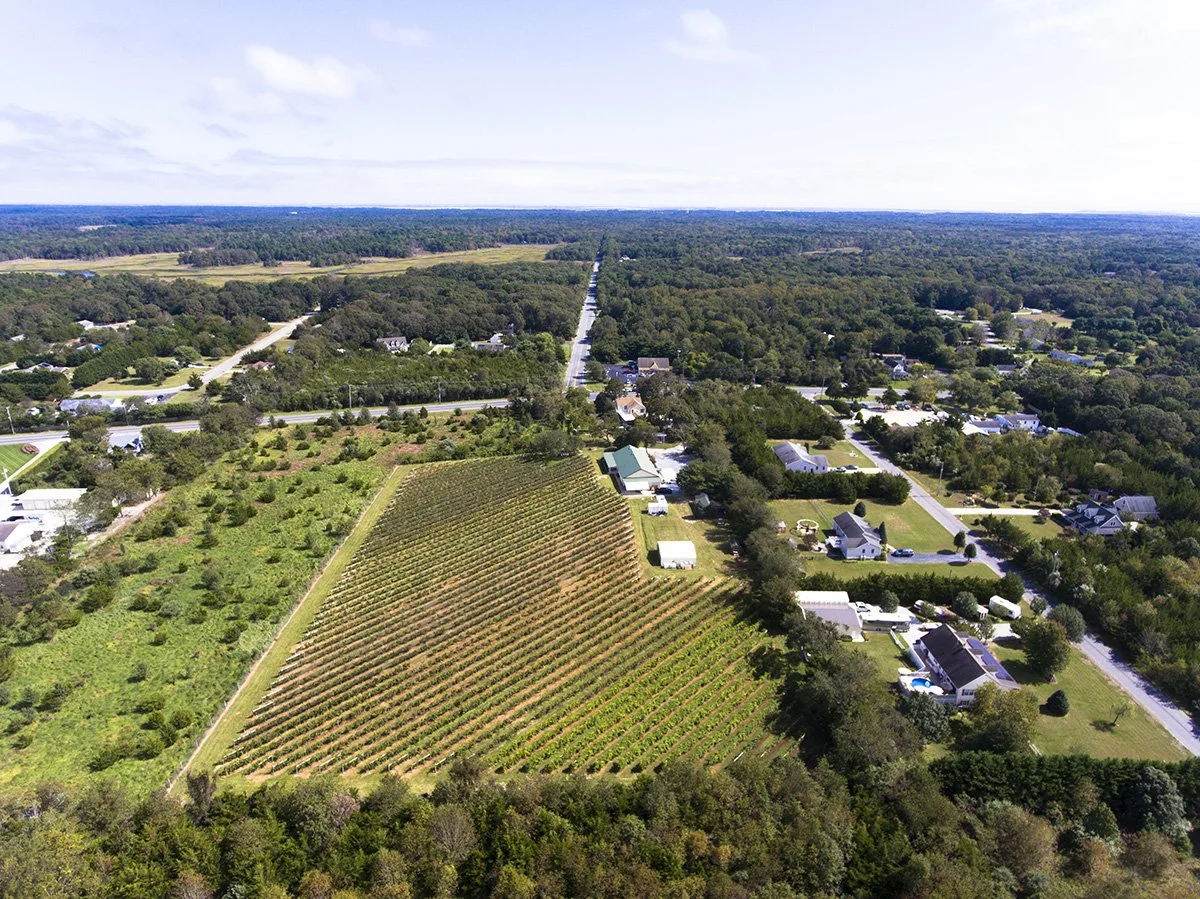
Jessie Creek Winery & Vineyard in Cape May Court House