
Melting Point... The Great Cape May Ice Cream Test!
On a hot Cape May afternoon, five ice cream scoops were placed in pale green melamine bowls atop the stone wall of one of the Washington Street Mall’s planted gardens and introduced to their future.
There was Bassetts vanilla from Fine Fellows, frozen custard from Kohr Bros, vanilla gelato from Cione, Ben & Jerry’s Chocolate Chip Cookie Dough with oat milk, and a Triple Vanilla sandwich from Peace Pie.
This was not a tasting. Tasting is what sensible people do with ice cream. No, we were investigating the perilous interval between shop and mouth. In Cape May, that interval includes heat (it was close to 90F), humidity (94 percent), predators (the Laughing Gull is the most opportunistic), children (including my five-year-old son, Oban, who was quietly paid off with a Kohr’s vanilla with rainbow sprinkles) and the inability of an adult in flip-flops to walk briskly while carrying an armful of ice cream in a Yeti box in order to preserve their integrity.
We wanted to know which dessert would pool first, which would hold its shape and which would surrender with dignity. More importantly, we wanted to know why.
The first useful fact is that ice cream does not have a single melting point. An ice cube does, but ice cream is too complicated for that. It is a partly frozen foam: ice crystals and air bubbles held inside a web of fat, protein, sugar and still-liquid water.
At a typical hard-ice-cream serving temperature of about zero Fahrenheit, roughly 72 percent of the water may be frozen, according to the University of Guelph’s ice-cream science program. (Yes, Guelph is a funny name for a university. It almost sounds like gulp. Anyway, they are in Ontario.) Sugar keeps the rest liquid by depressing the freezing point. That is why a scoop yields to a spoon instead of behaving like a vanilla-scented paving brick.
Even a gram of the stuff is alarmingly busy. It can contain something on the order of 1.5 trillion fat globules, eight million air bubbles and eight million ice crystals. But you probably knew that already, right?
When ice cream warms, two collapses begin racing each other. Ice crystals melt into water. At the same time, the partly joined fat globules that brace the air cells begin to lose their grip. One process makes liquid; the other destroys architecture. What we call melting is really both events, plus gravity, happening in public.
The speed depends on the recipe, the amount of air whipped in, the size of the ice crystals, the strength of the fat network, the viscosity of the unfrozen syrup, the serving temperature and the abuse the product suffered before it reached the bowl. Wind matters. So does the heat of your hand. Nothing about a cone at the seaside is controlled.
We did not choose the five “best” ice creams in town. That experiment might require lawyers. Each was chosen as a different engineering solution to the same delicious problem.
Fine Fellows supplied the local hero — plain Bassetts vanilla — or as close to local as we can get. Bassetts is a Philadelphia institution and apparently America’s oldest continuously operating ice-cream company. Quaker schoolteacher and farmer Lewis Dubois Bassett began making ice cream in 1861, when early batches were churned by mule power. In 1892, Bassetts became the first merchant to sign a lease at the new Reading Terminal Market. More than 160 years after that mule walked in circles, the business is still family-owned and still scooping at the Market’s marble counter.
It is also a living specimen of Philadelphia-style ice cream. That means no egg yolks: cream, milk, sweetener and flavor provide the body. Bassetts says its standard flavors contain more than 16 percent butterfat, well above the federal minimum of 10 percent. The result is dense, rich and unapologetically creamy.
Bassetts is also proud that its ice cream melts quickly, as Fine Fellows co-owner Dustin Piccolo enthusiastically told me. He framed the drip as the natural result of a purer, cream-forward approach: a scoop made to taste alive, not engineered via a supermarket supply chain.
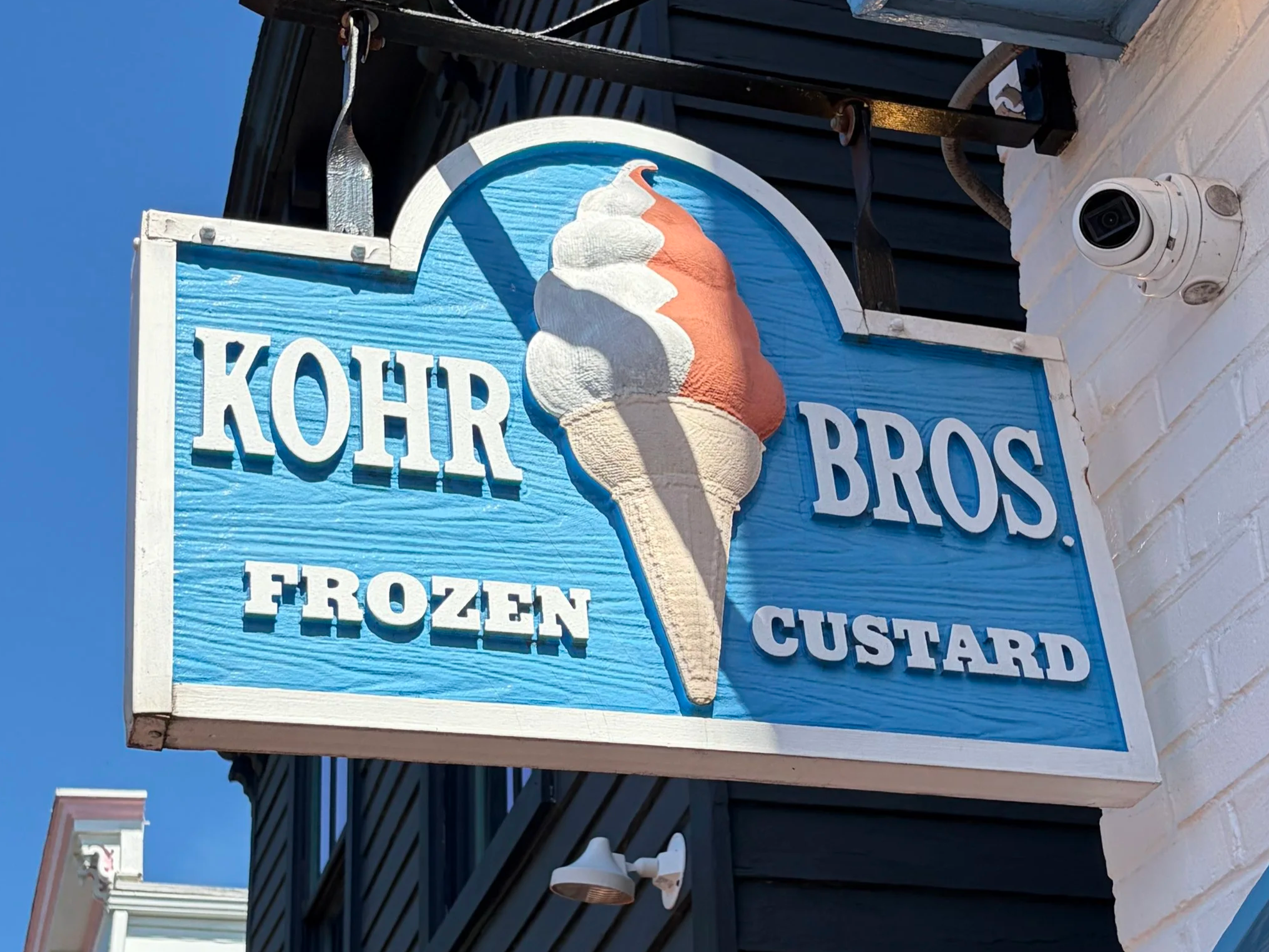
Kohr Bros arrived with a different piece of shore history. In 1917, Archie Kohr bought a gasoline-powered ice-cream machine for the family dairy business. He and his brothers Elton and Lester then modified the machine, adjusted a lower-fat, lower-sugar recipe and took it to Coney Island in 1919. They sold more than 18,000 nickel cones in their first weekend. There was one problem: it melted too fast in the salt air. Their answer was eggs. The yolks stiffened the mixture, and the first Kohr frozen custard was born.
Cione contributed vanilla gelato, a dessert generally churned with less air and served warmer than hard ice cream. Less air explains gelato’s density; the warmer service releases flavor and gives it that immediate, silk-on-the-tongue softness. It also means more water is already unfrozen when the clock starts. Gelato is not failed ice cream. It is ice cream calibrated to bloom early.
Ben & Jerry’s brought another history into the experiment. Ben Cohen and Jerry Greenfield opened their first scoop shop in a renovated Burlington, Vermont, gas station in 1978 after taking a $5 correspondence course in ice-cream making from Penn State. In 1984, an anonymous customer suggested stirring cookie dough into vanilla. The flavor graduated to pints in 1991, became non-dairy in 2019 and was the first of the company’s non-dairy flavors converted to a new oat-milk base in late 2023.
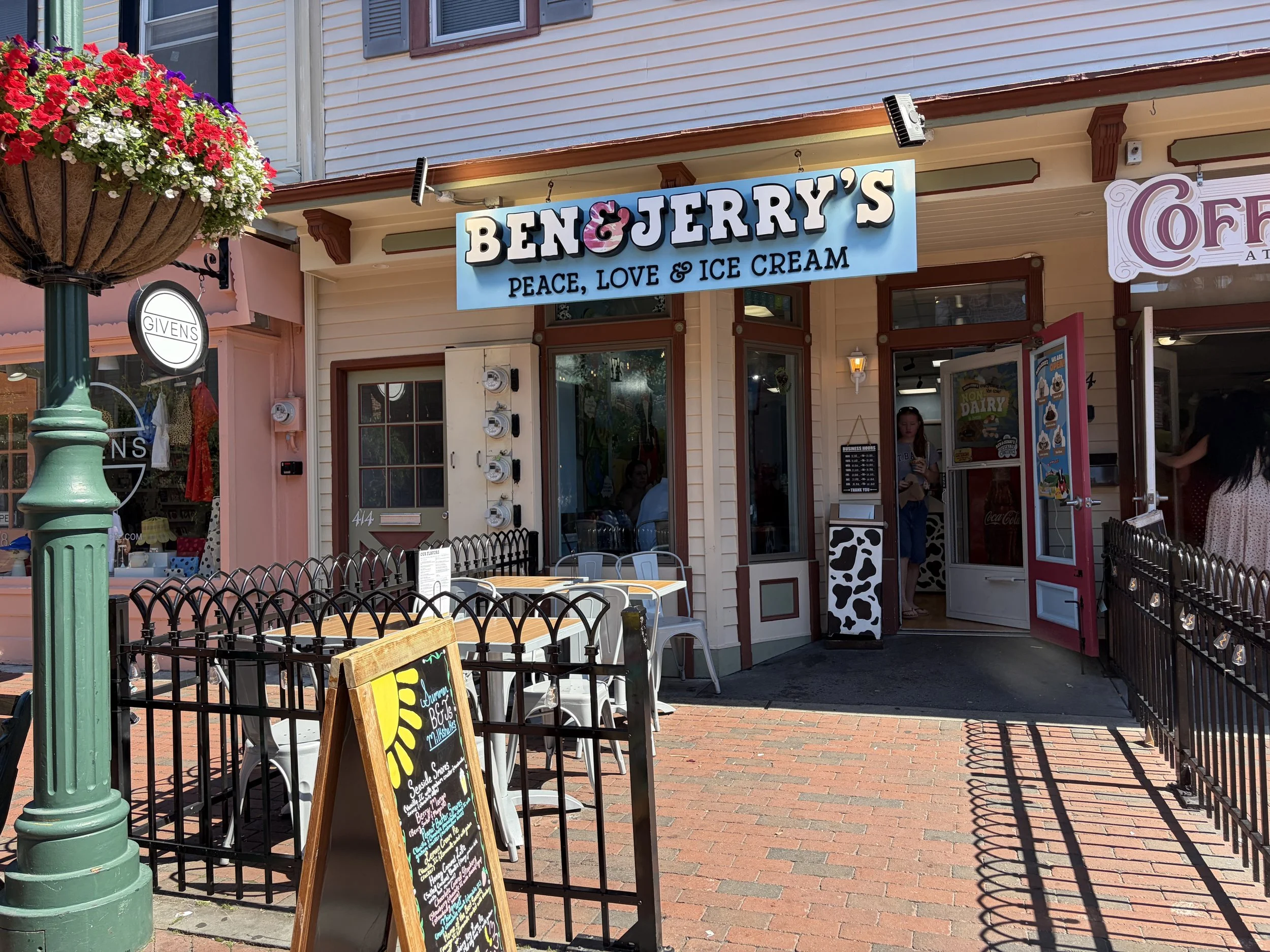
We chose Chocolate Chip Cookie Dough Non-Dairy: vanilla oat-milk frozen dessert loaded with cookie-dough pieces and fudge flakes. Coconut oil supplies solid fat. The proteins help stabilize air and water. Gums raise viscosity, and the lecithins manage the fat-water boundary. The dough and fudge are delicious structural debris. Together they can hold an outline even while the frozen base is softening.
Finally came Peace Pie’s Triple Vanilla, our architectural wild card. The cookies could shield the ice cream, reduce the surface exposed to warm air and drink up meltwater before it became visible. The mousse could insulate the center or become an accomplice. Because a sandwich is eaten by holding the surfaces meant to contain it, the design has a small but charming flaw. But so does the human knee.
Equal 100-gram portions went into identical, dry, room-temperature melamine bowls. We photographed every sample from above and from the side after 5, 10 and 15 minutes. Those three frames let us compare spread, height loss and visible pooling without pretending this was a clinical trial.
Across the 5-, 10- and 15-minute photographs, the order was unmistakable. Cione gelato melted fastest. Then came Kohr Bros, followed by the Bassetts from Fine Fellows and then Ben & Jerry’s oat-milk Chocolate Chip Cookie Dough. Peace Pie’s Triple Vanilla sandwich was last to give up its shape, as expected. Five desserts entered; most of them ended up looking increasingly like a dairy weather map.
Why did Cione go first? A proper gelato is designed to be soft and aromatic immediately, so it begins the contest closer to structural collapse than hard ice cream. Its warmer serving temperature means more water is already unfrozen, while its generally lower fat content can mean a smaller fat network bracing the structure.
Kohr came next, a century-old recipe again meeting salt air. The egg-yolk system is supposed to help by fat and water cooperating and lending structure, even though frozen custard is served relatively soft and warm. I’m sure the egg yolk usually works perfectly, but it just wasn’t able to repel a hot August Friday.
Bassetts came third, lasting a little longer than its quick-melt reputation suggested it might. Its high butterfat gave it luxurious body, but fat is only one lever: this was an exposed, egg-free scoop designed to taste creamy, not impersonate a porch column.
Ben & Jerry’s came fourth, and the oat milk did not make it fragile. Coconut oil, plant proteins, gums and lecithins rebuilt many of the jobs normally handled by milkfat and dairy protein, while the cookie-dough gobs and fudge flakes remained solid, acting as ballast and making visible collapse harder to read.
Peace Pie lasted longest, although declaring it the strongest ice cream would be like declaring a house stronger than a tent without mentioning the walls. Shortbread covered two broad surfaces. Mousse added another layer. The cookies could absorb liquid that would otherwise announce itself in the bowl, while the center exposed less area directly to warm air. Architecture beat chemistry.
Whatever collapsed first did not necessarily lose. A fast melt may be the price of a warmer serving temperature or a recipe designed to bloom immediately on the tongue; a slow melt may owe as much to a cookie roof as to the ice cream beneath it.
In the end, as we all know, the perfect frozen dessert is not the one that never melts. It is the one that melts at exactly the right speed: slowly enough to cross Beach Avenue, quickly enough to become creamy on the tongue, and decisively enough to make the last bite feel like an achievement.
A cone, after all, is kinda like summer with a deadline. So get out there and enjoy some ice cream!
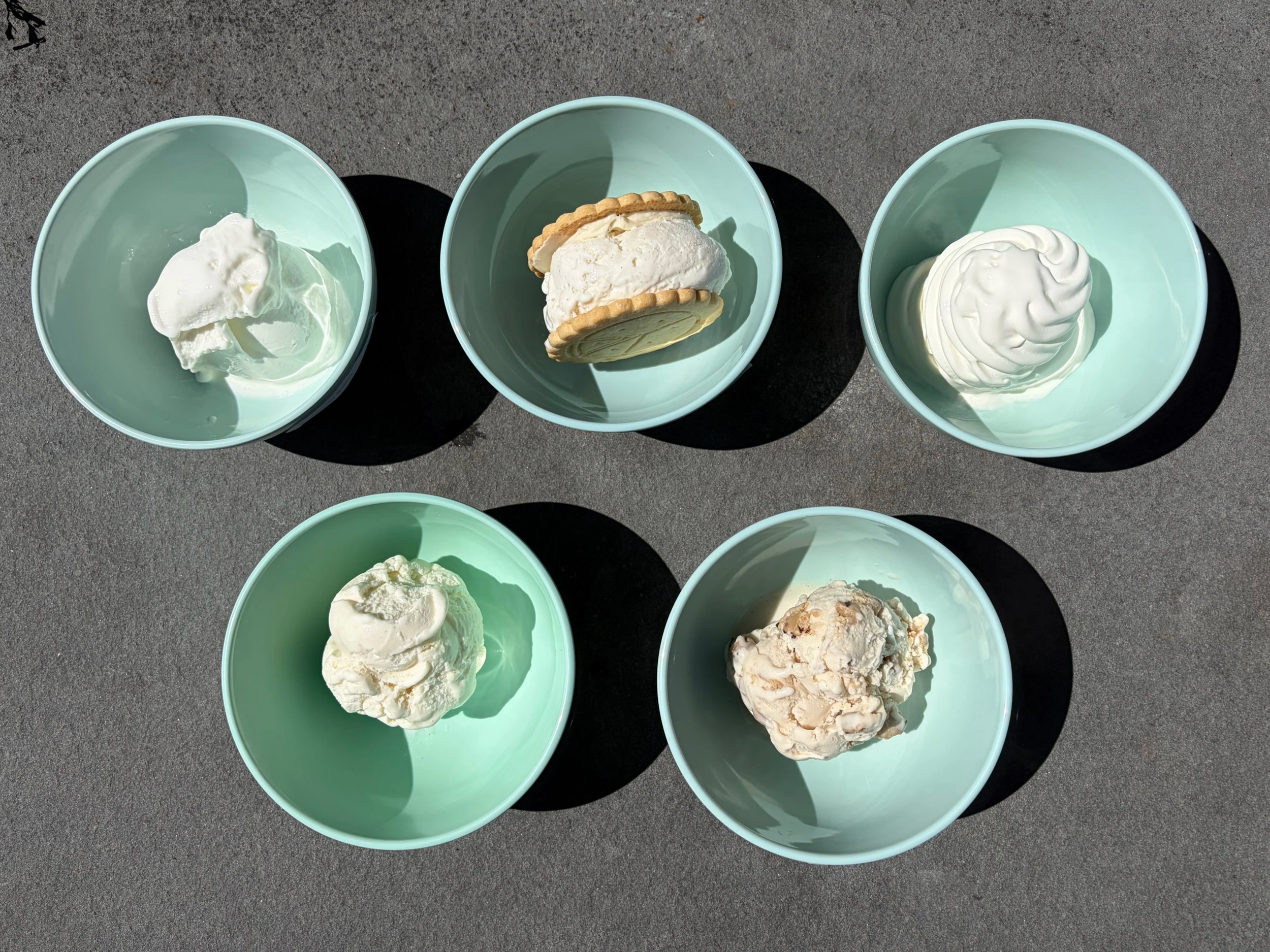
Top row: Cione Gelato, Peace Pie, Kohr Bros.
Bottom row: Fine Fellows, Ben & Jerry’s.
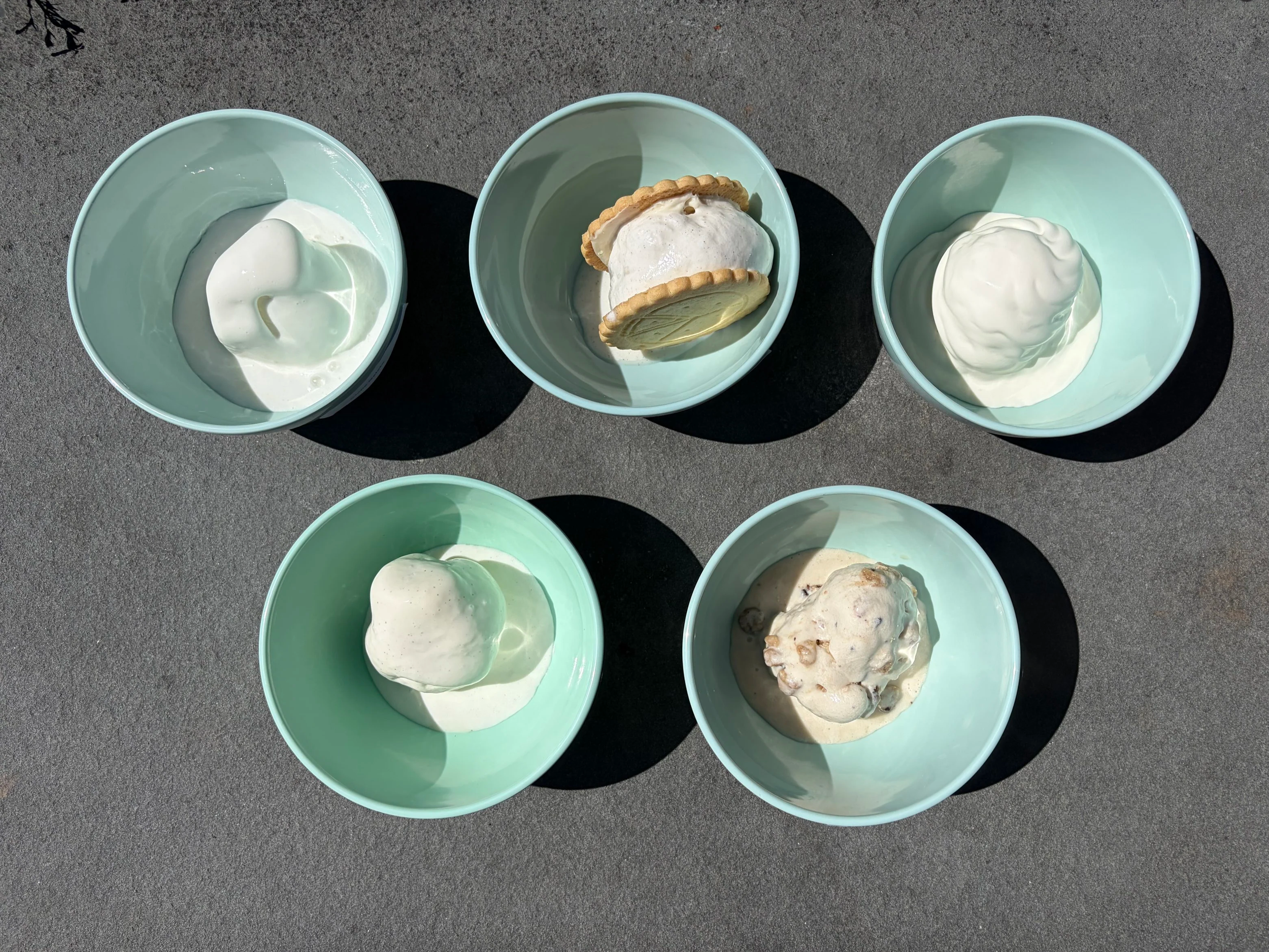
After about 10 minutes in the sun.
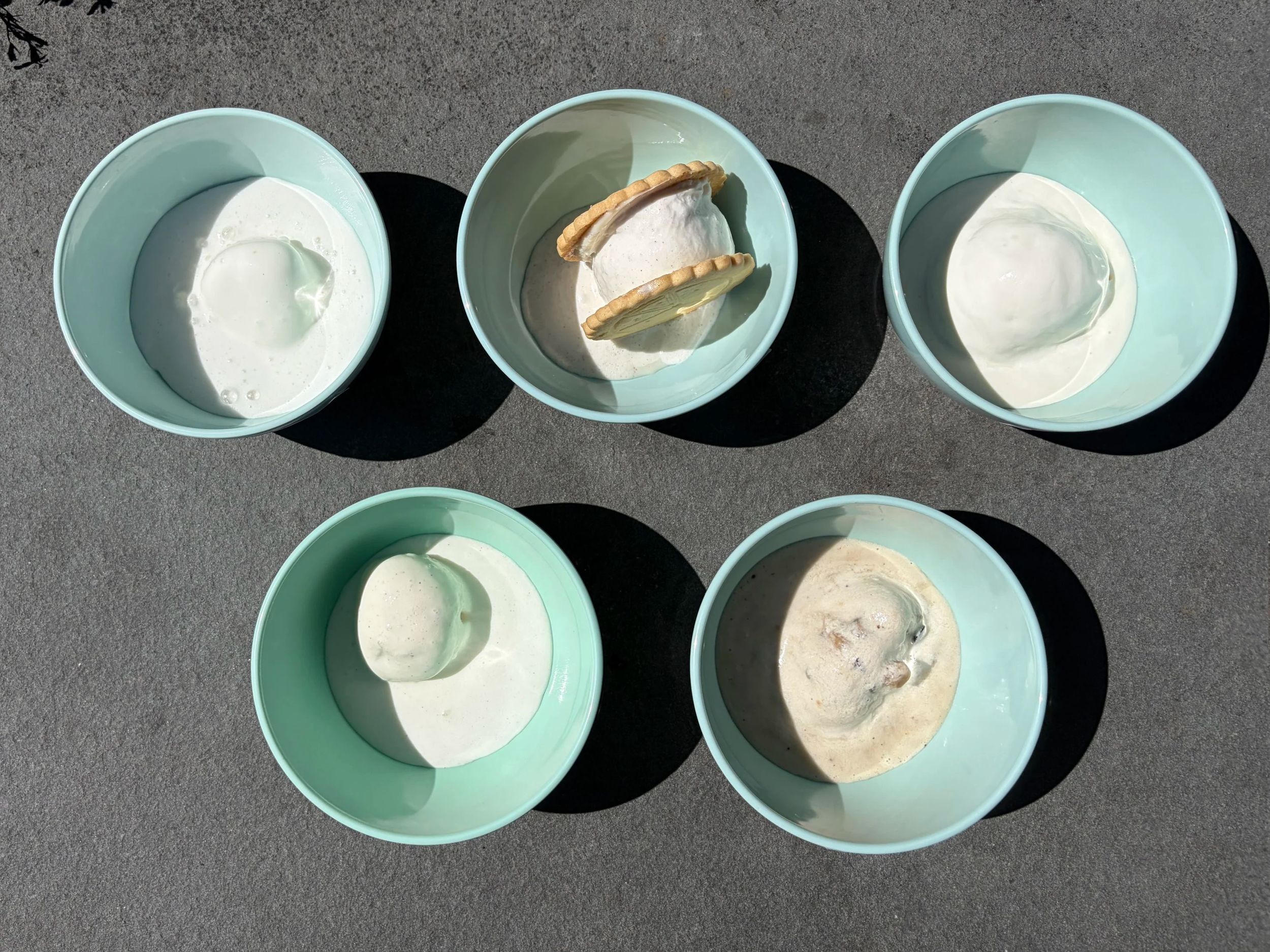
At precisely 3:31pm on the mall on Friday, August 7, after 15 minutes of 90-degree sun.