
The Nor’Easter That Flattened Cape May
While we were all digging ourselves out from more than a foot of snow last week, my mind was turning to a cataclysmic event that happened during this week in 1962, to a storm which is still the worst to have hit Cape May in living memory. (For those keeping score at home, the hurricane of 1821 was more severe — it made landfall here as a category four and, if it hit today, would cause more damage to the eastern shore than Hurricane Sandy wrought.)
But let’s dive back into March 5, 1962, which began with a weather forecast predicting a typical late-winter nor’easter —cloudy skies, a mix of rain and snow, and northeast winds of around 15mph. Instead, Cape May was turned over during the course of three days and five high tides by a slow-moving grinder that would come to be known as the Great Atlantic Storm, the Five High Storm or the Ash Wednesday Storm.
This wasn’t a hurricane that hit and run. It loitered and lingered. For barrier islands and low-lying coastal towns, loitering and lingering is a special kind of trouble — because it means the damage isn’t limited to one high tide. It stacks. Wave after wave, tide after tide, the water gets repeated chances to push farther inland, chew away a little more dune, loosen a little more foundation, and test every weak point in roads, bulkheads and buildings.
In Great Storms of the Jersey Shore, authors Larry Savadove and Margaret Thomas Buchholz described the event quite poetically as “sudden and surly, inundating, devastating, mutilating, obliterating.”
Consisting of two weather systems that joined forces, the monster pounded Cape May for three days with 63 mph winds and relentless 35-foot waves. As the nor’easter ended, the National Guard moved along Cape May’s Beach Avenue in rowboats, saving the stranded. More than 1,000 homes had been destroyed and the boardwalk was shredded. Convention Hall, an elaborate two-story structure overlooking the ocean, was ripped apart. Pieces of its balcony, meeting rooms, the ballroom where men in suits had once taken women in white gloves dancing, were scattered along the shore.
The skeleton of the building somehow remained standing, but the back wall, windows and floor were swept away. The hub of businesses that had operated inside — an arcade, movie theater, linen shop and luncheonette where kids would hawk copies of the local paper for a nickel — were gone.
A small portion of the boardwalk in front of the hall remained, but the rest of it was torn apart. In fact, a lot of damage to nearby buildings was caused not only by wind and water, but by flying timber from the destroyed boardwalk.
“I was seven at the time,” Cape May native Cheri Zebrowski told us in an interview several years ago. “It was so traumatic to see that beautiful building torn to pieces. I couldn’t comprehend the huge hole — you could see straight through to the ocean on the other side. To this day, I can still see the curtains for the stage blowing in the wind.”
One of the most sobering parts of the Cape May record is how residents described the suddenness and the sheer disorder afterward. Resident Cecilia Love, who wrote an account for capemay.com, noted that “we had no warning,” and described streets filled with displaced household items — furniture, appliances, mattresses, oil tanks — basically whatever could float, roll, or be shoved by wind and water.
The same account also mentions something that tends to get left out of “storm storytelling” unless you go looking for it: what happens after, when normal rules and routines disappear. Love’s account references state police presence and notes that looting occurred before order tightened.
Across the Mid-Atlantic and Northeast, the storm’s footprint was enormous — coastal flooding and erosion on the ocean side, and heavy snow inland in some places. It caused 40 deaths and more than a thousand injuries, along with hundreds of millions in damages across multiple states.
To understand why Cape May was so susceptible in 1962, it helps to remember that the town’s coastal defenses and shoreline profile were not what visitors see today. Some of what people now take for granted — the concrete seawall and asphalt promenade, the later generations of beach management and replenishment, and the modern understanding of how quickly dunes can disappear — was shaped by storms like this one.
Those 72 hours of battering cost the city around $3 million (around $33 million today), including the construction of a new Convention Hall, a seawall and a promenade made of storm-withstanding concrete in the space a boardwalk used to occupy.
Cape May has had plenty of storms since 1962, and will have more. But the Ash Wednesday Storm remains the benchmark because it was prolonged, it was destructive and it hit the town’s identity (and economy) right where it lived: along the beachfront, at what should have been the quiet runway into summer.
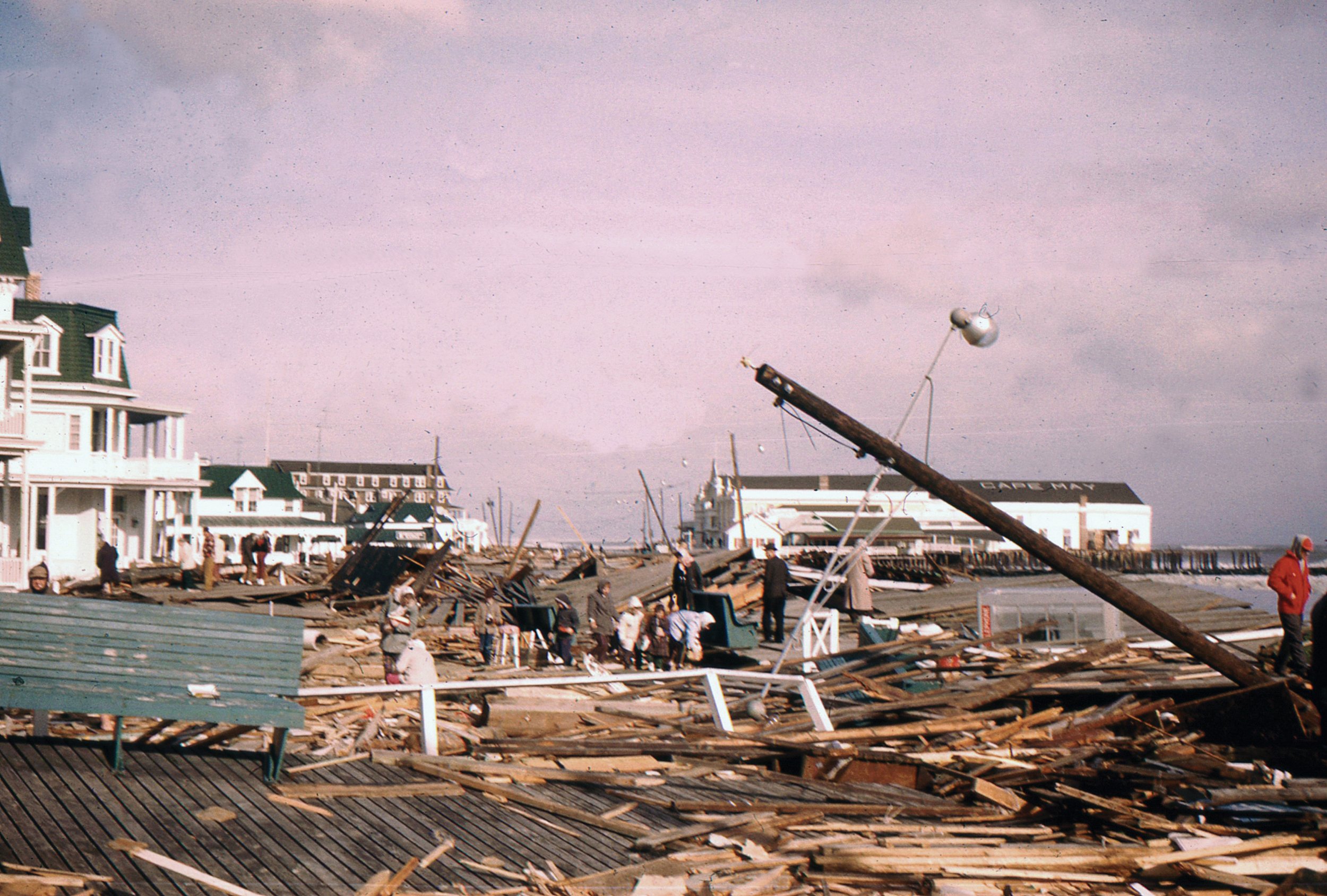
The Nor’Easter That Flattened Cape May
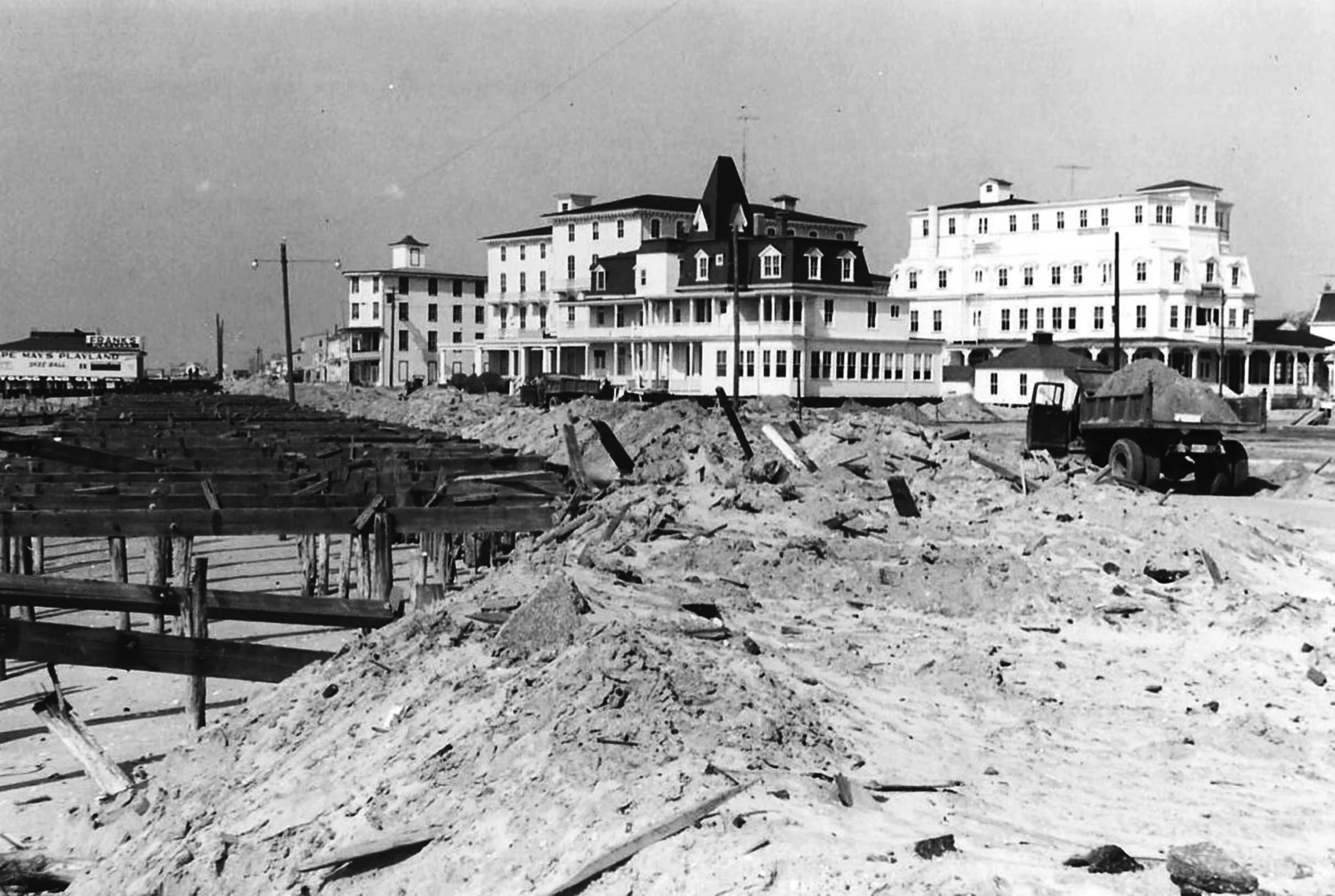
Cape May’s wooden boardwalk was torn apart by the nor’easter of 1962, dubbed by meteorologists as the Perfect Storm
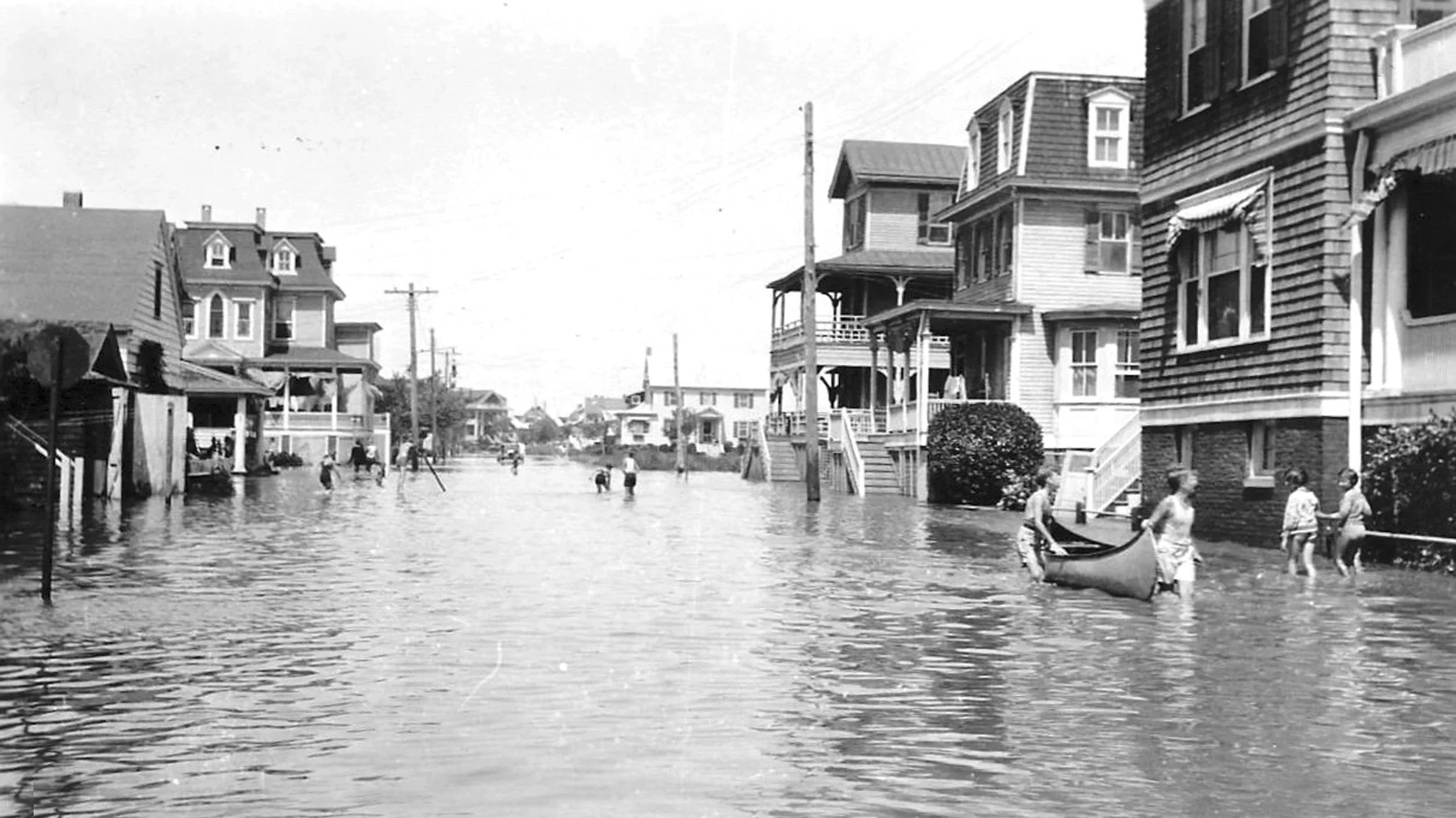
The storm surge brought ocean waters as far as four blocks past the boardwalk in places. The National Guard was brought in to help people escape the floodwaters.