Stand on the promenade on a warm morning — the ocean glittering, bicycles wobbling past, folks strolling by with the day’s inaugural coffee, the first giant cabanas appearing on the sand — and it can feel faintly disloyal to get into a car and leave. But do it anyway, because not every day should be a beach day.
Cape May sits at the end of the road, but it need not be the end of the journey. Within a short drive is another South Jersey — one of roller coasters and red pandas, roadside tomatoes, working marshes and old oyster towns where the names themselves seem to carry the smell of the bay. Leave after breakfast and you can explore it without sacrificing dinner. By late afternoon, the Parkway numbers will be counting down again and Cape May will be waiting, looking even prettier for having briefly been left behind.
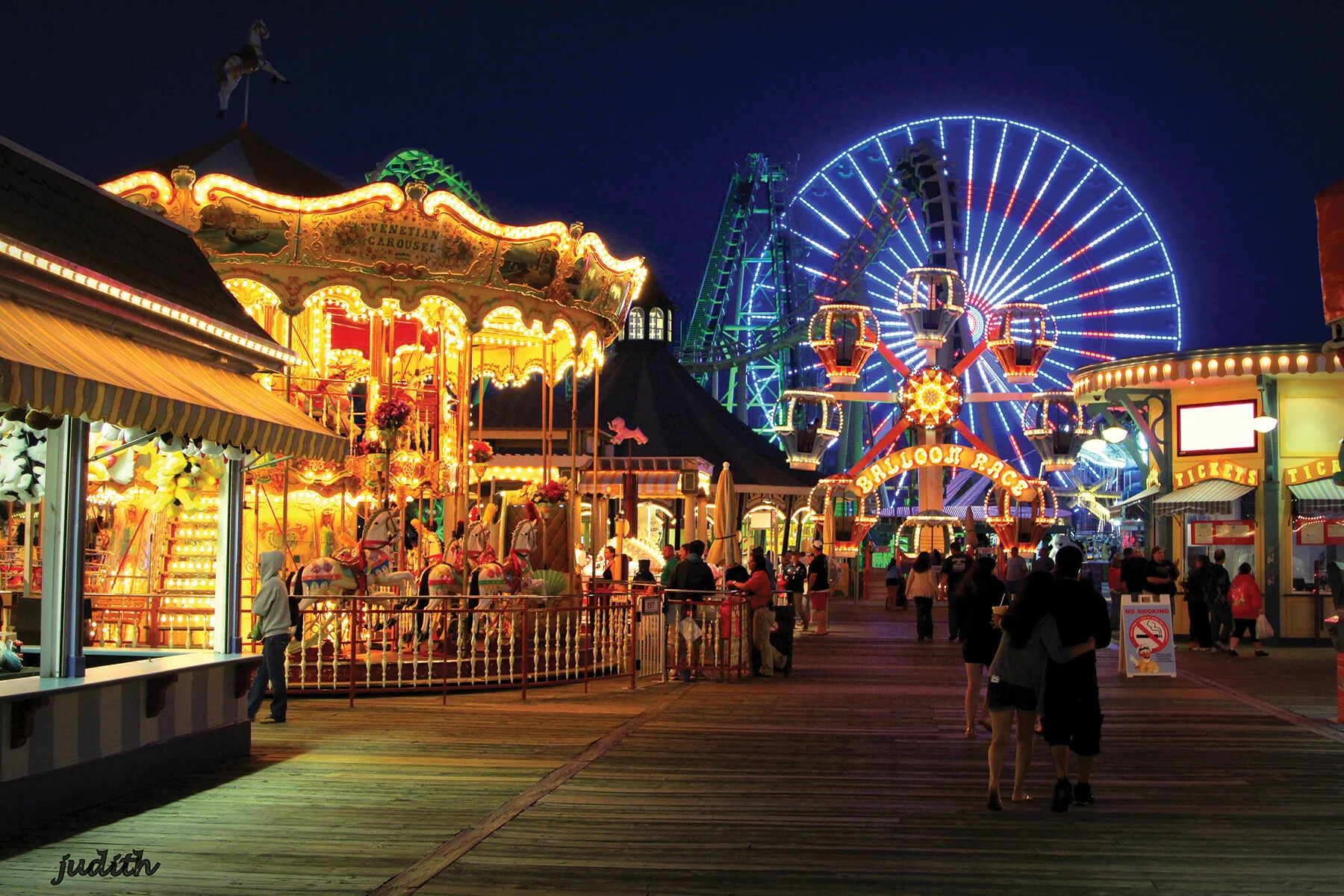
The easiest escape, as you should know, is Wildwood, a drive of just under 20 minutes and, in every other sense, a journey to another world. Cape May has verandas, gingerbread trim and horse-drawn carriages. Wildwood has neon, roller coasters, enormous fiberglass creatures and a tramcar that has been warning people to watch their feet for generations. The Wildwood boardwalk does not so much invite the senses as rush them all at once. Music leaks from storefronts. Games ring and flash. The air carries competing notes of pizza, suntan lotion, caramel corn and something being deep-fried that probably began life as a cookie.
At the center of it all is the world-class amusement park that is Morey’s Piers: Surfside, Mariner’s and Adventure, three piers spread along the boardwalk. A Cape May visitor does not need to conquer all three. In fact, trying to “do Wildwood” in a morning is an excellent way to end up exhausted, overfed and carrying a six-foot inflatable hammer nobody remembers winning.
Choose a pier and give in. Mariner’s has the 156-foot Giant Wheel, which provides one of the great views of the island and a useful test of who in the family has been lying about a fear of heights. Adventure Pier has the Great White, a wooden coaster whose 105-foot drop and speeds above 50mph offer a more forceful alternative to morning coffee. Ride half-a-dozen attractions, play several games, eat Curley’s Fries and walk away while everyone is still speaking. Better still, enjoy lunch at one of Morey’s excellent eateries — Jersey Girl, Pig Dog, Joe’s Fish Co., Founders or Stubborn Bros. I’ve tried them all.
With a little discipline, you can be back in Cape May by late afternoon, enjoying the surprising discovery that your quiet seaside resort is, in fact, quiet.
Roadside produce stands have long been part of the South Jersey summer. They are easy to pass at 50mph — a hand-painted CORN sign, a striped canopy, a few baskets beside an honor box — but taken together they form an edible map of the county. The trip requires no fixed itinerary. In fact, too much planning rather spoils it.
Begin at Rea’s Farm in West Cape May, which is almost cheating because you haven’t even left the island. But go anyway — Rea’s is the real deal. After that, cross the canal and continue toward Hands Farm Market on Route 9 in Rio Grande, then wander north and west. Meyers Farm on Route 47 near Goshen is a reliable destination in season, while Stone Circle Farm in Dias Creek represents a newer generation of small-scale farming, with an emphasis on healthy soil and carefully grown produce.
The real joy lies between the named stops. Follow the signs for blueberries, eggs, honey and beach-plum jam. Pull over when a folding table beside a field looks promising. A farm market with a polished logo may be excellent, but a stand supervised by a child and an old Labrador is very difficult to resist.
Farm stands are seasonal and independent by nature. Hours change, crops sell out and sometimes the farmer has gone off to do some, you know, farming. Check ahead when possible, carry cash and accept the occasional locked gate as part of the experience. By the return journey, the car will smell of basil, peaches and good intentions. Spread the haul across the kitchen table, add butter to the corn and dinner is halfway made.
For families seeking a more traditional destination, the Cape May County Park & Zoo in Cape May Court House is 20 minutes north of Cape May and remains one of the county’s most remarkable attractions.
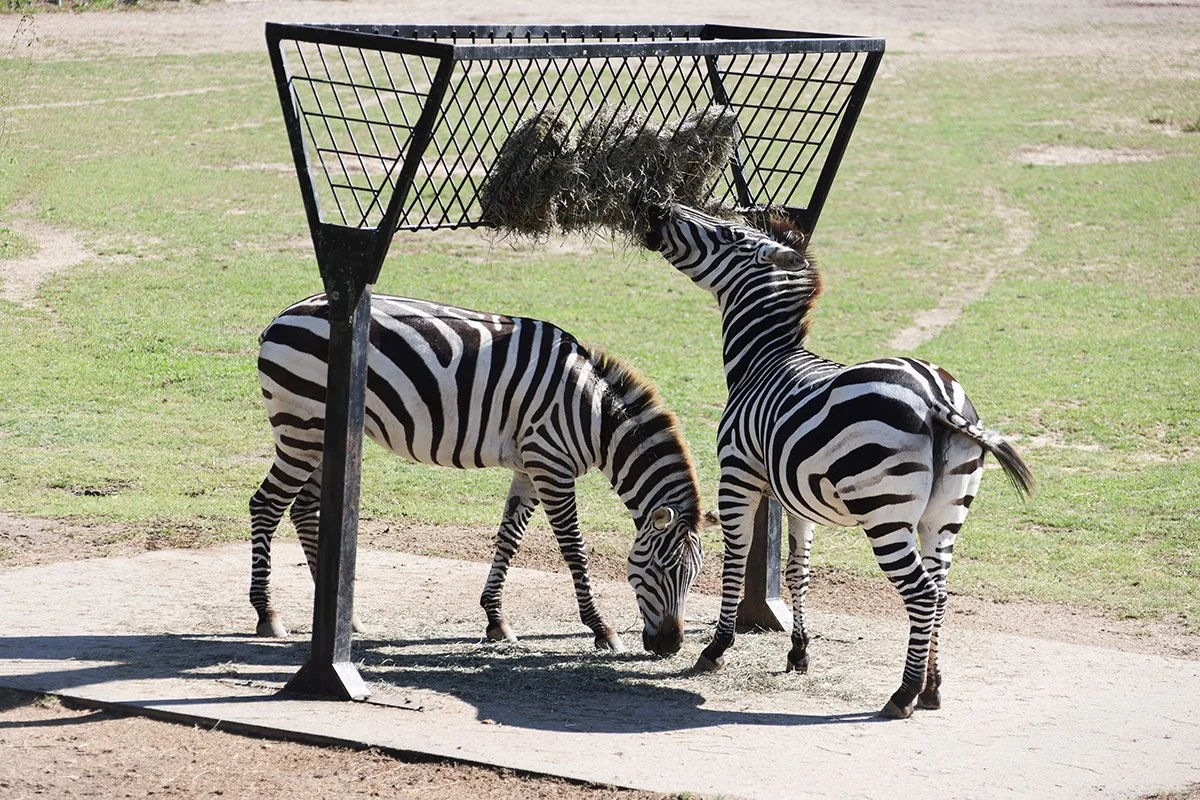
It is a proper zoo — home to giraffes, lions, primates, snow leopards, the aforementioned red pandas, lions, giraffes and many more — set inside a leafy county park. Admission is free. Parking is free and ridiculously plentiful (too plentiful — a lot of trees died for those spaces). The free admission tends to make first-time visitors suspicious, as if someone will eventually emerge from behind the giraffe enclosure with a bill. Nobody does, though donations are recommended.
Arrive when the zoo opens at 10am, before the hottest part of the day and before the animals adopt the sensible policy of sitting in the shade. The grounds are large enough to feel like a real outing, but compact enough to avoid the logistical campaign required by a major city zoo. Children can choose the route, guaranteeing that the family will cross the same bridge several times and somehow miss the one animal an adult particularly wanted to see.
Don’t eat at the zoo concessions — either pack a lunch and picnic in the surrounding park or slide into Cape May Court House, where George’s Place and Table One are good options. It is possible to be back by four with tired children, money left in the vacation budget and photographs of animals displaying better posture than anyone in the family.
The grandest of our one-day escapes leads northwest into Cumberland County and along the Delaware Bayshore, a place physically close to Cape May but separated from it by mood, history and vast acreage of marsh. The drive will take an hour, but it’s so worth it.
Aim for Port Norris, then continue through Shellpile and Bivalve. The names sound like they came from kids’ books, but they describe communities created by the oyster industry that once made this stretch of the Maurice River one of America’s great seafood ports. Bivalve was the working waterfront. Shellpile took its name from the mountains of discarded oyster shells that rose beside the packing houses.
It was also the home of a largely African American labor force, including families who came from Maryland, Virginia and Delaware to shuck, sort, carry and pack the catch. Their work powered an industry that made fortunes elsewhere in Port Norris, once proudly billed as the Oyster Capital of the World.
At its peak, oyster schooners tied up several deep along the wharves. Baskets moved from boats to sheds, and iced railroad cars carried oysters to New York and across the country. Then, in the late 1950s, disease devastated the Delaware Bay beds. The industry contracted, businesses closed and a waterfront once defined by noise and motion became a place of weathered buildings, working boats and long memory.
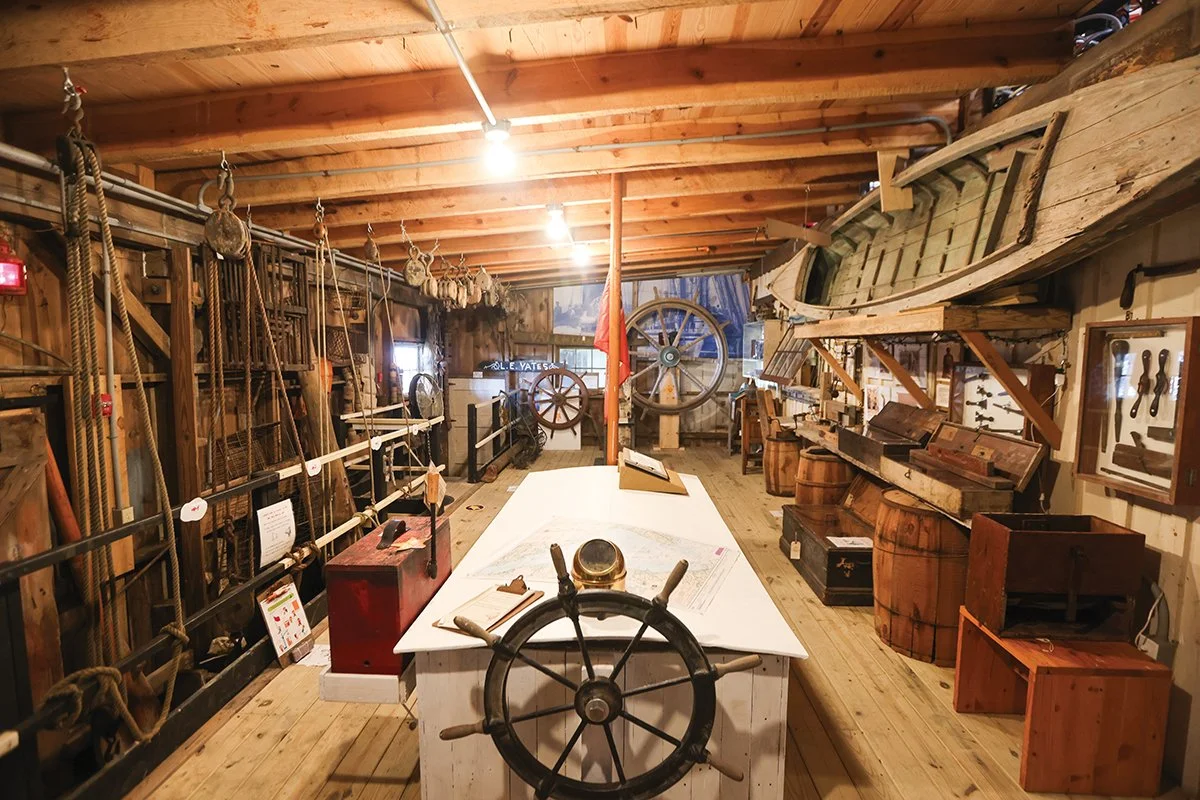
The essential stop is the Bayshore Center at Bivalve. Its campus occupies historic 1904 oyster shipping sheds beside the Maurice River. The Delaware Bay Museum preserves the industry through artifacts, photographs, oral histories and the buildings themselves.
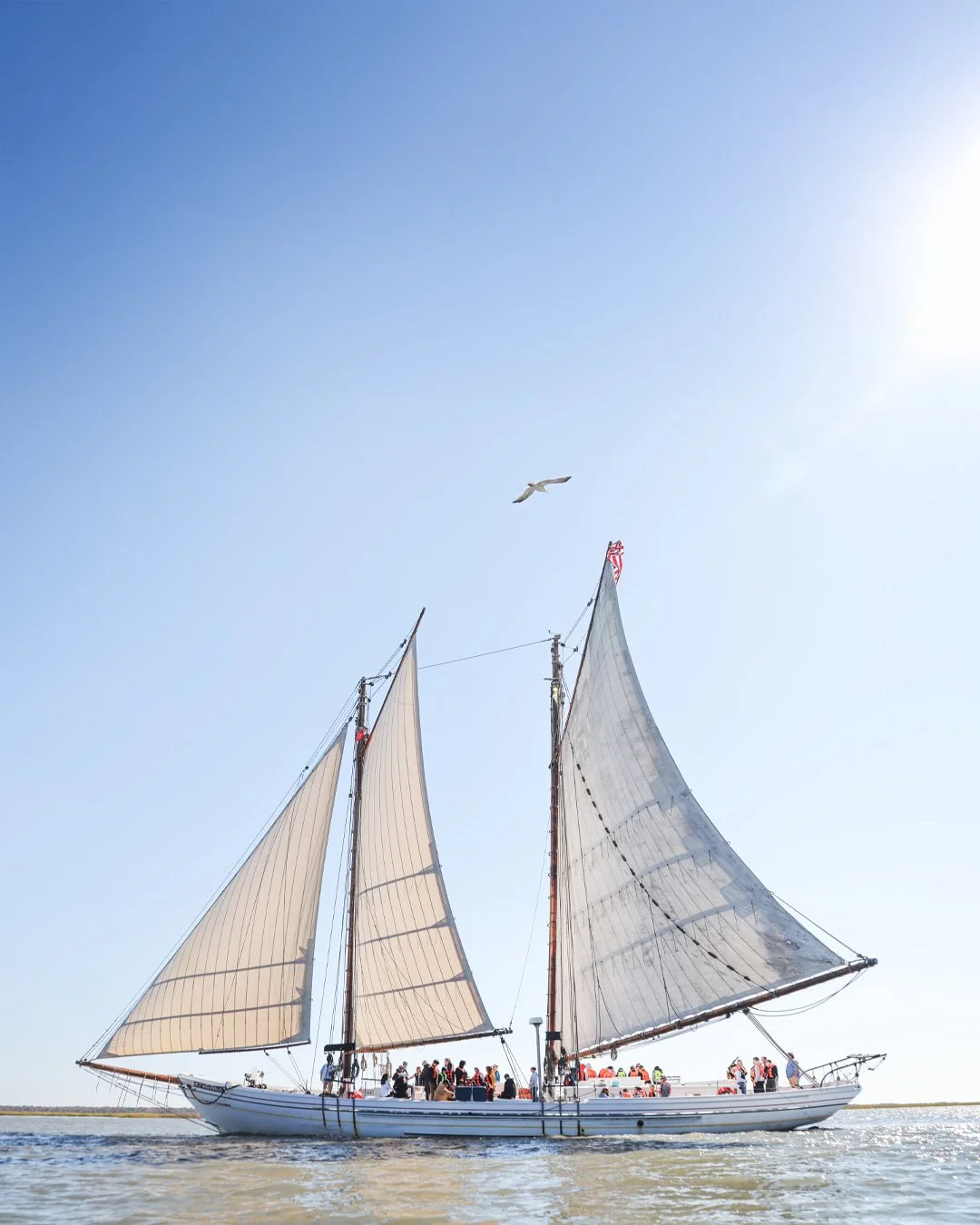
The Center is also home to the A.J. Meerwald, the restored 1928 oyster schooner that serves as New Jersey’s official tall ship. Built for the Meerwald family during the final great era of sail-powered oystering, she now works as a floating classroom, carrying passengers onto the waterways that shaped the region. The Meerwald sails from the Cape May ferry terminal in the summer (definitely worth a trip), so you won’t see her at Bivalve right now. Museum hours are also limited and seasonal. Check the schedule; this is a road trip that rewards preparation.
Stand on the wharf and it is possible to imagine the vanished soundtrack: rigging, engines, railcars, gulls, boots on timber and baskets landing on the dock. The marsh may appear empty, but it is crowded with birds, tides and stories.
From Bivalve, continue west to Fortescue, a small fishing village pressed against Delaware Bay. Fortescue once promoted itself as the Weakfish Capital of the World, a wonderfully confident title for such a modest place. There is no grand boardwalk and no carefully staged shopping district. There are working boats, weathered houses, a bay beach and the feeling of having reached the edge of something.
Walk along the water. Watch the birds. Look across the broad brown-green bay toward Delaware. Most importantly, resist the urge to turn Fortescue into a list of things to do. Its appeal lies in the stillness — in letting an unfamiliar corner of New Jersey remain a little strange.
Leave by 3:30 and Cape May will be well within reach of an early dinner. Order oysters, obviously. After Bivalve, Shellpile and the Meerwald, the half-dozen on the plate will no longer look like an appetizer. They will look like history.
Then the canal comes into view, the Victorian rooftops reappear and Cape May welcomes you home after an absence of only a few hours. Tomorrow can be a beach day.