The New Rules Of The Beach
I love the first real beach weekend of the year — it’s coming this week, apparently! I love the optimism of it. Families arrive with enough equipment to suggest they are not going to the beach, but landing on Normandy. Chairs. Coolers. Wagons. Boogie boards. Towels. Sunscreen. Snacks. A backup snack bag. A third snack bag nobody admits to packing. The toddler’s bucket. The teenager’s Bluetooth speaker. Grandmother’s umbrella. The Shibumi.
Ah yes, the Shibumi.
If you have not yet encountered one, you will. It is the expensive, fluttering, wind-powered beach shade that has become the new status symbol and/or public nuisance of the American coastline, depending on which side of it you are sitting. The Wall Street Journal recently gave the Shibumi its full cultural autopsy. Verdict? Both wonderfully simple and wildly divisive. The Shibumi is a sheet of polyester slid onto an arched aluminum pole, the ends buried in sand. In a breeze, the fabric billows overhead, like a bedsheet on a clothesline, creating shade without a center pole and without fighting the wind.
That is the beauty of it. Also, for some people, that is the problem.
In Wrightsville Beach, North Carolina, where the Shibumi has become almost part of the landscape, homeowner Tracy Dix told the Journal that when she sees them popping up, it means everyone is back and enjoying the beach. In Myrtle Beach, South Carolina, Mayor Mark Kruea sees something else. “The beach was being consumed,” he said, by tents and canopies. Myrtle Beach now allows only traditional umbrellas during beach season. In Rehoboth Beach, Delaware, beach patrol captain Jeff Giles told the Journal the shades were taking up too much room on the town’s narrow sand. Violators are first approached by “beach ambassadors.” Refuse to take it down, he said, and the police write a ticket.
This is where we are in 2026. Not just Republican versus Democrat. Not just local versus visitor. Shade versus sightline. Tent versus towel. Bluetooth speaker versus sound-of-the-surf. Personal freedom versus everyone else’s peaceful afternoon.
And now seems like the right time to say the quiet part out loud: the beach is not your living room. It is not your campaign headquarters. It is not your vape lounge. It is not your private concert venue. And it is definitely not the place to launch an unsecured umbrella into a family from Bergen County.
Let’s start there, with the umbrella, because it’s become one of summer’s more deceptive hazards. It looks innocent. It has stripes. It evokes postcards, Sinatra, paperback novels and ladies in cat-eye sunglasses. But give it a metal pole, loose sand and a stiff Atlantic breeze, and you have built a javelin.
In August 2022, Tammy Perreault, 63, was killed at Garden City Beach in South Carolina after a wind-blown umbrella struck and impaled her. In June 2023, two people were injured on Clearwater Beach, Florida after a storm and waterspout sent umbrellas flying. In June 2024, an 80-year-old woman at Cocoa Beach, Florida was injured when a rental umbrella dislodged from the sand and impaled her leg. And in June 2025, a 19-year-old Asbury Park lifeguard was impaled by a beach umbrella pole.
Those are the ones that made the news. The Consumer Product Safety Commission says roughly 3,000 people are treated in emergency departments each year for beach umbrella-related injuries.
This is one reason the Shibumi is all the rage. It does not fight the wind the way an umbrella does. It uses the wind. It weighs about four pounds. It packs down small. It creates enough shade for a family.
Shibumi’s owners say they are safer than umbrellas and easier than tents. Critics say they take up too much room, flap too loudly, look too identical, and are useless when the air is still. The company has already responded to some of these complaints, developing quieter fabric, adding more color combinations after parents complained that children could not find their family in a sea of matching blue-and-turquoise shades, and introducing a wind-assist kit for calm days.
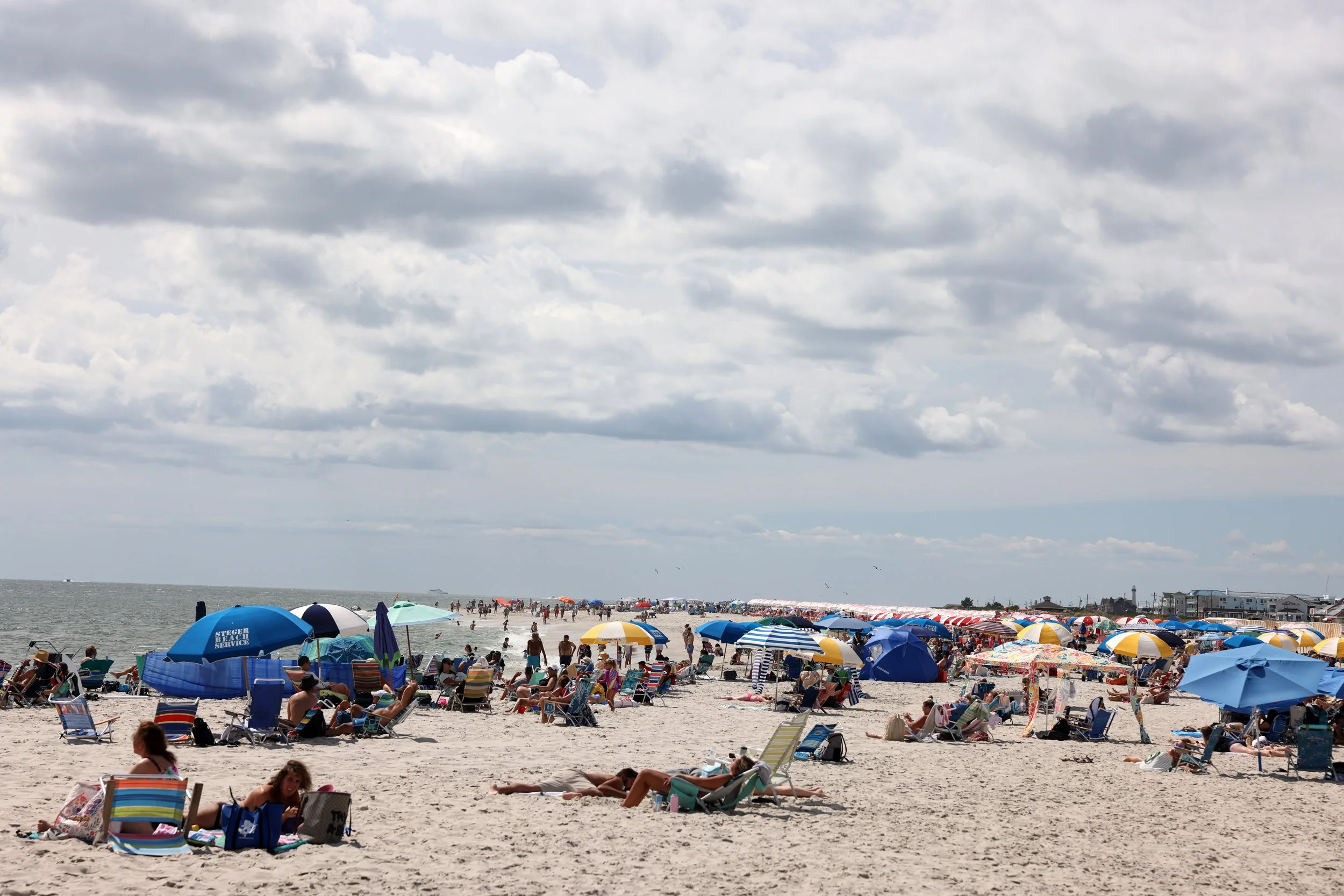
Cape May’s current position is fairly reasonable on the issue — tents and canopies no larger than 10 feet by 10 feet are permitted on all beaches, as long as they do not block public access or emergency vehicle access. When beaches are crowded, the city asks that they be set up closer to the dunes. In other words: Cape May has not banned the shade wars. It has simply asked us to remain civilized.
Other towns have been less patient. Rehoboth Beach bans tents and canopies, allowing only small baby tents and traditional umbrellas within size limits. Tarps, cabanas, pavilions, sportsbrellas and similar devices are also prohibited. Jersey Shore towns are increasingly regulating tents too, with some banning them outright and others, like Cape May, setting size limits.
You can understand why. Large structures block lifeguard sightlines. They block ocean views. They create corridors, compounds and trip hazards. At the Myrtle Beach hearing described by the Journal, resident Nan Trout warned about congestion, territorial disputes and guy lines or anchors becoming tripping hazards. She said her neighbors did not want Shibumis on the beach. That may sound dramatic until you have tried to carry a cooler through a crowded beach where every fourth family has created a little nylon fortress.
This is also where psychology comes in. Because the same mindset that says, I need a 10-by-10 tent, three walls, a speaker, a flag and a vape cloud to enjoy myself is not really about shade. It is about territory.
The beach is shared space, but some people arrive as if they have purchased a parcel. They plant. They spread. They broadcast. They mark their zone. Psychologists would recognize this as norm erosion: the weakening of those invisible agreements that make public life tolerable. I limit my noise, you limit yours. I take up a reasonable amount of space, you do the same. I do not smoke into your lunch, you do not turn your phone into a nightclub. When those norms break down, the result is not freedom. It is friction.
The political flag on the beach is a perfect example. Nobody is lying there halfway through a Wawa hoagie thinking, “You know what, that six-foot Trump flag has completely changed my thinking on tariffs.” The flag is not persuasion. It’s performance. The same would be true of any large political display, left or right. The point is not the candidate. The point is the intrusion. The beach is one of the few places where we are supposed to disengage from the daily madness — bills, email, cable news, school board fights, Facebook, the latest national scream. Dragging that madness onto the sand is not patriotism. It is bad manners with grommets.
Cape May’s publicly posted beach rules do not single out political flags or Bluetooth speakers. But legality is a low bar. You can do many things that make you a terrible beach neighbor. If the people three blankets away can sing along to your playlist, you are no longer “playing a little music.” You are DJing without consent.
Smoking and vaping rules are clearer — they’re prohibited on all Cape May beaches.
All of this may sound like scolding, but it is really just the old beach etiquette updated for modern equipment. Back in the 1960s and 1970s, beachgoers were not saints. They smoked everywhere. They littered more casually. They treated baby oil like dermatology. But they generally traveled lighter. A towel. A chair. A cooler. A transistor radio. Maybe a striped umbrella. Maybe a paperback. Maybe a thermos. The footprint was smaller because the gear was smaller.
The old rule was simple: claim enough sand to sit on, not enough to annex.
That is still the rule. Or it should be.
So here, for Cape May, America’s Original Seaside Resort, is the unofficial beach code.
Anchor your umbrella like it could hurt someone. Keep big shade structures close to the dunes when the beach is crowded. Treat a Shibumi the same way you would treat a tent: useful if deployed thoughtfully, obnoxious if used to dominate the landscape. Keep your music lower than the surf. Leave the political theater at home. Do not smoke or vape on the beach. Fill your holes. Take your trash. Give people space. Remember that everybody came for the same ocean.
And, above all, ask yourself one question before you set up, light up, crank up, unfurl, inflate, plant or deploy anything: Is my good time making someone else’s day worse?
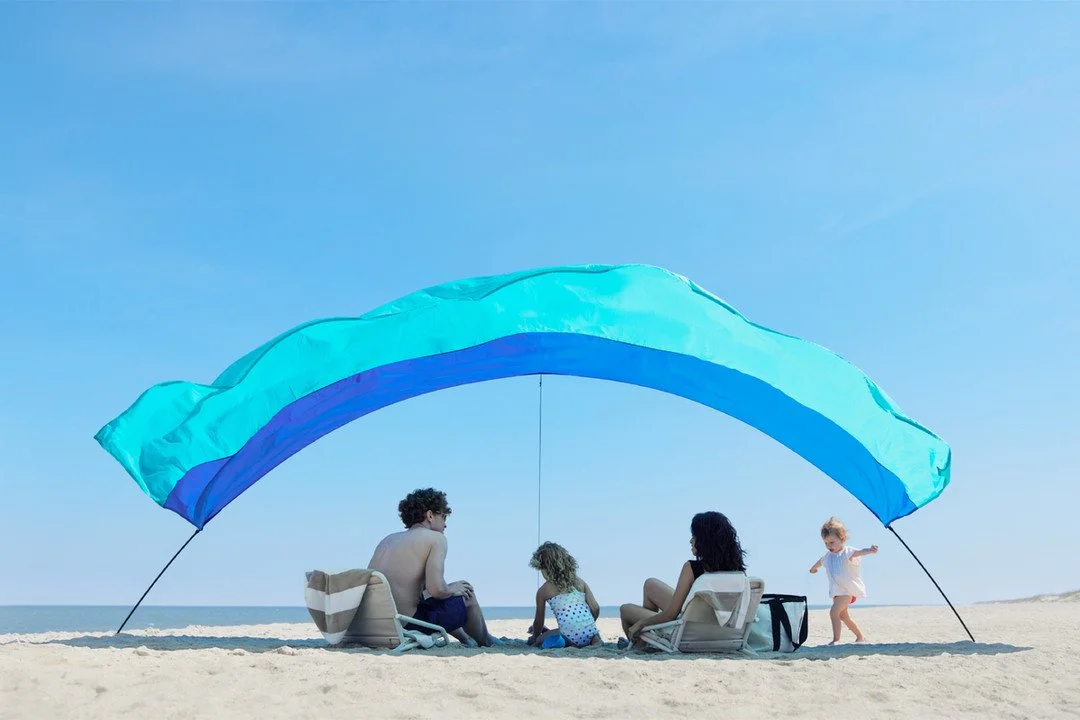
Love them or loathe them, the Shibumi beach shade (and others like it) will again be a regular presence on the Cape May beaches this summer.
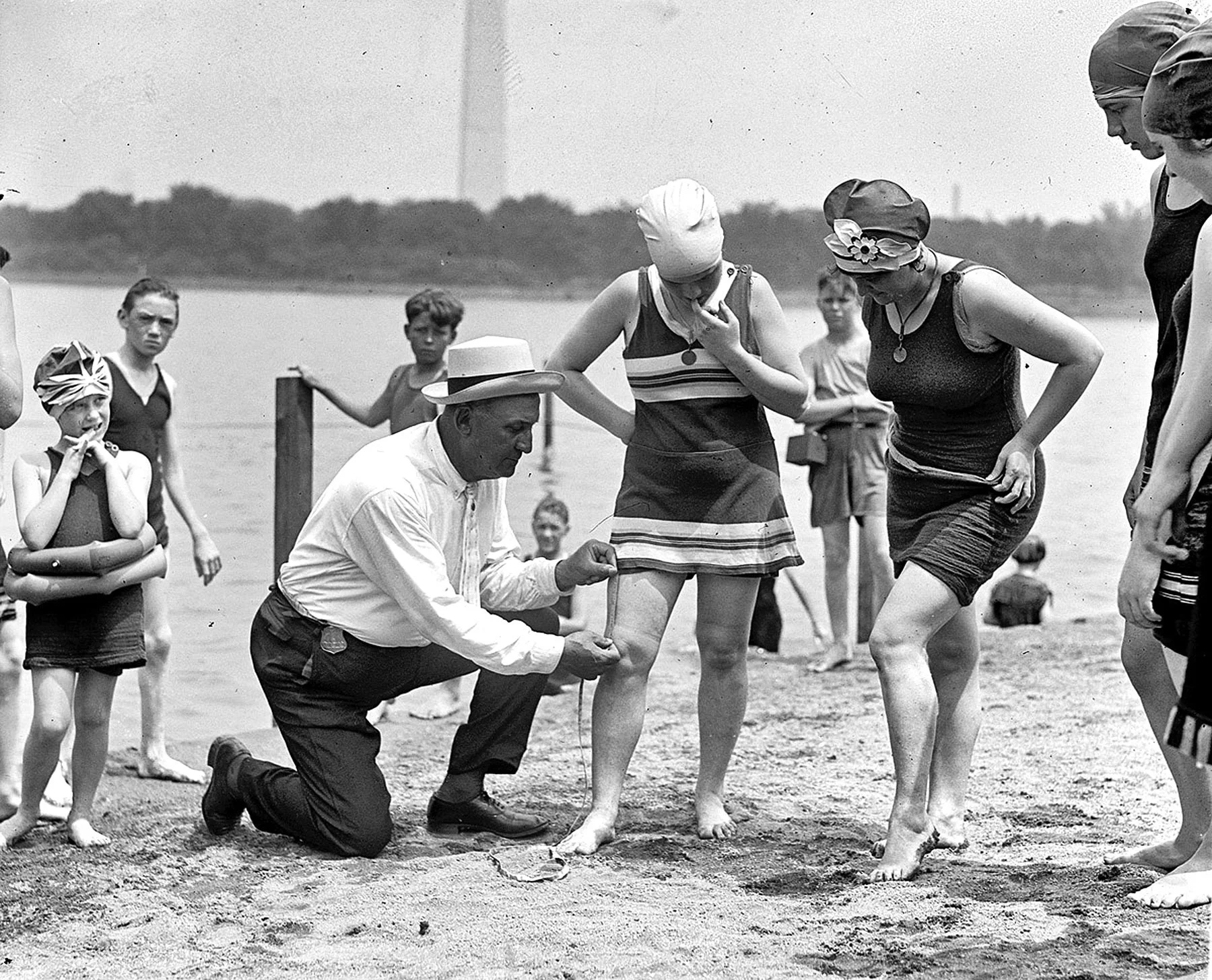
In the 1920s, some cities enforced rules that stated swimsuits weren’t allowed to be more than six inches above the knee. These days, regulations are way looser on beaches. Are they maybe TOO loose?